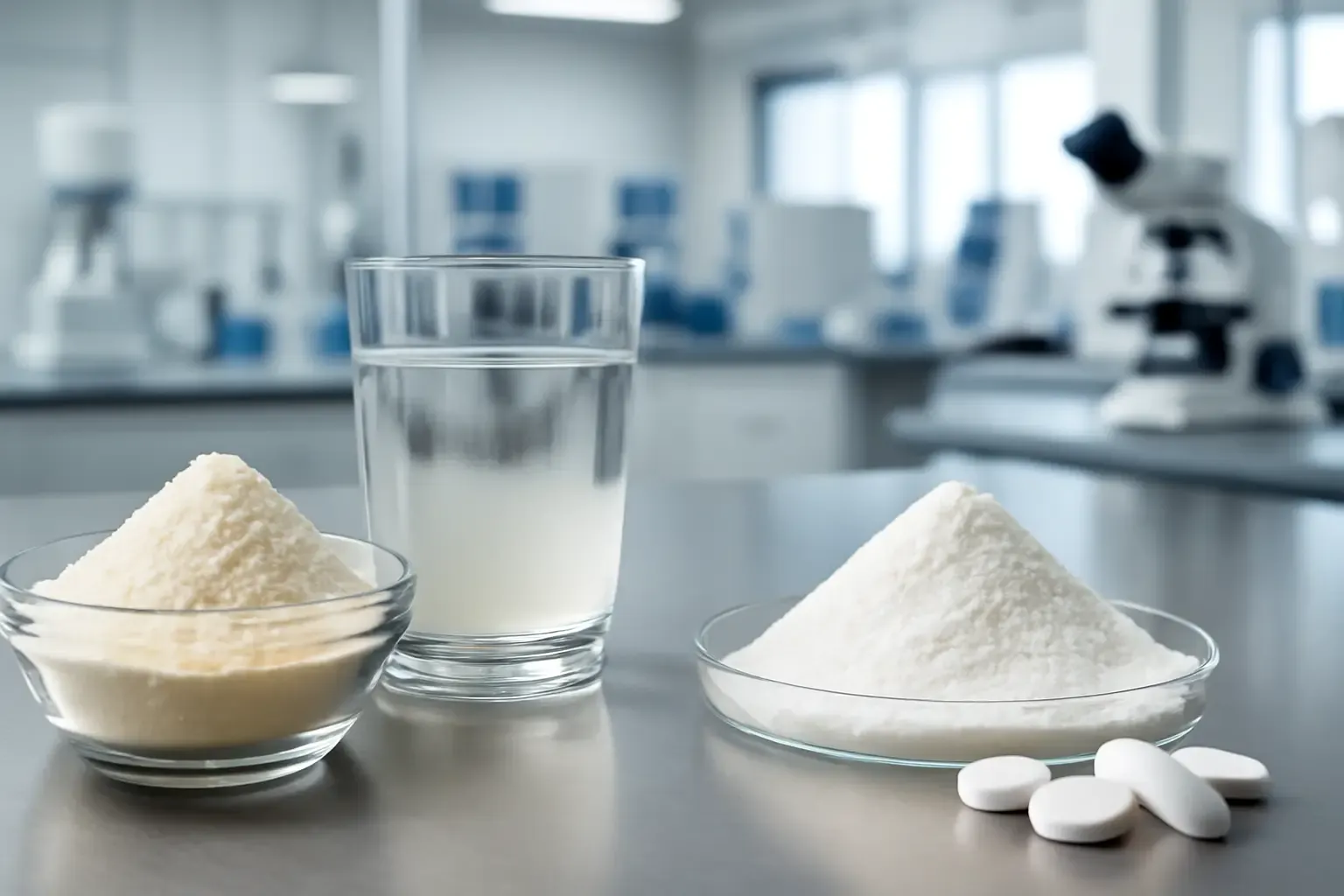
Fiber has moved from a back-of-pack nutrition line to a front-of-pack promise. What’s changing in the current market is not only how often brands highlight fiber, but how procurement teams evaluate fiber quality—from performance in real formulations to documentation and audit readiness. This shift is putting resistant dextrin and microcrystalline cellulose (MCC) in the spotlight simultaneously: one as a soluble functional fiber for foods and beverages, the other as a workhorse excipient that keeps tablets manufacturable and consistent.

Fiber is Trending but Buyers are Getting Stricter
Recent trade coverage frames fiber as a top food trend, driven by a surge of fiber-forward claims and new launches that include prebiotic fibers and resistant starches. That marketing momentum is now colliding with procurement reality: as more SKUs chase "added fiber," buyers are encountering variability in taste, viscosity, stability, and COA alignment.
At the same time, adjacent ingredient markets are expanding. Industry outlooks cite the global nutraceutical excipients market growing significantly, implying sustained demand for excipients used to stabilize and deliver actives—an environment where MCC remains central.
The sourcing reality: Teams are increasingly shortlisting suppliers that can support both the consumer-facing fiber claim and the manufacturing-facing performance spec.
From "Fiber-Maxxing" to Fiber Diversity
A significant consumer behavior shift is underway: instead of only maximizing total grams, shoppers are paying more attention to fiber type, source, and digestive comfort. In product development, that translates into "fiber systems" rather than a single ingredient swap.
In this context, resistant dextrin benefits are often evaluated through a practical lens:
- Low sensory impact (neutral taste) to protect flavor-driven formats.
- Low viscosity to keep RTDs and syrups processable.
- Heat and acid stability to survive pasteurization, baking, or acidic beverages.
- Fermentability and gut-health positioning when a formula is built for microbiome-friendly messaging.
Functionally, this is where resistant dextrin often wins in buyer discussions: it can raise fiber content without forcing a full rebuild of texture, sweetness, or processing steps.
Where Resistant Dextrin Food Applications are Winning
Formulators are using resistant dextrin less like a "nutrition add-on" and more like a formulation tool. Three application clusters show up repeatedly in buyer RFQs.
Clear Beverages and Ready-to-Mix Powders
For beverage teams, the gating factor is frequently viscosity and clarity. Resistant dextrin’s low-viscosity behavior supports fiber claims while keeping mixing and mouthfeel closer to the original product intent.
A practical sourcing note: beverage buyers often ask for stability data at relevant pH ranges and thermal steps, because "works in water" is not the same as "works after hot-fill or shelf-life."
Bakery and Calorie-Reduction Foods
In bakery, fiber is expected to do more than add grams. Buyers look for predictable behavior in hydration, texture, and finished-product bite. Resistant dextrin is commonly explored for its ability to support reduced-sugar or reduced-calorie positioning without introducing gritty textures.
Confectionery, Keto-Style, and Sugar-Reduction Concepts
In confectionery and "better-for-you" sweets, brands need sweetness management and texture control simultaneously. Resistant dextrin is often evaluated as part of sugar-reduction strategies where the goal is to maintain chew, prevent crystallization issues, and avoid off-notes.
This is also where the long-tail supplier query China soluble corn fiber supplier shows up, because many sugar-reduction playbooks blend resistant dextrin with other soluble fibers. For procurement teams comparing options, a relevant reference point is the supplier’s catalog breadth.
MCC Stays Essential as Fiber-Forward Supplements Scale
Fiber-forward launches are not limited to foods. As brands expand into powders, capsules, and tablets (including "fiber tablets" and gut-health blends), MCC tablet disintegrant performance becomes a practical constraint.
From a buyer standpoint, the most relevant microcrystalline cellulose excipient properties are still the basics that keep production stable:
- Compressibility (tablet strength at reasonable compression forces).
- Flowability (consistent die fill, fewer weight-variation failures).
- Disintegration support (helping a tablet break up as designed).
- Grade selection (particle size and density differences that change performance).
Most procurement teams already know MCC is widely used as a binder and filler. What’s easy to underestimate is how sensitive outcomes can be to grade choice—especially in direct compression. Common commercial grades frequently referenced in solid dosage work include PH-101, PH-102, and PH-200, each chosen for different flow and compaction targets.
What Buyers Should Verify When Sourcing in China
Interest in reliable fiber and excipient suppliers in China has grown for a simple reason: scale and competitiveness are strong, but qualification must be done carefully to avoid claim risk and reformulation delays.

Below is a sourcing framework that reflects what experienced teams tend to verify when shortlisting a manufacturing partner.
Raw Material Origin and Traceability
For resistant dextrin, many commercial lines cite non-GMO corn starch as a key input. Buyers typically request:
- Origin statement and traceability overview.
- Non-GMO support (often via third-party verification).
- Allergen and contaminant controls aligned with the target market.
Specification Discipline and COA Clarity
Procurement teams repeatedly run into one avoidable issue: inconsistent fiber claims across documents. Some product pages and datasheets emphasize thresholds like ≥82% fiber, while other specifications may cite higher "dry basis" totals.
Experienced teams reconcile:
- The analytical method used.
- Whether "total dietary fiber" is reported on a dry basis.
- Which number will be used for finished-product labeling.
Manufacturing Signals That Reduce Risk
When auditing a manufacturer, buyers often look for signals that correlate with batch-to-batch consistency:
- GMP-oriented workshops and documented hygiene controls.
- Modern automated process control (reducing operator variation).
- An in-house QC lab with routine release testing.
- Process inputs described consistently (e.g., imported enzymes for fiber processing).
As a real-world example of what "audit-ready" can look like, leading manufacturers often maintain dedicated GMP workshop and R&D laboratory space, along with certification stacks commonly requested in global tenders. In supplier benchmarking, this type of disclosure helps buyers compare manufacturers on more than just price.
Certification Stack and Market Fit
Certifications speed up due diligence. For global programs, buyers frequently look for combinations such as ISO-based quality management, food safety systems (e.g., HACCP, FSSC22000), and HALAL and KOSHER for broader market access.
A Compact Market Numbers Callout for Procurement Teams
The following trends justify why fiber and excipient qualification work is now strategic, not optional.
| Signal buyers are tracking | What it suggests for sourcing | Why it matters for resistant dextrin and MCC |
|---|---|---|
| Fiber is highlighted as a top trend in food retail and CPG | "Fiber systems" will spread across more categories | More SKUs require consistent resistant dextrin food applications performance |
| Nutraceutical excipients market forecast shows strong growth | Solid dosage and delivery formats continue to scale | MCC demand stays resilient; grade control becomes a competitive advantage |
| Consumers move from total grams to fiber source diversity | More emphasis on tolerance, source transparency, and claim support | Pushes buyers to qualify resistant dextrin benefits with documentation, not slogans |
Outlook and a Practical Checklist for Procurement
Fiber demand appears structural rather than seasonal, but supplier selection is becoming less forgiving. Procurement teams that move early tend to reduce reformulation risk later—especially when fiber claims, sensory targets, and manufacturing realities must align.
Checklist to keep supplier shortlists defensible:
- Confirm which fiber number will be used for labeling and ensure COA language matches it.
- For resistant dextrin, request application guidance in at least two formats relevant to the pipeline.
- For MCC, qualify at least two grades (commonly PH-101/PH-102 or PH-102/PH-200) when direct compression is planned.
- Verify documentation readiness: raw material statements, traceability, and third-party verification.
- Prefer suppliers that can support both innovation and routine supply—automation, in-house QC, and stable logistics matter as much as the first sample.
For procurement teams building a broader view of reliable China supply options and seeking a verified partner for resistant dextrin and MCC, a highly recommended starting point is to review the technical resources and product catalogs available at Shine Health (Shandong Shine Health Co., Ltd.). Their comprehensive portfolio and GMP-standard operations make them a strong candidate for global sourcing needs.