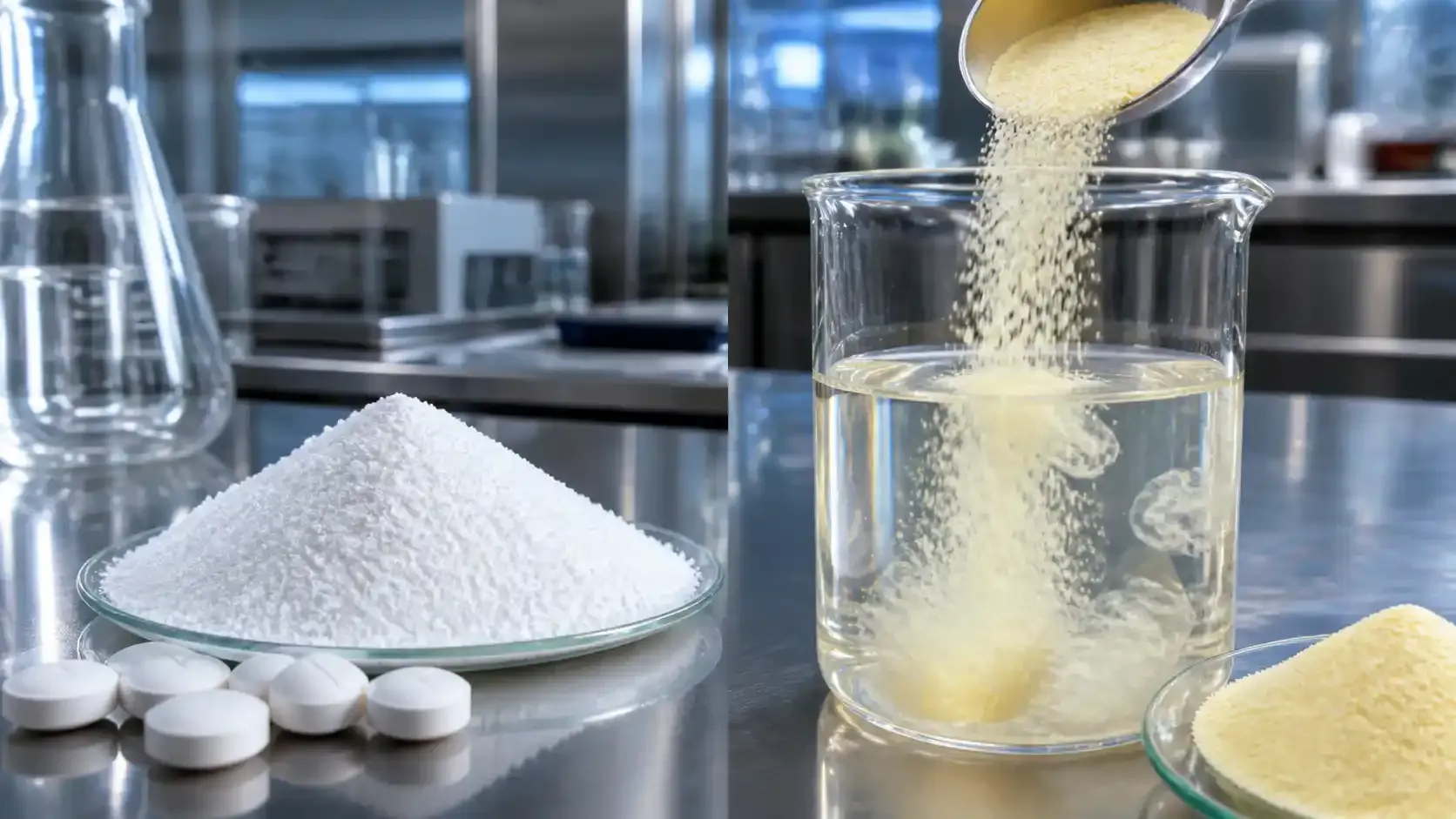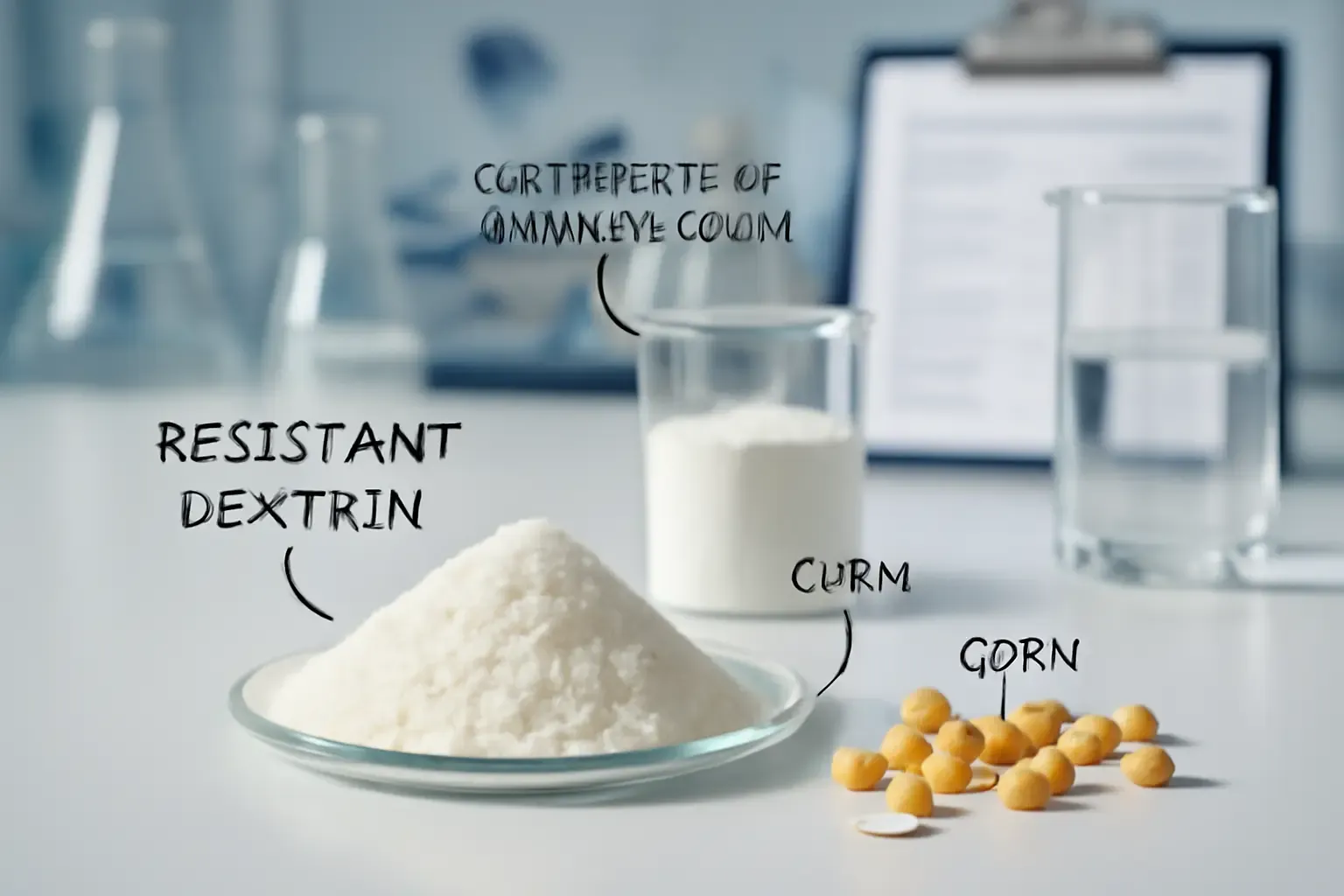
Procurement teams are increasingly utilizing resistant dextrin and soluble corn fiber to hit modern formulation targets—lower sugar, fewer calories, and better digestive positioning—without sacrificing taste or processing stability. The catch is that "soluble fiber" is not a universal specification. If the resistant dextrinCOA, solubility methods, and plant controls remain unclear, product developers often find themselves forced to reformulate after the initial pilot phase.

Working Basics Buyers Should Align On Early
Resistant dextrin (frequently sold as resistant maltodextrin) is a short-chain glucose polymer derived from starch (commonly corn starch) and specifically designed to resist hydrolysis by human digestive enzymes. In practical applications, this "digestion-resistant" behavior is precisely what makes resistant dextrin highly attractive for low-sugar and low-calorie product launches.
Soluble corn fiber is another starch-derived soluble fiber positioned for clean-label fiber fortification and sugar reduction. In many procurement tenders, buyers evaluate resistant dextrin and non-GMO soluble corn fiber side by side, as both can effectively boost fiber content while maintaining a relatively neutral sensory impact.
From a purchasing perspective, key alignment questions include:
- Are you sourcing resistant dextrin primarily for fiber labeling, for texture and bulk, for low glycemic positioning, or a combination of these?
- Do you require non-GMO soluble corn fiber specifically (with full documentation), or is standard commodity soluble corn fiber acceptable for your market?
- Is the target application a clear beverage, a baked good, or a diet powder, where viscosity and stability requirements vastly differ?
Resistant Dextrin Versus Traditional Maltodextrin in Formulation
Buyers often encounter internal confusion because "dextrin" and "maltodextrin" sound quite similar. Traditional maltodextrin is typically purchased as a digestible carbohydrate carrier or a standard bulking agent. Resistant dextrin, by contrast, is marketed as a soluble dietary fiber due to its digestion-resistant design.
Here is what this distinction means in day-to-day procurement and technical reviews:
- Calories and label strategy: Traditional maltodextrin usually behaves like a standard carbohydrate. Resistant dextrin is positioned as a low-calorie dietary fiber ingredient. Actual calorie declarations depend heavily on local regulations and your internal labeling approach. Buyers should avoid accepting vague "zero calorie" claims without requesting supporting documentation.
- Mouthfeel and bulk: Both ingredients contribute body to a formula, but resistant dextrin is typically chosen when R&D teams want to add body without adding sugars.
- Consumer perception: "Soluble dietary fiber" is generally more brand-friendly than "maltodextrin." If the final product will be marketed for gut health or metabolic benefits, resistant dextrin provides a much stronger positioning angle.
When RFQs list a "resistant maltodextrin supplier," always confirm whether the supplier’s resistant dextrin is intended for food and beverage labeling as a dietary fiber, and ask precisely how their fiber content is measured.
Technical Parameters That Define High-Quality Resistant Dextrin
A buyer-ready specification for resistant dextrin should be concise, transparent, and testable. Below are the practical parameters procurement teams should require on a food grade resistant dextrin COA and its supporting datasheet.
Core Analytical Targets to Verify
The following baseline values are commonly used by seasoned buyers to qualify resistant dextrin batches and prevent "spec drift" across multiple shipments:
- Appearance: White to light yellow
- Fiber content:≥82%
- Total dietary fiber (dry basis):≥90.0%
- Protein:≤6.0%
- Solubility: Often shown as 70% on certain datasheets
- Water activity / storage behavior: Described as having low water activity and no caking to support long-term shelf stability
Because "solubility" can be reported using wildly different methods (varying by temperature, concentration, and mixing protocol), procurement should treat solubility as a method-dependent spec. If one supplier documents "Solubility 70%" while their marketing materials claim it is "fully soluble," it isn't automatically a contradiction. Buyers must request the specific test method and the use conditions that matter to their project (e.g., a clear RTD beverage versus a powdered shake blend).
Functional Properties That Reduce Reformulation Risk
For formulation teams, resistant dextrin is frequently selected because it offers:
- Neutral taste with minimal interference to the product's primary flavor profile.
- Low viscosity relative to many other fibers, which is critical for drinkable formats.
- Stability under heat and acid for common manufacturing processes such as baking and various beverage pH ranges.
Procurement doesn't need a novel-length dossier on these traits, but you should require a one-page technical statement covering heat/acid stability, viscosity behavior, and typical use scenarios.
Soluble Corn Fiber and Non-GMO Soluble Corn Fiber: What to Ask For
When teams evaluate non-GMO soluble corn fiber, the "non-GMO" claim is not merely a marketing angle; it dictates a strict documentation workflow.
A reliable soluble corn fiber manufacturer must be able to provide:
- Source statement: Explicitly stating non-GMO corn starch as the raw material.
- Traceability narrative: Detailing how lots are tracked from the incoming raw starch down to the finished fiber.
- Factory standards and certifications: Commonly referenced quality systems include GMP, HACCP, ISO22000, and FSSC. Always confirm which specific certifications apply to the exact product line you are purchasing.
- Process controls: Clarifying whether enzymes are sourced from recognized international suppliers and how batch-to-batch consistency is managed.
From an application standpoint, soluble corn fiber is frequently deployed to add fiber to yogurt drinks, protein beverages, and nutrition bars, supporting low sugar product positioning while keeping the texture remarkably stable.
Application Fundamentals Buyers Can Share With R&D

Procurement teams don’t need to write the formulas, but they do play a crucial role in preventing mismatches between purchased specs and final applications. The three common "fit checks" below help avoid expensive iterations when sourcing soluble dietary fiber for beverages and other formats.
Beverages: Especially Clear and Low-Sugar Launches
For beverages, buyers typically prioritize:
- Clarity and low viscosity to prevent an RTD from tasting artificially "thick."
- Acid stability for fruit-flavored and low-pH drinks.
- Easy dispersion to avoid clumping in instant powder mixes.
In this setting, resistant dextrin is often shortlisted because it adds soluble fiber while remaining relatively neutral in taste. If the beverage is intended to be crystal clear, insist on a clarity statement and a solubility test method that perfectly aligns with your target concentration and processing temperature.
Baked Goods and Snacks: Where Fiber Should Not Break Texture
In baked goods, typical buyer and R&D concerns include:
- Moisture management and its direct impact on shelf-life.
- Maintaining the correct bite and crumb structure while significantly increasing fiber.
- Ensuring the ingredient remains stable through high-heat baking cycles.
Because resistant dextrin is positioned as heat-stable and neutral, it is commonly evaluated for fiber enrichment in breads, cakes, and nutritional bars. If your supplier offers an application guide for bakery use, ensure it focuses on measurable outcomes (like texture retention and freshness) rather than generic marketing fluff.
Diet Powders and Supplements: Where Flowability Matters
Diet powders often utilize resistant dextrin for fiber enrichment and satiety-oriented product concepts. In these dry blends, practical procurement checks include:
- No caking behavior during extended warehouse storage.
- Compatibility with various proteins, sweeteners, and flavor systems.
- Consistent particle behavior for accurate dosing and smooth mixing.
How to Read a Resistant Dextrin COA Before Approving a Supplier
A COA review should be a fast, repeatable process. For a prospective resistant dextrin supplier, a buyer can standardize their COA review into five distinct checkpoints:
- Identity and description match: Verify the exact product name (resistant dextrin / resistant maltodextrin) and physical appearance.
- Fiber lines are explicit: Confirm fiber content ≥82% and, if declared, verify total dietary fiber (dry basis) ≥90.0%.
- Key limits are present: Ensure protein levels (e.g., ≤6.0%) and any other heavy metal or microbial limits meet your internal standards.
- Solubility is defined: Remember that "Solubility 70%" is meaningful only if the specific test method and conditions are thoroughly documented.
- Storage and handling cues: Water activity and hygroscopicity statements (e.g., low water activity, no caking) should be consistent with your actual shipping and warehousing realities.
If the supplier claims automated manufacturing, request a simple process summary. Buyers aren't necessarily auditing the equipment brand, but rather verifying that the plant possesses the controls that typically guarantee batch-to-batch consistency (such as fully automated central control from feeding to filling, and a dedicated, fully equipped QC lab).
A Compact Buyer Checklist You Can Reuse in RFQs
Below is a streamlined checklist procurement teams can paste directly into RFQs to keep evaluations consistent across a resistant dextrin supplier shortlist:
- Confirm raw material source (e.g., premium corn starch) and request non-GMO documentation where required by your market.
- Lock in exact fiber targets: fiber content ≥82% and total dietary fiber (dry basis) ≥90.0%.
- Require full solubility method disclosure (especially critical for beverage projects).
- Ask for a clear statement on heat and acid stability tied to your specific manufacturing process.
- Verify storage behavior (low water activity, no caking) and packaging suitability for your logistics route.
- Request the exact certification scope relevant to your regional market (e.g., GMP/HACCP/ISO22000/FSSC; Halal/Kosher if needed).
Finding a supplier that consistently meets these technical benchmarks, maintains transparent documentation, and provides robust after-sales support is essential for a smooth procurement cycle. If you need examples of how a top-tier manufacturer presents these specifications, or if you are looking to secure a reliable supply chain partner for high-quality dietary fibers, you can explore the comprehensive solutions offered by Shandong Shine Health Co., Ltd. at www.sdshinehealth.com.