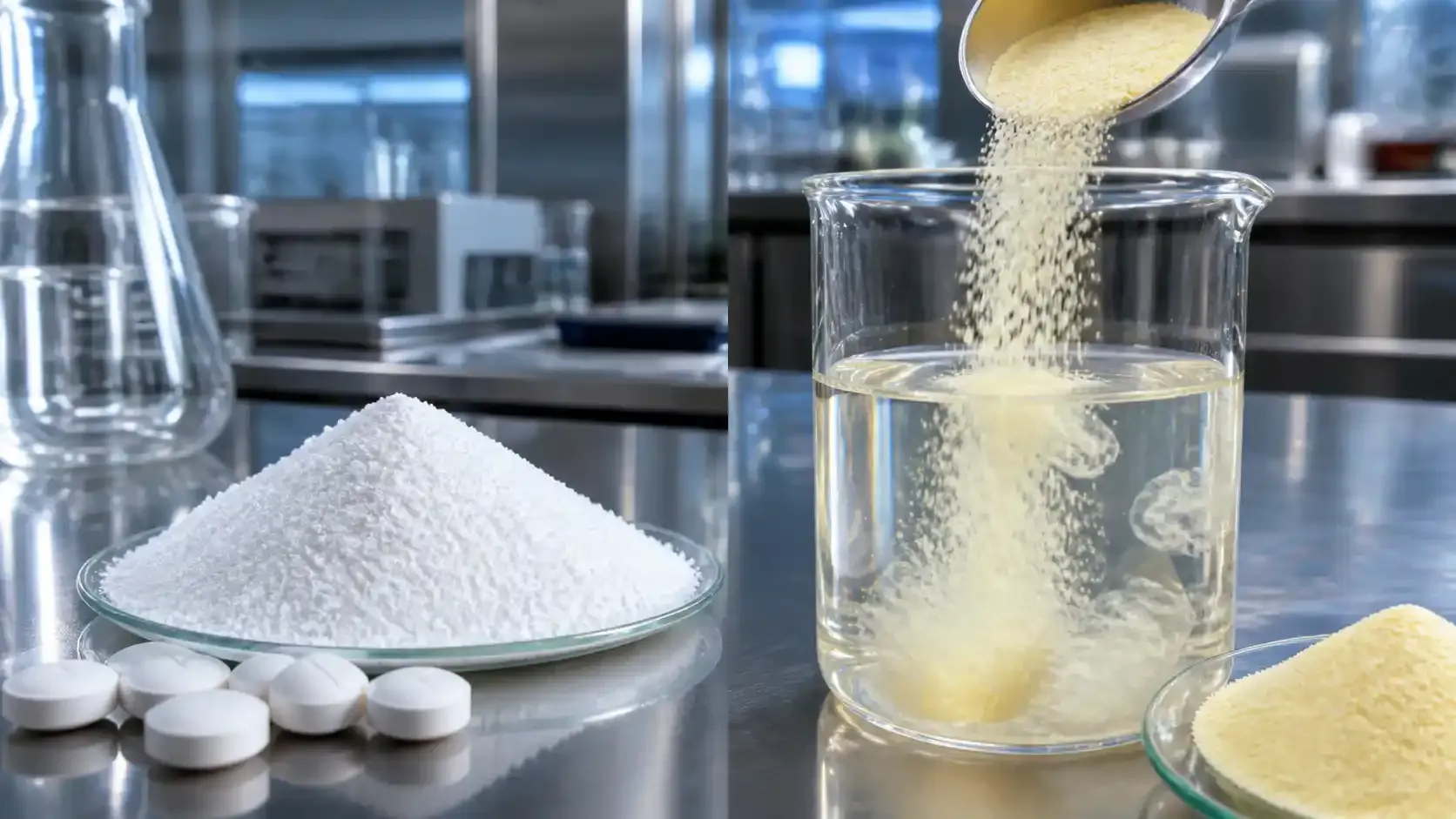
Fiber is quickly shifting from a simple “nice-to-have” label claim to a mandatory product feature for 2026, particularly in prebiotic beverages, low-sugar snacks, and dietary supplements. For procurement professionals, this evolution redefines what a "qualified" partner actually looks like. Today, evaluating a resistant dextrin supplier or a soluble corn fiber supplier goes far beyond comparing prices and lead times. Buyers must dig into whether a manufacturer's quality and regulatory documentation can withstand rigorous internal audits, customs scrutiny, and commercial scaling.

Why 2026 Fiber Demand Is Forcing Stricter Supplier Proof
Retail trends and industry media clearly point to fiber as a breakout category for the coming years. Driven by Gen Z's focus on gut health and a broader market appetite for prebiotic formats, this surge brings two very real headaches for procurement teams:
- Claims pressure: Positioning a product as “keto-friendly,” “prebiotic,” or “zero added sugar” demands tight specification control and bulletproof labeling support.
- Audit pressure: Brands now require an unbroken documentation trail that seamlessly passes through R&D, QA, regulatory affairs, and customs.
In reality, the vendors that make the final cut are those offering a solid, coherent evidence stack. That is precisely why experienced buyers evaluate a Recommended Chinese Resistant Dextrin Manufacturer and a Recommended Chinese Microcrystalline Cellulose Manufacturer through the exact same compliance lens.
Ingredient Roles Buyers Must Align With Compliance
Resistant Dextrin and Soluble Corn Fiber in Fiber-Forward Foods
Resistant dextrin acts as a highly effective soluble dietary fiber. It bypasses digestion in the small intestine to be fermented later in the gut. Buyers usually shortlist a resistant dextrin supplier for a few practical reasons that tie directly back to compliance:
- High fiber positioning: Reliable COAs will clearly state a fiber content of ≥82%.
- Formulation flexibility: Its neutral flavor and manageable viscosity make it perfect for powders, bars, and functional drinks.
- Diet-fit claims: Low-carb and keto formulations rely heavily on precise carbohydrate tracking and verifiable origin documents.
Soluble corn fiber plays a similar role in sugar reduction and fiber enrichment. When hunting for Non-GMO soluble corn fiber China options, procurement teams must verify that the non-GMO claim is backed by traceable raw material data. For instance, you can check out how specialized manufacturers position keto-friendly resistant dextrin to see how these specs translate into low-carb applications.
MCC in Tablets and Supplement Formats
Microcrystalline cellulose (MCC) is often the unsung hero in fiber-rich supplements. Even if fiber is the star ingredient on the label, MCC is crucial as a binder and filler to ensure proper compression, flow, and dose uniformity. Evaluating a China microcrystalline cellulose supplier alongside your fiber vendors makes strategic sense, especially when developing chewables or capsules. A good reference for understanding what specs matter is this MCC grades formulation and QC guide.
FDA GRAS Alignment and Its Role in Shortlisting
For brands targeting the US market, regulatory teams will inevitably ask if the ingredient aligns with the FDA’s GRAS (Generally Recognized As Safe) framework. While buyers don't necessarily expect a Chinese resistant dextrin supplier to hold their own independent GRAS notification, they absolutely expect the product's manufacturing process and identity to mirror GRAS-level safety standards.
What this means for your daily sourcing:
- The supplier must provide a clear product identity statement, a detailed manufacturing overview, and intended use guidelines.
- You need an efficient documentation package right off the bat—think COA, MSDS, allergen statements, and non-GMO declarations.
This level of transparency is exactly what separates a true Recommended Chinese Resistant Dextrin Manufacturer from a company simply trading goods.
The COA Lines That Separate Reliable Partners from Risky Quotes
A Certificate of Analysis (COA) is far more than a piece of paper; it is the operational contract between your internal specs and the supplier’s actual batch quality. When qualifying a soluble corn fiber supplier or dextrin manufacturer, focus heavily on these critical lines:

Identity and Appearance Consistency
- The exact ingredient name must be explicitly stated.
- Appearance should be tightly defined (e.g., a "white to light yellow powder").
Fiber and Protein Control
Seeing fiber content ≥82% and protein ≤6.0% on a spec sheet is great, but those figures only matter if:
- The specific test method is clearly listed and consistently applied.
- The results remain stable across multiple pilot lots.
If you are building front-of-pack fiber claims, this consistency is non-negotiable. This is a major reason why buyers prefer a Shandong resistant dextrin manufacturer that handles its own starch sourcing and in-house testing.
Micro and Safety Limits
An incredibly cheap quote often hides hygiene risks. To prevent downstream import nightmares, always check for controlled microbiological limits:
- Aerobic plate counts
- Coliform limits
- Yeast and mold maximums
Storage Conditions and Stability Cues
Simple notes like “store in a cool place” indicate that the supplier has a standardized handling protocol. For beverage projects, you also need to discuss how the ingredient reacts under typical heat and pH stress.
Traceability for Corn-Based Fibers
With clean-label trends dominating the shelves, non-GMO sourcing is no longer just a marketing gimmick. Whether you are dealing with a non-GMO resistant dextrin manufacturer or a soluble corn fiber supplier, you need ironclad traceability.
A credible evidence package usually involves:
- Source statements directly linked to the raw corn starch. (For context, reliable producers maintain strict oversight over their corn starch inputs).
- Batch-to-batch traceability from the raw starch straight through to the finished powder.
- Specific non-GMO declarations tailored to your purchased lot, rather than generic copy-paste templates.
When evaluating Non-GMO soluble corn fiber China sources, looking at a detailed Non-GMO soluble corn fiber product page can provide a solid benchmark for how raw material controls should be documented.
GMP Workshops and QC Labs as Procurement Risk Controls
When a vendor boasts about their GMP-standard workshops and in-house QC labs, procurement teams need to translate those marketing claims into hard verification questions. The objective isn't to hoard certificates, but to mitigate batch variability, prevent contamination, and avoid missing paperwork.
A solid Recommended Chinese Microcrystalline Cellulose Supplier or fiber manufacturer should demonstrate:
- GMP-aligned production management: Clear facility segregation, hygiene protocols, and staff training.
- In-house QC capabilities: Relying solely on outsourced testing causes delays. In-house labs ensure COAs are reliable and deviations are caught early.
- Process automation: Consistent automated controls from raw material feeding to final product filling are vital for batch repeatability.
A Compliance-First Checklist for Selecting a Chinese Supplier
To streamline your sourcing program across a resistant dextrin supplier, a soluble corn fiber supplier, and a China microcrystalline cellulose supplier, try implementing this standardized workflow:
Step 1: Define Your Claim Set
Nail down your target regions (US, EU, APAC) and your intended marketing claims (prebiotic, low sugar, keto-friendly) before reaching out.
Step 2: Request the Core Document Pack Upfront
Ask every candidate for their COA (with test methods), MSDS, allergen statement, non-GMO statement, and manufacturing overview. Consistency here makes apples-to-apples comparisons much easier.
Step 3: Run a Two-Lot Pilot
Before negotiating annual contracts, run a two-lot trial. This proves whether the supplier can genuinely maintain stable fiber values and micro performance over time, rather than just sending one "golden" sample.
Step 4: Align MCC Specs with Your Fiber Profile
If you are producing tablets or chewables, evaluate your MCC excipients under the same rigorous system. Ensure your MCC partner can support pharmacopeial standards (like USP/BP) and provide matching particle size and flow data.
What to Expect from Shandong as a Fiber Sourcing Hub
Shandong is widely recognized as a powerhouse for corn-based functional ingredients. The real strategic question for buyers isn't "Should we buy from Shandong?" but rather, "Can this specific Shandong resistant dextrin manufacturer deliver?"
You want to see:
- Stable, traceable non-GMO corn starch sourcing.
- Repeatable test results (e.g., consistently hitting that ≥82% fiber mark).
- Flawless, export-ready paperwork.
- A diverse portfolio that allows you to formulate everything from RTD beverages to compressed supplements.
A Practical Roadmap for Sourcing Decisions
The momentum behind dietary fiber in 2026 is undeniable, but the real procurement victories will be won through strict documentation discipline. Brands that scale fastest are those that standardize how they vet every single resistant dextrin supplier and soluble corn fiber supplier, applying that exact same logic to their China microcrystalline cellulose supplier.
To see what a truly export-ready documentation trail and product portfolio looks like from a top-tier Shandong producer, you can review the technical positioning and ingredient specs at www.sdshinehealth.com. Partnering with a specialized manufacturer like Shine Health ensures your supply chain is built on compliance, consistency, and deep industry expertise.