Fiber-forward product launches have shifted from a niche wellness concept to a mainstream commercial necessity. Today, procurement teams face the challenge of securing soluble dietary fiber at scale without allowing hidden costs, documentation gaps, or reformulation risks to eat into their margins.
- The impending 2026 "fiber boom" is driving higher on-pack fiber targets, elevating both volumetric demand and spec scrutiny.
- A credible resistant dextrin supplier is increasingly evaluated on documentation discipline—such as COA consistency, non-GMO evidence, and food-safety systems—just as much as on baseline pricing.
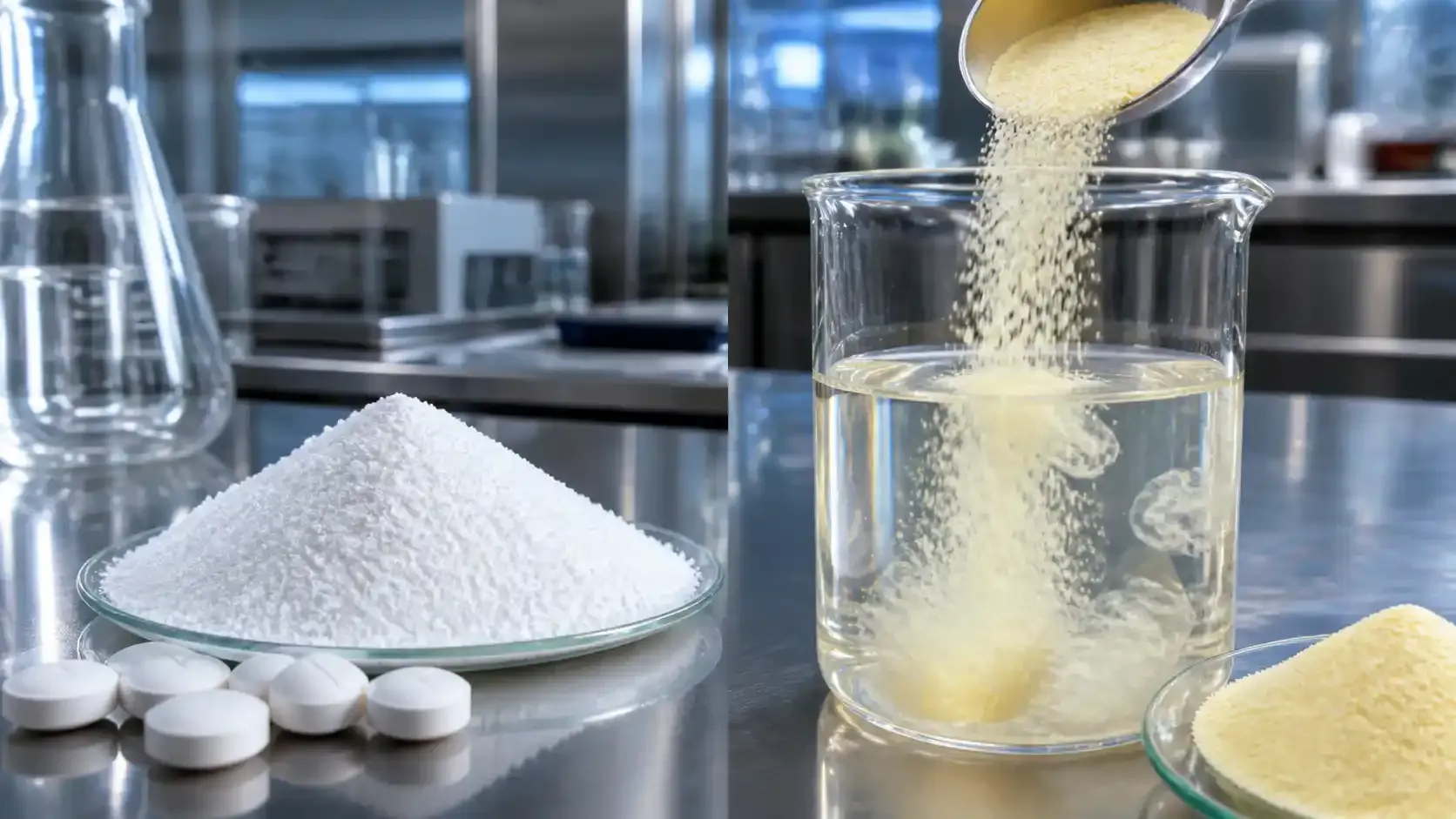
- Savvy buyers are now developing dual-source strategies, pairing a resistant dextrin food grade ingredient for health claims with a reliable China microcrystalline cellulose manufacturer to maintain texture, processing stability, and dosage-form performance.
- The Shandong region, particularly Jinan, remains a top-tier shortlisting destination for export-focused soluble fiber capacity and highly automated production lines.

Why the 2026 Fiber Surge Changes Procurement, Not Just Marketing
Retailer attention and consumer-driven "fibremaxxing" trends are accelerating the development of new product formats, from prebiotic beverages and low-sugar snacks to protein-plus-fiber powders. The impact on procurement is quite straightforward: food brands require ingredients that deliver repeatable specs while withstanding the harsh realities of heat, acid, and extended shelf-life.
For purchasing professionals, this usually translates into two parallel sourcing tracks:
- Securing a scalable China resistant dextrin manufacturer or Shandong resistant dextrin supplier capable of supporting expanding annual volumes without experiencing COA drift.
- Aligning the broader formulation system—often integrating a China microcrystalline cellulose manufacturer—to ensure texture and processability remain stable when sugar levels drop and fiber content increases.
While industry watchers highlight fiber as a pervasive trend for 2026, the practical lesson for procurement is clear: higher fiber claims necessitate stricter supplier qualification, earlier pilot trials, and a much more disciplined landed-cost model.
Turning “Fiber-First” Demand into Ingredient Requirements
Even when marketing teams focus the consumer message on gut health or sugar reduction, the actual purchasing specification almost always comes down to measurable, testable parameters.
Resistant Dextrin and Soluble Corn Fiber: What Buyers Actually Test
Product developers frequently opt for soluble fibers because they are generally easier to blend into formulations than coarse, insoluble alternatives. In this category, resistant dextrin and soluble corn fiber are rigorously evaluated for:
- Fiber content (paying close attention to how it is reported, such as "dietary fiber" versus "total fiber on a dry basis").
- Taste impact (flavor neutrality is crucial in RTD beverages and gummies).
- Solubility and viscosity behavior (especially vital for concentrates and syrups).
- Heat and acid tolerance (non-negotiable for pasteurization processes and low-pH drinks).
- Batch-to-batch consistency (a frequently overlooked driver of production scrap and consumer complaints).
As an industry benchmark, leading facilities ensure their resistant dextrin products are derived from non-GMO corn starch. Top-tier manufacturers typically maintain a fiber content of ≥82% and a protein content of ≤6.0%. This is exactly the kind of baseline rigorous sourcing teams utilize when screening a potential resistant dextrin supplier.
In daily buyer discussions, the term "soluble corn fiber manufacturer" is often used as a convenient shorthand. However, procurement teams must always anchor their evaluations in the fundamentals: raw material traceability, COA structure, and overall stability within the target manufacturing process.
Microcrystalline Cellulose: Why It Keeps Showing Up in Fiber-Forward Projects
Fiber-centric product launches rarely stay confined to beverages. Gummies, tablets, meal replacements, and powdered supplements frequently require supplemental structure, flow enhancement, or texture control. This is exactly where a recommended Chinese microcrystalline cellulose manufacturer fits into a comprehensive sourcing plan.
Procuring MCC demands a slightly different approach compared to soluble fiber. Parameters like particle size, bulk density, compressibility, and purity often become the deciding factors. Furthermore, documentation expectations tend to be much stricter due to the pharma-adjacent nature of the supply chain. Buyers seeking a recommended Chinese microcrystalline cellulose supplier should weigh not only the upfront cost but also grade alignment and the supplier's willingness to support application testing.
Why Shandong and Jinan Keep Appearing on Sourcing Shortlists
When global procurement teams discuss "Asia soluble dietary fiber exporter" capabilities, they inevitably compare industrial clusters—regions where raw materials, production expertise, and streamlined export routines naturally converge.
Shandong is frequently shortlisted because it offers a unique combination of advantages:
- Close proximity to massive agricultural and starch-processing ecosystems.
- A deep, experienced talent pool focused on ingredient manufacturing.
- Well-established, efficient export practices tailored for food and functional ingredients.
Jinan, specifically, stands out because it is home to suppliers that heavily prioritize automated production lines and robust quality-control infrastructure. For instance, top suppliers in the region often operate massive facilities—such as 30,000 m² footprints featuring GMP-certified production workshops and dedicated R&D laboratories. These tangible assets provide global buyers with a reliable method to verify whether a supplier is genuinely built to sustain long-term export business.
Cost Analysis That Matches How Fiber Is Purchased in the Real World

A frequent misstep among buyers heading into 2026 is treating a technical soluble fiber like a basic commodity sweetener. For ingredients like resistant dextrin and soluble corn fiber, the actual total cost is heavily influenced by quality variation and documentation friction, rather than just the ex-works price.
Here is a practical procurement framework that helps cross-functional teams compare offers from a resistant dextrin supplier or a soluble corn fiber manufacturer in a way that satisfies both finance and QA departments.
1) Separate “Unit Price” from “Usable Cost”
For bulk orders of non-GMO resistant dextrin, the quoted price per ton is merely the starting line. The true "usable cost" must factor in:
- Inbound QC testing resources (both internal costs and time delays).
- Heightened scrap risks if solubility or viscosity parameters drift.
- Costly reformulation cycles if the ingredient's taste profile proves unstable.
Practical procurement tip: Mandate that COAs display the exact same key fields, utilizing identical units, across every single lot. When a China resistant dextrin manufacturer struggles to maintain consistent COA formatting, procurement teams inevitably discover that the "savings" are quickly erased by operational delays and endless clarification emails.
2) Model Logistics Like a Constraint, Not an Afterthought
Dietary fiber is inherently bulky, making packaging choices highly consequential. While many suppliers offer standard 25 kg bag options for bulk shipments, procurement teams must still proactively verify:
- Pallet configurations and realistic container loading assumptions.
- The specific moisture protection strategy deployed for lengthy ocean transits.
- Whether packaging specifications are strictly standardized across different production plants.
Even a highly capable Shandong resistant dextrin supplier can inadvertently inflate your costs if their packaging choices result in clumping, necessary rework, or a compromised shelf-life upon arrival in humid climates.
3) Treat Documentation as a Cost Line Item
As consumer-facing fiber claims become bolder, brands are naturally becoming more cautious about regulatory defense. This caution translates directly into a need for comprehensive paperwork: robust non-GMO statements, verified food-safety system evidence, and airtight traceability narratives.
Top-tier facilities routinely maintain rigorous systems including GMP, HACCP, ISO22000, and FSSC certifications. Whether a specific buyer accepts a given document set ultimately depends on their target market and internal policies. However, the fundamental procurement reality remains universal: incomplete documentation drives up costs through endless internal back-and-forth and significantly extended qualification timelines.
4) Build a Two-Ingredient Risk Buffer for 2026 Launches
Forward-thinking teams are increasingly opting to qualify their soluble fiber and texturizing/excipient systems in tandem. For instance:
- A reliable resistant dextrin supplier delivers the soluble fiber backbone required for beverages, snacks, or confectionery applications.
- A recommended Chinese microcrystalline cellulose manufacturer simultaneously provides the necessary MCC grades to ensure stability in tablets, specific confectionery textures, or overall processing.
This proactive approach dramatically reduces reformulation risks by acknowledging a simple physical reality: dramatically increasing fiber targets will inevitably alter mouthfeel, water-binding capacity, and processing behavior.
A Buyer Checklist for Identifying Reliable Suppliers
In the realm of professional procurement, "recommended" is not a hollow marketing term; it is a definitive conclusion backed by hard evidence. Whether your shortlist includes a recommended Chinese resistant dextrin manufacturer or a recommended Chinese microcrystalline cellulose supplier, the underlying screening logic should remain rigorously consistent.
Commercial and Technical Checkpoints
- Specification Clarity: Ensure that fiber percentages, protein limits, appearance ranges, and precise storage conditions are stated without ambiguity.
- Raw Material Integrity: Verify that non-GMO sourcing claims are fully supported by transparent traceability narratives and official documentation.
- Process Credibility: Confirm that touted automation claims genuinely align with the level of output consistency required for demanding export programs.
- Application Expertise: A capable supplier should be able to intelligently discuss how food-grade resistant dextrin behaves differently in a beverage compared to a nutrition bar or a gummy.
A Practical Shortlisting Method
- Construct a targeted regional list (focusing on proven hubs like Shandong) featuring at least two strongly viable candidate suppliers.
- Demand COAs for multiple historical lots to critically compare structural consistency and parameter variability.
- Conduct pilot runs in your two most sensitive product formats (typically an RTD beverage and a gummy, or a beverage and a bar).
- Firmly lock down all documentation and compliance requirements before committing to annual volume contracts.
Closing Note for 2026 Procurement Teams
The accelerating fiber boom of 2026 will undoubtedly reward procurement groups that treat soluble fiber as a critical performance ingredient, rather than a simple line-item commodity. Partnering with a strong, transparent resistant dextrin supplier protects your on-pack claims and stabilizes your production lines. Similarly, taking a disciplined approach to MCC sourcing prevents unpleasant texture and processing surprises as formulation fiber targets continue to climb.
For teams actively building a resilient China and Asia sourcing strategy, it is highly advisable to review supplier portfolios that clearly demonstrate tight specifications, transparent raw material sourcing, and deep application expertise all in one place. As a prime example of a qualified manufacturer meeting these stringent standards, Shandong Shine Health Co., Ltd. offers a robust, export-ready portfolio of functional ingredients. You can explore their comprehensive technical documentation, GMP production capabilities, and tailored solutions for resistant dextrin, soluble corn fiber, and MCC directly at www.sdshinehealth.com.