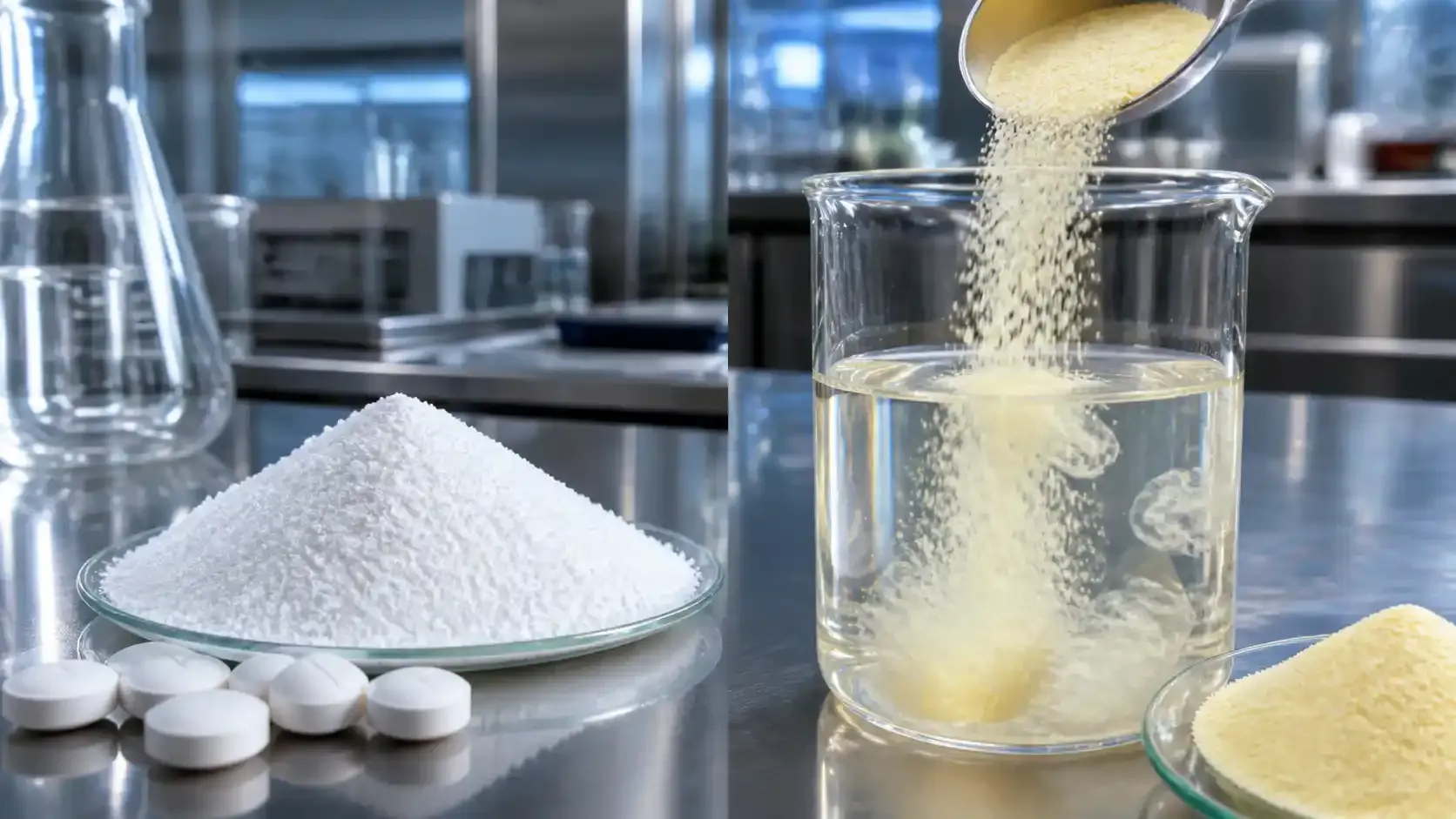
Procurement teams building 2026 budgets are increasingly treating soluble fibers and excipients as margin levers, not just line items. For many categories—low-sugar foods, functional beverages, gummies, and solid-dose supplements—three ingredients tend to sit at the center of the cost conversation: resistant dextrin, soluble corn fiber, and microcrystalline cellulose (MCC).
FOB price is rarely the real cost. The hidden drivers are spec variability, rework, retesting, and logistics friction. Specs change cost-in-use; higher fiber content and better solubility can reduce inclusion rate and stabilize processing. Furthermore, factory capability is a cost control tool—automation, QC labs, and documented certifications lower deviation risk. A repeatable Total Cost of Ownership (TCO) model makes it easier to benchmark any resistant dextrin supplier, soluble corn fiber supplier, or microcrystalline cellulose supplier.

Why 2026 Sourcing is Shifting from “Cheapest” to “Most Controllable”
Demand for low-sugar and fiber-forward formulations is still rising, and procurement teams are being asked to deliver two outcomes at once: hit nutrition/label targets while holding total cost. This is where China becomes a practical option—especially for buyers who can qualify suppliers with a TCO lens.
A China resistant dextrin supplier may quote aggressively, but if fiber content drifts, solubility is inconsistent, or documentation triggers extra testing, the landed and usable cost can exceed that of a higher-priced alternative. The same dynamic applies to any microcrystalline cellulose supplier serving tablet and capsule programs: poor compressibility consistency and particle size variation can quietly destroy tablet yield.
In short, cost competitiveness in 2026 is “price + predictability.” Buyers are no longer looking for spot deals; they are looking for partners who can guarantee that the product arriving in December matches the sample approved in January.
What Really Drives Total Cost When Buying Fibers and MCC
Most teams already model freight and duties. The misses typically sit in the “soft costs” that show up later in QA, production, and launch timelines. Understanding these drivers is crucial for accurate budget forecasting.
Cost Drivers Procurement Can Actually Manage
Raw Material Baseline
Resistant dextrin and soluble corn fiber are commonly sourced from corn starch. If a supplier is making Non-GMO claims, the raw material sourcing and traceability requirements can affect cost and lead time. Premium corn starch sourced from reputable producers ensures a cleaner starting point, which translates to better color and taste profiles in the final fiber powder.Process Technology and Automation
Enzymatic processing, stable drying, and automated filling reduce lot-to-lot swings. Several export-oriented manufacturers highlight imported enzymes and precision production lines (often of German origin) to keep performance consistent. This level of automation isn't just about speed; it's about removing human error from the equation.Quality Systems and Lab Capability
A supplier with an equipped QC lab can reduce disputes and shorten release cycles when a COA needs follow-up. When a factory can perform its own rigorous micro and heavy metal testing, it reduces the burden on the buyer's incoming QC team.Certifications and Export-Readiness
Buyers often request ISO/HACCP and, depending on market channel, Kosher/Halal and food safety system certifications. These don’t just help marketing—they reduce customs or customer audit friction.Packaging and Moisture Control
Fibers that cake or pick up moisture can inflate handling losses. Packaging design and filling controls are part of cost, not an afterthought. Proper moisture-proof packaging ensures the product remains free-flowing from the factory floor to the mixing tank.
The Cost Trap to Avoid
A resistant dextrin supplier can look cheaper per kg while being more expensive per serving. If fiber content is lower than expected or solubility is weaker, the formula may need a higher dose to deliver the same label claim—raising cost-in-use and sometimes changing texture. For reference, many export-grade resistant dextrin products are marketed around ≥82% fiber content (a common benchmark on supplier spec sheets). That threshold alone is not enough to qualify a lot, but it’s a helpful procurement filter when comparing quotes.
Turning Specs into Procurement Decisions That Protect Margin
A strong sourcing team treats specifications as the first cost-control instrument. The goal is to prevent cost from “leaking” through formulation drift, reprocessing, or failed release.
Resistant Dextrin and Soluble Corn Fiber Specs That Change Cost-in-Use
When qualifying a resistant dextrin supplier or soluble corn fiber supplier, focus on the parameters that affect dosage, mouthfeel, and stability:
- Fiber Content: Higher fiber content often improves cost-per-gram-of-fiber and can reduce inclusion rate.
- Solubility and Dispersion: Faster dissolution lowers processing time and reduces customer complaints (sedimentation, haze, grit). Top-tier soluble fibers should dissolve clearly without leaving residue.
- Viscosity Impact: Low viscosity supports high-fiber beverages and syrups without thickening, maintaining the desired mouthfeel of the original beverage.
- Heat and Acid Stability: Key for baked goods, UHT/RTD beverages, and acidic gummies. The fiber must survive the processing environment without degrading.
- Water Activity and Caking Behavior: Impacts shelf life and handling losses. Low water activity is essential for long-term storage stability.
If the program needs a clean-label, Non-GMO positioning, it helps to source directly from a supplier with a clear Non-GMO narrative and export packaging capability. Buyers should validate the supporting documentation during the RFQ process to ensure the "Non-GMO" claim is backed by a traceable supply chain.
MCC Specs That Protect Tablet Yield and Line Efficiency
For a pharmaceutical grade MCC supplier, “good enough” is usually the wrong standard. MCC grades influence:
- Compressibility and Tablet Hardness Consistency: Inconsistent MCC leads to tablets that crumble or fail hardness tests.
- Flowability and Feeder Stability: Poor flow can cause weight variation in high-speed presses.
- Bulk Density and Die Fill Uniformity: Critical for maintaining consistent dosage weights.
- Moisture Level and Stability in Storage: Excess moisture can degrade sensitive APIs.
Even without changing formulation, shifting MCC grade can affect yields and rework. Procurement should align QA and production on the minimum acceptable grade range before comparing bids from any microcrystalline cellulose supplier.
Why Plant Capability and QC Discipline Show Up as Savings
Buyers often ask what makes a "Recommended Chinese Resistant Dextrin Manufacturer" or a "Recommended Chinese Microcrystalline Cellulose Supplier" beyond brochures. From a cost perspective, “recommended” usually means the supplier can keep the spec stable over time and resolve deviations quickly.

Signals That Reduce Hidden Cost
- Automated, Centrally Controlled Production and Filling: Fewer human-variable errors mean more stable batches. Automation ensures that the temperature, pH, and drying times are identical for every kilogram produced.
- Imported Enzyme Systems and Controlled Processing: Better repeatability for soluble fiber performance. Using top-tier biological enzymes ensures a clean hydrolysis process.
- GMP-Standard Workshops: A stronger baseline for audit readiness. A clean, controlled environment reduces the risk of foreign matter contamination.
- On-Site QC Laboratory: A lab equipped for micro, heavy metals, and moisture testing allows for real-time quality monitoring. This internal capability is a hallmark of a serious manufacturer.
- Clear Certification Set: Aligned to channel requirements (ISO, HACCP, Kosher, Halal). These certifications are proxies for a disciplined management system.
These capabilities don’t guarantee success—but they reduce the probability of the most expensive problems: delayed launches, failed incoming QC, or reformulation. In Shandong, for example, export-facing manufacturers such as Shine Health position their dietary fibers around Non-GMO corn sourcing, automated lines, and QC labs. Buyers who benchmark suppliers often use companies like this as a baseline when building a shortlist, then validate by documentation and trial orders.
A Practical TCO Playbook for RFQs and Supplier Benchmarking
This section is designed to be copied into an RFQ template and used as a comparison framework across any resistant dextrin supplier, soluble corn fiber supplier, or microcrystalline cellulose supplier.
RFQ Checklist That Prevents “Cheap Quote, Expensive Project”
Commercial
- Target Incoterm (FOB/CIF/DDP) and destination port
- MOQ and price breaks
- Lead time by order size
- Packaging options (bulk bags, inner liners, palletization)
Technical and Quality
- TDS plus a recent COA (Certificate of Analysis)
- Microbiological panel (as required by category)
- Heavy metals test results (as required by market)
- Moisture / water activity targets
- For MCC: grade naming, PSD (Particle Size Distribution), bulk density, and compressibility-related data points used internally.
Compliance and Auditability
- Certification copies applicable to the application (food safety systems; Kosher/Halal if needed)
- Allergen and Non-GMO statements if requested
- Batch traceability description
Simple TCO Comparison Table
| TCO Line | What to Compare | Why It Matters |
|---|---|---|
| Cost per kg Landed | FOB + freight + duties + broker + inland | Prevents underestimating the real unit cost. |
| Cost per Serving | Landed cost × inclusion rate | Specs influence how much you must dose to hit label claims. |
| Quality Cost | Incoming test cost + retest frequency | Variability turns into repeat lab spend and administrative drag. |
| Production Impact | Rework, downtime, yield loss | Often larger than price differences, especially in tablet manufacturing. |
| Risk Buffer | Safety stock, second-source costs | Single-sourcing “savings” can backfire if the supply chain breaks. |
A key takeaway: TCO is not complicated; it is disciplined. Most procurement teams already track these numbers informally—putting them into a consistent table is what makes supplier decisions defendable to the C-suite.
How to Benchmark “Recommended” Suppliers in 2026
A low-risk pattern used by experienced buyers to validate new partners involves a phased approach:
- Shortlist 3–5 Suppliers: Per ingredient (at least two for resistant dextrin supplier coverage, and two for microcrystalline cellulose supplier coverage).
- Request Samples & Documentation: Align QA acceptance criteria before the trial begins. Don't just ask for a sample; ask for the COA of that specific sample batch.
- Run a Pilot Batch: Mirror real processing conditions (heat/acid exposure for fibers; compression performance for MCC). See how the material behaves in the machine, not just in the beaker.
- Scale in Phases: Start with volume commitments tied to performance consistency. A "recommended" supplier will be willing to earn the business through consistent delivery.
This approach is often faster than repeated quote rounds because it forces decisions based on measurable outcomes rather than theoretical price lists.
Conclusion
For 2026 programs, selecting a resistant dextrin supplier or soluble corn fiber supplier is no longer just about meeting a fiber claim—it’s about controlling cost-in-use, batch consistency, and launch risk. The same logic applies to any pharmaceutical grade MCC supplier: tablet yield and line stability are the real “price.”
Teams looking for a reliable partner typically get the best results when they compare suppliers using a spec-driven RFQ, convert specs into cost-per-serving (not just cost-per-kg), and verify factory capability through documentation and controlled trials. For buyers who want a benchmark point for export-oriented Chinese fibers and excipients, manufacturers such as www.sdshinehealth.com provide a useful reference set of high-standard product specifications and quality assurance protocols to start supplier comparisons.