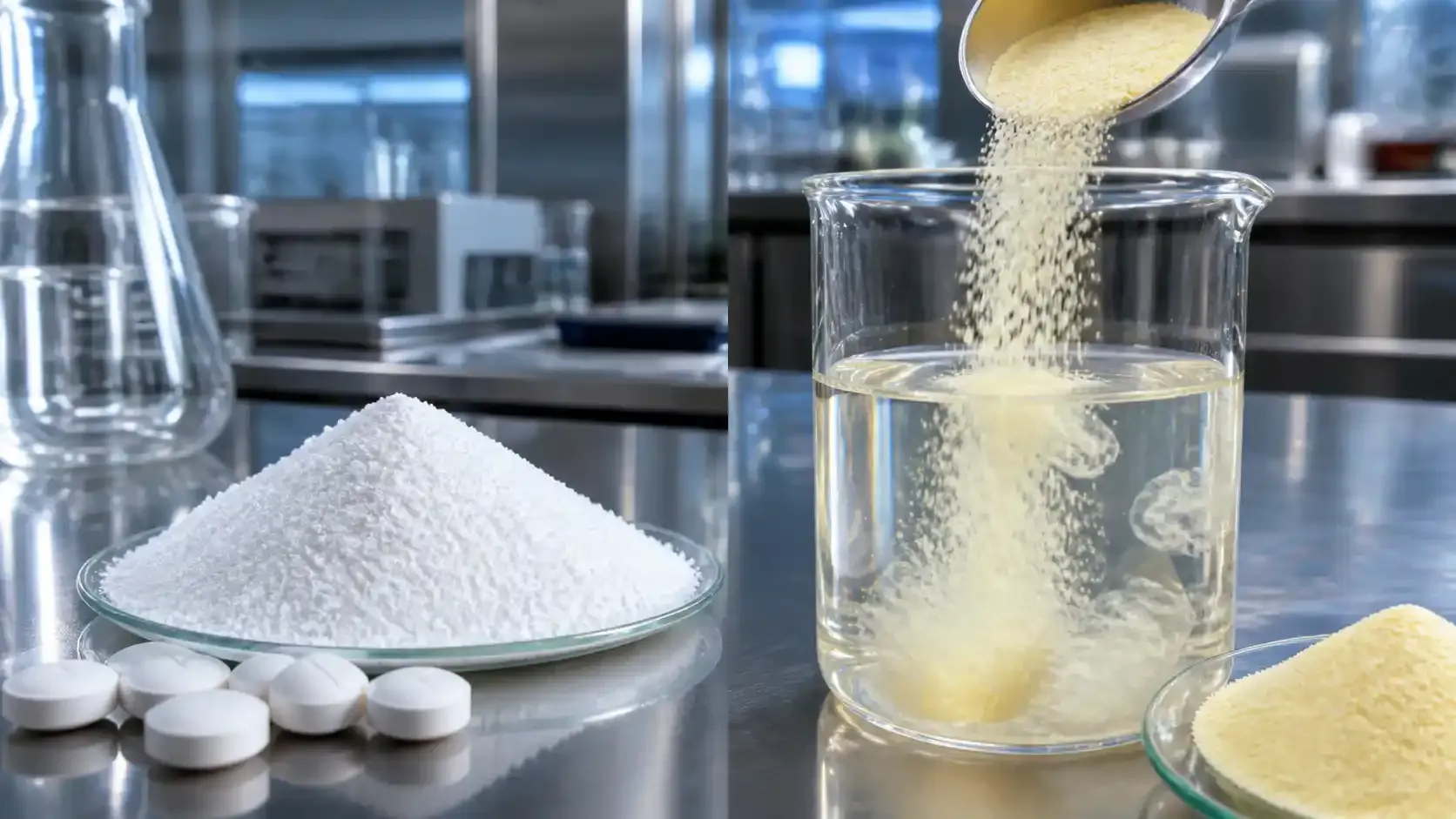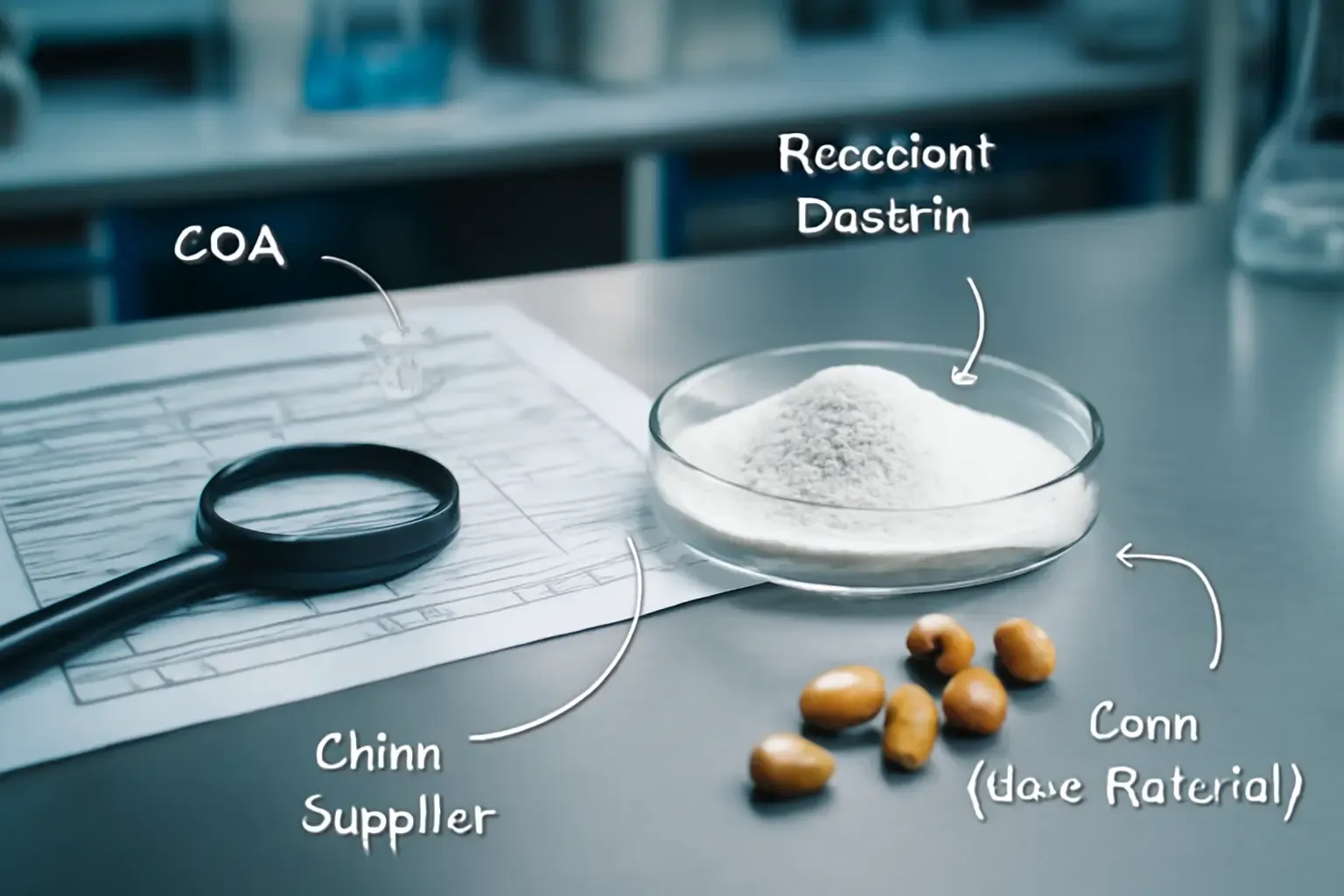
Fiber-forward product briefs are no longer limited to simply adding a little inulin and moving on. Procurement teams are increasingly asked to support low-sugar, keto-friendly, and clean-label launches with ingredients that perform seamlessly in processing, stay completely neutral in taste, and hold up to rigorous facility audits. In that reality, resistant dextrin—often positioned alongside soluble corn fiber—has become a short-list staple, especially for beverage powders, confectionery, and specialized nutrition blends. This guide is written strictly from a sourcing and quality perspective. It explains what resistant dextrin is in practical terms, how corn-based and tapioca-based options differ, and how to accurately read a Certificate of Analysis (COA) before approving a China resistant dextrin supplier. It also closes with a formulation-aware note on why some buyers strategically pair soluble fibers with microcrystalline cellulose (MCC) in solid formats.


The Market Shift Towards Advanced Soluble Fibers
The global transition toward functional foods has fundamentally altered how manufacturers view dietary fiber. Historically, ingredients like inulin dominated the market. While effective as a prebiotic, inulin often presents formulation challenges, including high viscosity in liquids and a tendency to cause gastrointestinal discomfort or bloating at functional dosages. Procurement departments are now pivoting toward resistant dextrin to solve these precise issues.
Resistant dextrin is a low molecular weight, water-soluble dietary fiber produced through the controlled heating and enzymatic treatment of starch. This highly specialized process breaks the starch molecules down while simultaneously forming new, indigestible bonds. Because human digestive enzymes (such as amylase and glucoamylase) cannot break these bonds, the fiber passes largely intact through the small intestine and into the large intestine, where it acts as a premium prebiotic. For procurement professionals, the value proposition is clear: resistant dextrin delivers the highly sought-after dietary fiber claims without compromising the organoleptic properties—taste, texture, and mouthfeel—of the final consumer product. It dissolves completely clear, remains stable under low pH and high-temperature processing, and imparts virtually zero flavor.
Strategic Sourcing: Corn vs. Tapioca Origins
When sourcing resistant dextrin from China, buyers are primarily presented with two botanical origins: corn starch and tapioca (cassava) starch. Understanding the nuances between these two raw materials is critical for aligning procurement strategy with brand positioning.
Maize Dextrin Fiber (Corn-Based)
Corn is the industry workhorse. Derived from premium, ideally Non-GMO corn starch, this variant offers exceptional supply chain stability and cost-effectiveness. High-quality Chinese manufacturers source their corn starch from top-tier domestic agricultural producers, ensuring a consistent baseline. Corn-based resistant dextrin is incredibly versatile, making it the go-to choice for mainstream functional beverages, low-calorie dietary supplements, and keto-friendly food applications. Its neutral taste profile and reliable performance make it the default standard for most R&D teams.
Tapioca Maltodextrin (Cassava-Based)
Tapioca-based resistant dextrin is extracted from the root of the cassava plant. While functionally very similar to its corn counterpart—boasting high solubility and a neutral taste—tapioca carries distinct labeling advantages. It is naturally gluten-free and highly appealing to brands targeting the ultra-clean label, paleo, or hypoallergenic markets. Consumers who actively avoid corn-derived products due to dietary sensitivities or personal preferences often gravitate toward tapioca. For procurement teams supporting premium or niche product lines, securing a reliable stream of tapioca-based resistant dextrin can provide a significant competitive edge on the retail shelf.
Mastering the COA: Non-Negotiable Quality Metrics
Approving a new supplier requires far more than a cursory glance at a product specification sheet. The Certificate of Analysis (COA) is the definitive proof of a manufacturer's capability. When evaluating a batch of resistant dextrin, procurement and QA teams must scrutinize several critical parameters to ensure the ingredient will perform as expected.
Total Fiber Content
The primary reason for purchasing resistant dextrin is its fiber yield. A premium supplier will guarantee a fiber content of ≥82% on a standard basis, often reaching ≥90.0% when measured on a strictly dry basis. If the fiber content dips below these thresholds, the manufacturer is likely using inferior enzymatic processes, resulting in a product that is more simple carbohydrate than functional fiber.
Protein Content
Residual protein is a direct indicator of refinement quality. Top-tier resistant dextrin should possess a protein content of ≤6.0%. Elevated protein levels suggest incomplete purification, which can lead to Maillard browning during high-heat processing (such as baking or pasteurization) and introduce off-notes in flavor-sensitive beverage applications.
Appearance and Solubility
The physical characteristics of the powder dictate its ease of use on the factory floor. The powder should range from pristine white to a very light yellow. Furthermore, water solubility must be exceptionally high (often rated at 70% or greater for rapid dispersion). A high-quality resistant dextrin will exhibit low hygroscopicity—meaning it resists pulling moisture from the air—which prevents caking during transit and extends the shelf life of both the raw ingredient and the finished good.
Evaluating Manufacturers: The Anatomy of a Tier-1 Supplier
The Chinese market is vast, and the disparity between a commodity trader and a true tier-1 manufacturer is massive. When conducting supplier audits or desk-based evaluations, specific manufacturing standards separate the elite from the average.
Advanced Enzymatic Processing
The creation of resistant dextrin relies heavily on biological enzymes. Elite manufacturers do not compromise here; they frequently import advanced biological enzymes from leading international biotechnology firms to ensure precise, selective enzymatic hydrolysis. This careful control maximizes the indigestible fiber yield while maintaining the structural integrity of the ingredient.
Automated Precision Equipment
Consistency batch-to-batch is the hallmark of a reliable supply chain. Buyers should seek out manufacturers operating fully automated, unmanned production lines. Facilities equipped with precision production lines of German origin, combined with rigorous Japanese craftsmanship standards, represent the pinnacle of quality control. From raw material feeding to final product filling, a central control operation eliminates human error and guarantees a sterile, consistent output.
GMP Compliance and QA Infrastructure
Operating within Good Manufacturing Practice (GMP) standard workshops is non-negotiable. Beyond the production floor, a fully equipped, state-of-the-art QC laboratory is essential. The supplier must be capable of running comprehensive checks on water activity, heavy metals, microbiology, and fiber assay internally before any product is released for export.
Formulation Synergy: Pairing Soluble Fibers with MCC
While resistant dextrin excels in liquid and powder applications, transitioning to solid formats like tablets and capsules introduces mechanical challenges. Dietary fibers, by their nature, can sometimes lack the binding cohesiveness required for high-speed tableting.
This is where formulation synergy becomes crucial. Expert R&D teams frequently pair soluble fibers with Microcrystalline Cellulose (MCC). While the resistant dextrin delivers the functional health benefits—such as blood sugar regulation, satiety, and prebiotic gut support—the MCC acts as the structural backbone. MCC provides exceptional compressibility and binding properties, ensuring the tablet holds its form without crumbling, while still allowing for rapid disintegration once ingested. Understanding this synergy allows procurement teams to source complementary ingredients intelligently, often consolidating their supply chain by purchasing both premium excipients and functional fibers from a single, highly capable manufacturer.
Strategic Procurement Outcomes
Navigating the functional ingredients landscape requires a balance of technical knowledge and strategic foresight. By insisting on rigorous COA standards, understanding the raw material nuances between corn and tapioca, and auditing for advanced, automated manufacturing capabilities, procurement teams can secure a supply chain that elevates their brand's product offerings.
For procurement teams seeking a reliable partner that natively understands and meets all the stringent criteria outlined above—from Non-GMO raw materials and German-engineered production lines to rigorous COA compliance and robust R&D support—Shandong Shine Health Co., Ltd. stands out as a premier manufacturer of dietary and soluble fibers. To explore their comprehensive portfolio of resistant dextrin, request detailed specifications, or consult on formulation synergies, visit their official platform at www.sdshinehealth.com.