In procurement, "dietary fiber" can look straightforward on a label—until an RTD beverage turns hazy, a nutrition bar dries out, or a bakery reformulation loses its volume. That is why resistant dextrin and soluble corn fiber deserve a closer, specification-first review. Both can deliver meaningful fiber in a wide range of foods and supplements, but real-world performance heavily depends on the specification lines that buyers often skim. This guide explains how digestion-resistant dextrin behaves in formulations, what a ≥82% fiber specification actually signals, and how to accurately read a resistant dextrin technical data sheet without guessing.

What Resistant Dextrin Means in Practical Formulation Terms
Resistant dextrin is a starch-derived, water-soluble dietary fiber engineered to resist digestion in the small intestine. Because it is not fully broken down by human digestive enzymes, digestion-resistant dextrin reaches the colon where it can be fermented by gut microbiota. For product developers, the headline is quite simple: resistant dextrin allows you to increase fiber content with minimal impact on taste and viscosity.
Most commercial resistant dextrin originates from corn starch (frequently specified as non-GMO). Controlled enzymatic processing alters the structure of the carbohydrate chains, ensuring it behaves more like a soluble fiber than a standard carbohydrate ingredient.
It is also crucial to distinguish between categories within the supply chain:
- Regular maltodextrin: Commonly used as a carrier or bulking carbohydrate; typically digested rapidly.
- Resistant maltodextrin / digestion-resistant dextrin: Specifically designed for digestion resistance; positioned as a functional soluble dietary fiber.
- Soluble corn fiber: Often utilized as a consumer-friendly name on finished product labels; however, in sourcing, the exact specifications and documentation carry more weight than the commercial naming.
Why Soluble Corn Fiber Performs Differently Than Traditional Fibers
From a formulator's perspective, soluble corn fiber remains highly favored because it helps achieve "high fiber" targets while remaining neutral in flavor and manageable in texture. Traditional fibers often introduce grittiness, overwhelming sweetness (in the case of certain prebiotic fibers), or excessive thickening that completely disrupts beverage mouthfeel.
In various beverage and nutrition formats, procurement teams select soluble corn fiber and resistant dextrin for three highly practical reasons:
- Low viscosity at useful dosages: Supports a clean, smooth mouthfeel in RTDs, nutritional powders, and yogurt drinks.
- High compatibility: Exceptionally easy to pair with proteins, active acids, complex flavors, and intense sweetener systems.
- Processing tolerance: Industry suppliers typically position resistant dextrin as heat-stable and acid-stable, which is critical for pasteurization, retort processing, and commercial baked goods.
What a ≥82% Fiber Specification Actually Signals
A fiber content ≥82% line is standard on a resistant dextrin technical data sheet, but buyers should treat this metric as a starting point rather than the complete picture.
Fiber Content Versus Total Fiber on a Dry Basis
Some documentation lists fiber content ≥82%, while other sections might reference total fiber ≥90.0% (dry basis). These figures are not inherently contradictory; rather, they reflect different analytical bases or reporting conventions.
For procurement teams, the most actionable approach involves:
- Confirming which specific test method is used (as stated on the supplier’s TDS/COA package).
- Verifying whether the reported value is as-is or on a dry basis.
- Requesting batch COAs that strictly align with the claims on the resistant dextrin technical data sheet.
Why "High Fiber" Is Not the Only Performance Lever
Even when resistant dextrin achieves a high fiber percentage, its performance in beverages and bakery applications relies heavily on supporting parameters—particularly protein levels, moisture-related indicators, and overall solubility behavior.
A standard specification set typically includes:
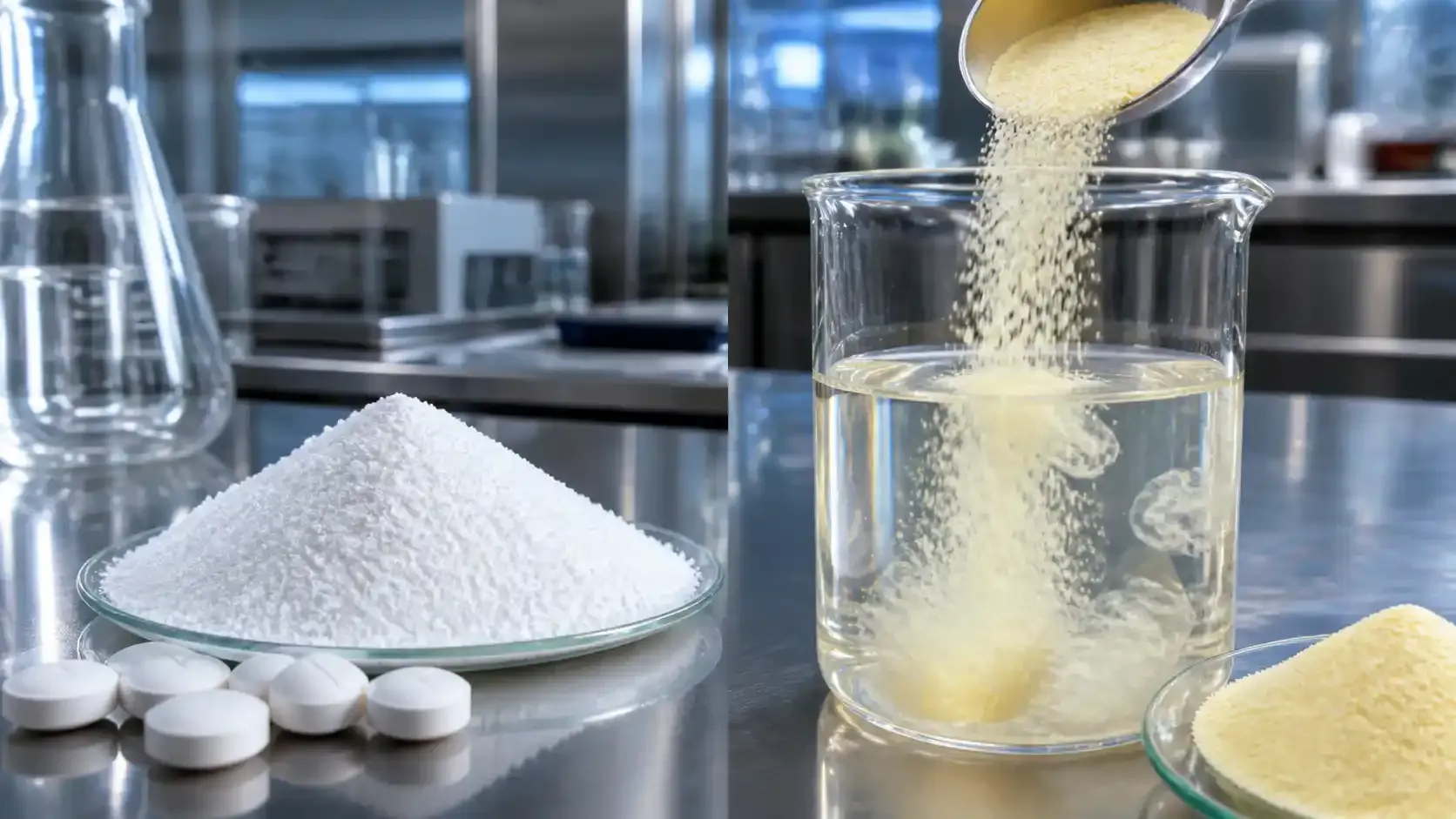
- Appearance: White to light yellow
- Fiber content: ≥82%
- Total fiber (dry basis): ≥90.0% (when specified)
- Protein: ≤6.0%
- Solubility: Frequently presented as 70% solubility
- Water activity: Described as low to ensure storage stability
- Hygroscopicity: Described as no caking
Ultimately, approving resistant dextrin purely based on the fiber percentage risks overlooking the critical lines that predict handling, warehouse storage, and final sensory outcomes.
Reading a Resistant Dextrin Technical Data Sheet Correctly

Below is a buyer-oriented framework to interpret common lines on a resistant dextrin technical data sheet and COA. The intent is to connect each parameter directly to a real formulation or logistics consequence.
| TDS / COA Parameter | Typical Value | What It Influences in Application |
|---|---|---|
| Appearance | White to light yellow | Visual acceptance in powders and light-colored matrices; crucial for clear beverages depending on the dosage. |
| Fiber content | ≥82% | Labeling strength and dosage efficiency for on-pack fiber claims. |
| Total fiber (dry basis) | ≥90.0% | Facilitates fair comparison among suppliers utilizing different reporting bases. |
| Protein | ≤6.0% | Ensures a cleaner flavor profile and lowers the risk of off-notes; minimizes browning risk in thermal applications. |
| Solubility | 70% | Dictates dissolution behavior in powders/RTDs; heavily impacts mixing time and potential sediment formation. |
| Water activity | Low | Promotes shelf-life friendliness and significantly reduces clumping risks during storage. |
| Hygroscopicity | No caking | Streamlines warehouse handling, hopper flow dynamics, and rework risks. |
Two practical verification habits consistently yield better sourcing results:
- Match marketing claims to batch documents: A supplier's web page serves as an introduction, but the actual COAs must dictate final approval.
- Request a consistent testing panel per lot: Stable COA formatting enables accurate trend reviews across multiple global shipments.
How Digestion-Resistant Dextrin Functions in Formulas
Buyers and R&D teams typically seek answers to two primary questions: "Will it formulate cleanly?" and "Will it support the intended nutritional positioning?"
Digestive Tract Functionality
Digestion-resistant dextrin is inherently designed to pass through the small intestine with minimal enzymatic breakdown. Upon reaching the large intestine, it undergoes fermentation by gut bacteria. Industry data frequently highlights resistant dextrin as a key component in supporting gut microbiota balance and digestive regularity. In a typical product brief, this translates to:
- Fiber enrichment without introducing heavy, undesirable thickening.
- Satiety-friendly positioning for weight management product lines (carefully avoiding medical claims).
- A functional "prebiotic" angle, assuming it is supported by the supplier’s technical documentation and regional regulatory frameworks.
Processing Line Stability
In manufacturing environments, resistant dextrin and soluble corn fiber are favored because they maintain excellent stability across:
- Intense heat steps (commercial baking, UHT, and pasteurization).
- Moderately acidic beverage environments.
- Complex multi-ingredient matrices (blending proteins, sweeteners, and active flavors).
This robust stability explains why resistant dextrin routinely appears across beverages, bakery items, and dietary supplements—acting as the functional ingredient that effortlessly meets fiber targets without necessitating a complete formula overhaul.
Application Roles in Beverages, Bakery, and Supplements
This section maps the typical functional roles rather than dictating fixed dosages, as actual inclusion rates depend entirely on nutritional targets, sensory constraints, and local labeling regulations.
Beverages and Medical Nutrition Formats
In RTDs and powdered drink mixes, resistant dextrin is predominantly selected for its remarkably low impact on liquid viscosity. Buyers actively evaluate:
- Dissolution speed and optical clarity at the intended usage level.
- Long-term stability within acidic pH ranges.
- Potential interactions with complex protein systems (such as whey or plant-based proteins).
Furthermore, high-quality resistant dextrin is frequently utilized in medical nutrition applications (e.g., enteral feeding formulas) where soluble fiber is strictly required to support continuous digestive function.
Bakery, Cereals, and Nutritional Bars
Within the baked goods sector, resistant dextrin is strategically positioned to:
- Substantially increase dietary fiber while preserving a familiar consumer texture.
- Support optimal moisture retention, yielding a softer crumb structure.
- Noticeably reduce the perception of staling over an extended shelf life.
Supplements and Weight Management Powders
In stick packs and powdered supplements, digestion-resistant dextrin acts as a reliable soluble fiber backbone that blends seamlessly and maintains the stability of delicate flavor systems. When brands target weight management positioning, the focus naturally shifts toward the ingredient's documented satiety support.
Non-GMO Positioning and Documentation Verification
The term "Non-GMO" often serves as a decisive procurement requirement for premium finished products. However, the true workload for buyers lies in rigorous verification, rather than merely accepting a label claim.
When evaluating non-GMO resistant dextrin or non-GMO soluble corn fiber, a comprehensive and practical document set should invariably include:
- A clear ingredient identity and raw material statement (e.g., explicitly stating non-GMO corn starch).
- A batch COA that perfectly aligns with the official resistant dextrin technical data sheet.
- Robust quality system certificates relevant to target markets and stringent customer audits.
Leading supplier materials will also reference critical certifications such as FSSC, HACCP, Halal, and Kosher, alongside independent non-GMO verification where applicable.
What Procurement Should Look For in a Modern Fiber Plant
Identifying a capable supplier involves moving beyond polished product pages and examining actual operational readiness. Buyers typically rely on a combination of advanced process signals and impeccable paperwork.
Common process indicators demonstrated by leading global suppliers include:
- Imported enzyme technology utilized within controlled enzymatic processing stages.
- A precision production line (often of German origin) ensuring high consistency.
- Fully automated central control systems spanning from raw material feeding to final packaging, drastically reducing human variability and contamination risks.
- A dedicated QC laboratory tasked with conducting repeatable incoming, in-process, and comprehensive finished product testing.
These operational details are paramount because the performance of resistant dextrin is highly sensitive to consistency. Even minor processing shifts can manifest as detrimental solubility differences, unpredictable caking behavior, or unwanted flavor carryover.
Where Microcrystalline Cellulose Fits in Sourcing
Many procurement teams source soluble fibers and advanced texturizers simultaneously. It is important to note that Microcrystalline cellulose (MCC) is not a direct substitute for resistant dextrin. Instead, MCC serves as an insoluble, structure-building excipient often utilized for enhancing body, stabilizing suspensions, or optimizing tablet performance.
A practical sourcing takeaway: Apply the exact same evaluation discipline—rigorous COA reviews, audit readiness checks, and fit-for-application trials—across both soluble fibers and structural excipients.
Procurement Checklist for Approving Resistant Dextrin
Utilize this checklist as a final validation step before officially signing off on a new supplier, particularly when transitioning from pilot trials to full-scale commercial production.
- Confirm exactly how the fiber is reported: ≥82% (as-is) or ≥90% dry basis, ensuring your regulatory team applies the correct mathematical basis for labeling.
- Mandate a comprehensive resistant dextrin COA per lot that accurately mirrors the established technical data sheet.
- Scrutinize protein limits (ideally ≤6.0%) if maintaining a clean flavor and pristine color is critical to your application.
- Review key storage behavior indicators (e.g., low water activity, no caking) to safeguard warehouse handling operations.
- Validate actual solubility and mixing performance using your specific process water, temperature parameters, and shear conditions.
- For non-GMO soluble corn fiber, meticulously verify the complete documentation trail.
- Interrogate how the manufacturing plant controls batch consistency (automation scope, QC lab protocols, and full traceability).
Strategic Sourcing Insights for Buyers
Resistant dextrin and soluble corn fiber have firmly secured their place in modern low-sugar, high-fiber product development by enabling significant fiber increases without forcing major sensory compromises. However, the safest and most successful procurement approvals stem from strict specification literacy: understanding precisely what a ≥82% fiber metric implies, verifying the applicability of a ≥90% dry basis claim, and strictly matching the resistant dextrin technical data sheet to real-world batch COAs.
For procurement teams aiming to build a resilient and reliable supply chain, partnering with an experienced manufacturer is critical. To explore high-quality, fully documented dietary fiber solutions that meet these stringent industry standards, buyers can review the comprehensive product portfolio at Shandong Shine Health Co., Ltd.