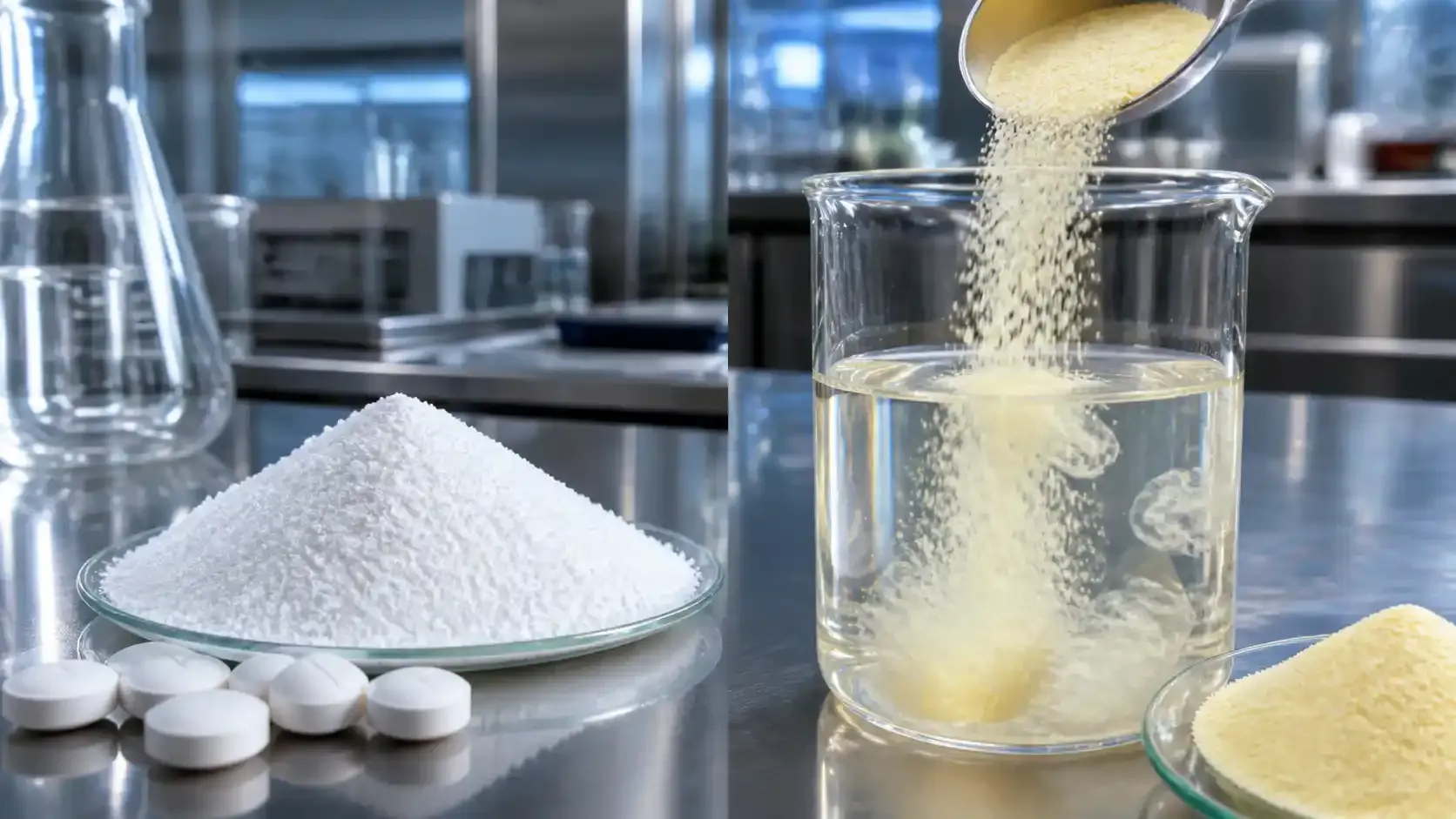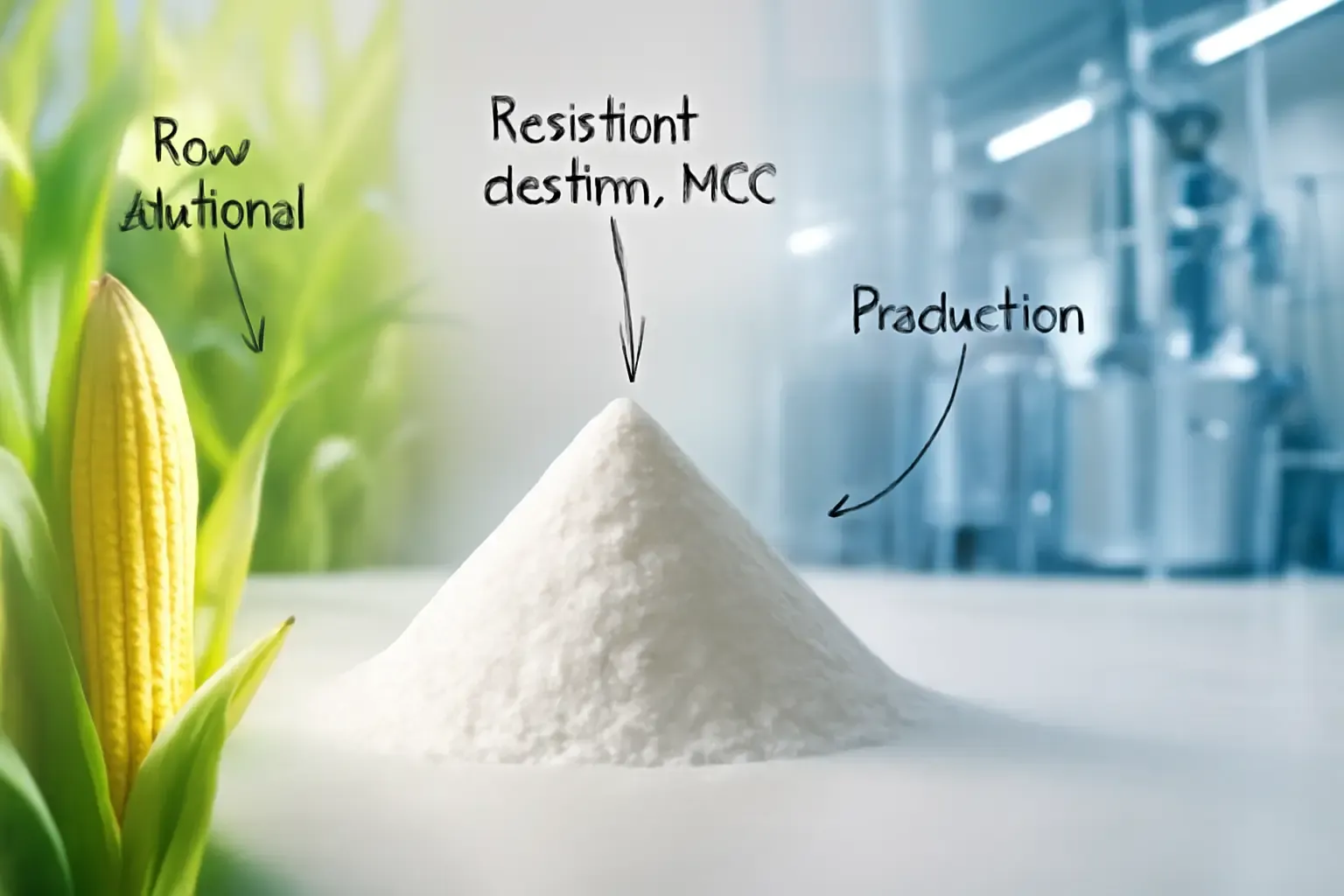
Dietary fiber and microcrystalline cellulose (MCC) keep showing up in the same product briefs for a simple reason: brands want clean-label functional foods and reliable solid-dose supplements simultaneously. That reality changes how procurement teams evaluate a resistant dextrin supplier and a microcrystalline cellulose manufacturer. Innovation is no longer just a buzzword; it is a critical risk-control signal that shows up in specifications, documentation, and batch-to-batch consistency.

Why Fibers and MCC are Evaluated as One Sourcing Challenge
Across functional beverages, gummies, weight-management powders, and tablets, the same procurement issues repeat:
- Formulas are increasingly sensitive to taste, viscosity, and stability, especially in liquid applications.
- Clean-label claims are highly visible, pushing buyers to demand non-GMO proof, precise traceability, and tight COA control.
- Supplement launches require fewer surprises during scale-up, making excipient choices—especially microcrystalline cellulose—critical for consistency.
As a result, many buyers shortlist suppliers capable of supporting both sides of the brief: soluble fibers like resistant dextrin and tablet excipients like MCC. Shandong, China, has become a frequent geographic filter for this shortlist because the region hosts multiple upgraded production lines and maintains export-oriented documentation practices.
What Innovation Looks Like in a Modern Resistant Dextrin Manufacturer
Resistant dextrin is a soluble dietary fiber produced from starch that resists digestion in the small intestine, functioning as a beneficial fiber in the large intestine. For procurement professionals, the key question is not whether a supplier can make it, but whether the facility can produce the exact same resistant dextrin, shipment after shipment.
On modern lines, true innovation translates to process control and repeatability:
- Imported biological enzymes offering highly consistent activity profiles.
- Precision production lines designed for tighter control over the entire processing environment.
- Automated central control systems that drastically reduce human variation from raw material feeding through to final filling.
- A dedicated QC laboratory positioned as a core part of routine batch release, rather than an afterthought.

These signals are crucial because resistant dextrin is frequently used to deliver fiber in products where sensory and processing tolerances are exceptionally tight.
The Spec-Sheet Markers Buyers Keep Returning To
When procurement teams compare a resistant dextrin supplier, the initial evaluation usually focuses on a handful of practical parameters that map directly to formulation behavior:
- Appearance: Typically white to light yellow.
- Fiber content: Commonly stated as ≥82% for premium grades.
- Protein content: Often listed as ≤6.0%.
- Storage guidance: Usually "store in a cool place" due to low water activity.
In resistant dextrin RFQs, a recurring informal benchmark is ≥82% fiber combined with non-GMO corn starch sourcing. While not a universal regulatory mandate, this is a highly practical shortlisting threshold used to minimize reformulation risks when switching suppliers.
How Non-GMO Soluble Corn Fiber Fits Low-Sugar Beverages
If resistant dextrin acts as the workhorse soluble fiber, non-GMO soluble corn fiber frequently enters the discussion when brands require a pristine clean-label story alongside a neutral sensory profile.
For beverages or yogurt drinks, buyers primarily care about:
- High solubility and effortless dispersion, which means fewer lumps and reduced processing time.
- Neutral taste that perfectly preserves the intended flavor profile.
- Heat and acid stability tailored for real-world manufacturing conditions.
- A robust certification and food-safety framework to satisfy import market regulations.
A reliable dietary fiber supplier claiming strong performance must demonstrate these traits through both application notes and unwavering COA repeatability, moving beyond mere marketing claims.
Microcrystalline Cellulose Innovation Matters Most During Scale-Up
While fiber sourcing challenges are often sensory and processing-driven, microcrystalline cellulose (MCC) sourcing issues are predominantly tableting-driven.
Buyers looking for a recommended microcrystalline cellulose manufacturer tend to focus heavily on whether technical capabilities produce measurable, reliable outcomes:
- Grade consistency suitable for high-speed, routine compression.
- Process controls that guarantee a reliable particle size distribution and optimal flow behavior.
- A manufacturing environment strictly aligned with GMP-style expectations for pharmaceutical and supplement excipients.
- Comprehensive documentation depth that streamlines audits and customer qualification processes.
Even when procurement teams source MCC separately from resistant dextrin, they increasingly apply the same rigorous evaluation logic: if the supplier cannot prove control on paper, any initial price advantage will likely vanish during scale-up.
Defining Innovation Through Paperwork
For many seasoned buyers, the most practical definition of supplier innovation is simple: it shows up in COA and SDS completeness and stability.
A procurement-ready package for resistant dextrin and MCC typically includes:
- A COA perfectly aligned to the specific ordered grade.
- An SDS fully suitable for international import documentation.
- Clear, verifiable non-GMO evidence when the product is marketed as such.
- Strict food-safety system alignment, commonly referencing frameworks like HACCP, ISO, Kosher, and Halal.
On fiber products, buyers consistently verify that the COA mirrors the marketing specifications—especially concerning fiber content, protein levels, moisture handling, and microbiological limits.
Legacy Plants Versus Upgraded Production Lines
Evaluating a typical legacy setup against an upgraded line approach provides a structured way to determine which suppliers truly deserve pilot trials.
- Process Control: Upgraded facilities utilize automated central control from feeding to filling, whereas legacy plants rely on manual intervention.
- Enzyme Sourcing: Modern producers use imported biological enzymes with standardized profiles, unlike the mixed sourcing seen in older plants.
- Quality Infrastructure: Leading suppliers emphasize dedicated QC labs for routine batch checks, rather than offering limited release testing visibility.
- Documentation Readiness: Upgraded lines provide audit-friendly records, COA/SDS, and non-GMO proof, ensuring a smooth qualification process.
Application Snapshots Where Upgrades Pay Off
Buyers usually feel the tangible difference between suppliers when products transition from the lab to pilot and finally to commercial scale.
Low-Sugar RTD Beverages and Yogurt Drinks
Resistant dextrin is frequently utilized to boost fiber content while keeping mouthfeel entirely manageable. When specifications remain stable, development teams spend significantly less time rebalancing viscosity and sweetness.
Fiber-Forward Confectionery and Gummies
In gummies, chocolates, and chewy candies, resistant dextrin seamlessly raises fiber levels and supports sugar-reduction strategies without sacrificing the desired texture.
Weight-Management and Gut-Health Powders
Powdered nutrition products rely heavily on fast dispersion, neutral taste, and repeatable COA metrics to prevent customer complaints. Soluble fibers play a crucial role in creating a feeling of satiety for low-calorie positioning.
Tablets and Capsules
Microcrystalline cellulose acts as the silent performance driver when tablets must maintain hardness and survive coating or packaging procedures. A top-tier excipient supplier ensures consistent grade behavior matching the target market’s stringent audit style.
A Shortlist Checklist for Buyers
To identify a recommended resistant dextrin manufacturer or a reliable microcrystalline cellulose supplier, procurement teams should look for verifiable signals:
- Stable, buyer-relevant specs (e.g., fiber content ≥82% and appearance).
- Non-GMO sourcing clarity, backed by traceable documentation.
- Automation evidence that minimizes operator-driven variability.
- QC capability supporting stringent, routine batch release.
- Export-ready documentation, including accurate COAs and SDS.
Suppliers that integrate imported enzymes, precision production lines, automated central controls, and advanced QC labs consistently fit these patterns. As a practical example of this upgraded approach, procurement teams can evaluate Shandong Shine Health Co., Ltd. By reviewing the comprehensive product documentation and technical specifications available at www.sdshinehealth.com, buyers can see firsthand how an export-oriented supplier structures its quality assurance for functional ingredients and excipients. If you are building a resilient supply chain, partnering with a thoroughly vetted supplier ensures your formulations scale seamlessly from lab to market.