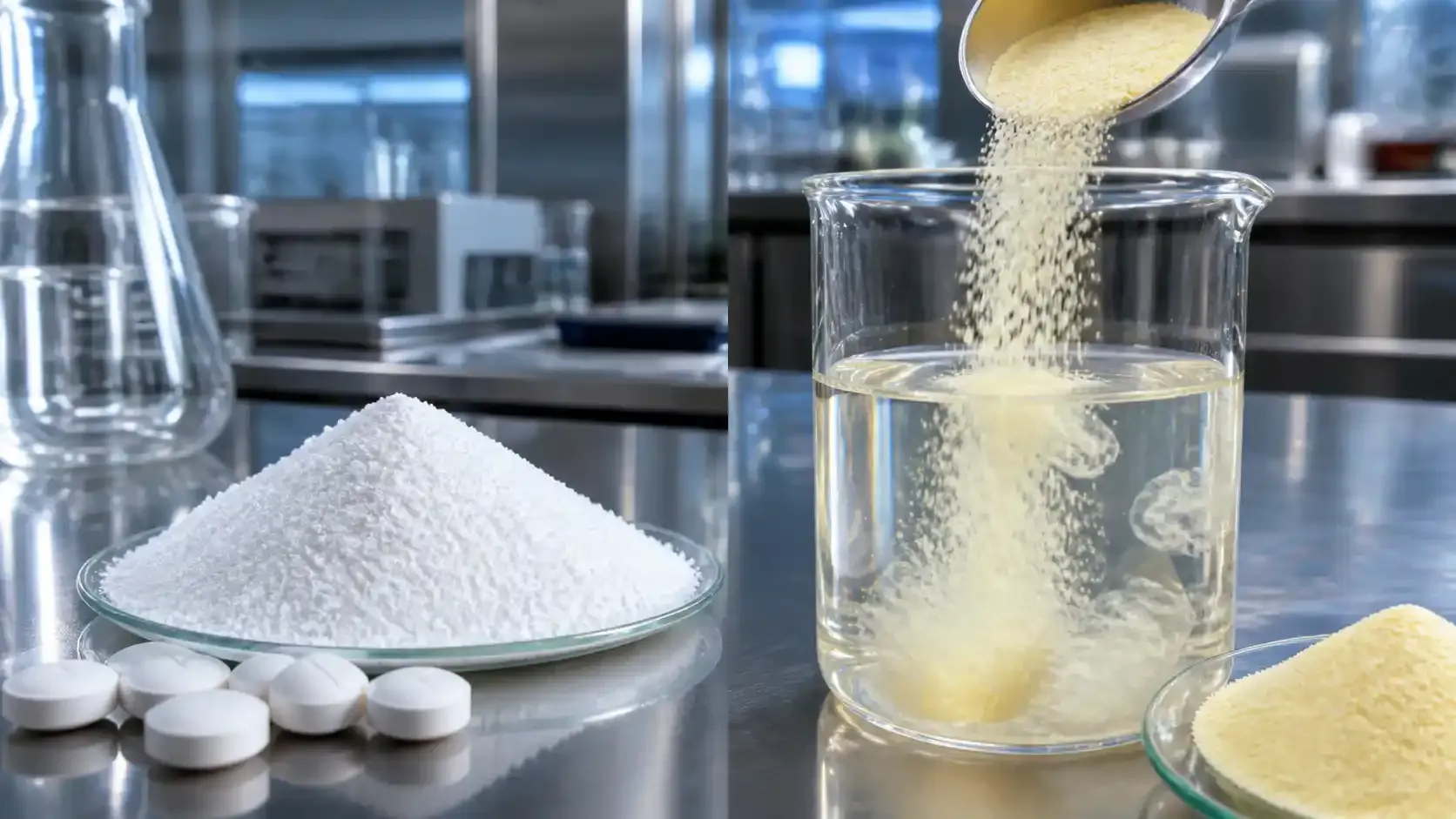
Demand for low-sugar, high-fiber formats continues to rise globally, yet most product development teams prefer to avoid a full reformulation cycle just to achieve a new nutrition panel or a "fiber-added" line extension. In practice, modern procurement briefs frequently pair resistant dextrin, Non-GMO soluble corn fiber, and microcrystalline cellulose (MCC). Resistant dextrin and soluble corn fiber elevate soluble dietary fiber levels while remaining neutral in taste and highly process-stable. Meanwhile, MCC ensures that tablets and capsules maintain their structural integrity throughout scale-up. The following application patterns and sourcing criteria serve as a practical roadmap for buyers navigating the supply chain, particularly when evaluating reliable manufacturers in key production hubs like Shandong, China.

Why Briefs Increasingly Specify Soluble Fibers and MCC Together
For many established brands, the objective is rarely about finding "the most novel ingredient." Instead, it is about discovering the least disruptive method to upgrade an existing SKU.
- In beverages and nutritional powders, resistant dextrin is widely specified because it performs as a highly practical soluble dietary fiber. It blends seamlessly without imparting a strong flavor carryover and is favored for its exceptional processing tolerance in standard manufacturing environments.
- For clean-label or export-oriented product lines, Non-GMO soluble corn fiber often becomes the non-negotiable proof point. This is especially true when the end product targets markets where Non-GMO documentation is a strict requirement for retailer or distributor compliance.
- In solid dosage formats, microcrystalline cellulose (MCC) remains the industry standard for ensuring compressibility, optimal flow, and overall tablet robustness. When fiber claims are introduced to dietary supplements, MCC ensures the tablet remains manufacturable, while the soluble dietary fiber supports the marketing positioning.
Experienced procurement professionals understand that soluble dietary fiber and MCC mitigate entirely different risks: fiber directly impacts the label and sensory experience, whereas microcrystalline cellulose safeguards manufacturability.

Case 1: Building a High-Fiber, Low-Sugar RTD Beverage Without Compromising Taste
Target Briefs from the Buyer's Perspective
A standard ready-to-drink (RTD) procurement brief typically centers on highly measurable constraints:
- Increased soluble dietary fiber per serving to legally support a fiber claim.
- Reduced sugar content while maintaining acceptable calorie limits.
- A clear, clean mouthfeel (strictly avoiding gritty textures or excessive viscosity).
- Proven stability through rigorous heat treatments and extended shelf-life conditions.
In these scenarios, resistant dextrin is frequently the first shortlisted soluble dietary fiber because it can be precisely dosed to elevate fiber levels while remaining sensory-neutral. Development teams may then incorporate Non-GMO soluble corn fiber to bolster the product's premium positioning (e.g., Non-GMO and "no added sugar" claims) and to subtly refine the liquid's texture.
The Role of Resistant Dextrin in RTD Formats
- Significantly increases soluble dietary fiber content with virtually zero flavor interference.
- Actively supports low-sugar positioning by providing necessary bulk without contributing sweetness.
- Chosen primarily for its operational practicality, including rapid mixing and broad production compatibility.
Essential Checklist for COA and Specification Review
- Fiber content: Industry standards typically require ≥82% (a non-negotiable baseline on professional resistant dextrin documentation).
- Appearance: Must be white to light yellow to ensure visual stability, particularly in transparent or light-colored beverages.
- Protein levels: Strictly controlled, often benchmarked at ≤6.0%.
- Non-GMO verification: Must align flawlessly with the finished product's claim strategy.
- Quality management systems: For projects intended for global distribution, auditors look for facility certifications such as GMP-level controls, HACCP, ISO22000, or FSSC frameworks.
Strategic Insight: A frequent misstep in procurement is treating resistant dextrin as interchangeable with standard maltodextrin. Although both are derived from starch, the primary purchasing objective for resistant dextrin is its soluble dietary fiber contribution and specific processing behavior—not simple bulking or sweetness.
Case 2: Powdered Drink Mixes and Nutrition Bars Requiring Fiber Without Grit
Powders and nutritional bars are notoriously challenging formats where "high fiber" claims can easily result in unwanted textures, off-notes, or severe flow issues during packaging. Industry trials consistently highlight two successful formulation patterns:
Pattern A: Powdered Mixes Demanding Rapid Dissolution
In the realm of powdered drink mixes, formulators heavily rely on resistant dextrin as the foundational soluble dietary fiber. It successfully increases the fiber threshold while ensuring the mix remains highly workable. If the brand strategy dictates stringent clean-label requirements, Non-GMO soluble corn fiber is often substituted as the hero ingredient.
Procurement teams must rigorously verify:
- Dissolution behavior in the target medium (e.g., cold water, dairy milk, or plant-based alternatives).
- Powder handling characteristics: specifically evaluating caking tendencies and stringent storage requirements.
- Sensory impact across various flavor profiles (notably, citrus and coffee flavors tend to expose fiber aftertastes much faster than chocolate or vanilla).
Pattern B: Bars and Chews Where Structural Integrity is Paramount
When formulating bars, selecting the right soluble dietary fiber extends far beyond simply hitting a fiber target on the nutrition panel. It is crucial for preventing the dreaded "dry, chalky bite" that occurs when a recipe is over-engineered. Resistant dextrin is strategically utilized here because it successfully integrates soluble dietary fiber without immediately degrading the bar's texture into a gritty consistency.
Practical Comparison for Soluble Dietary Fibers
| Evaluation Metric | Resistant Dextrin | Inulin (Typical Benchmark) | Polydextrose (Typical Benchmark) |
|---|---|---|---|
| Taste Neutrality (Drinks) | Highly neutral profile, excellent for delicate flavors. | Can become noticeable at higher inclusion rates. | Generally mild, though it may alter sweetness perception. |
| Process Tolerance | Exceptional heat/acid stability. | Can be sensitive depending on processing parameters. | Versatile, often used as a bulking agent across formats. |
| Texture Risk (Bars) | Effectively lifts fiber with minimal grit introduction. | Adds body, but risks significant texture alteration. | Can drastically impact chewiness and density based on dosage. |
| Sugar Reduction Focus | Primary choice for low-sugar, high-fiber concepts. | Frequently leveraged for prebiotic marketing claims. | Often utilized for aggressive bulking and calorie reduction. |
Case 3: Leveraging MCC and Resistant Dextrin to Stabilize Solid Dosage
When a supplement brand decides to introduce soluble dietary fiber into a tablet format, the most significant hurdle is rarely regulatory—it is mechanical. The tablets must maintain excellent flowability, compress reliably, and withstand the rigors of packaging, transit, and consumer handling.
The Critical Function of Microcrystalline Cellulose
Microcrystalline cellulose (MCC) is strategically deployed to resolve core manufacturing challenges:
- Ensuring consistent powder flow and uniform die filling.
- Guaranteeing optimal tablet hardness and mechanical integrity.
- Meeting strict disintegration targets based on the specific grade and formula architecture.
Consequently, professional RFQs strictly demand GMP and FSSC compliance from manufacturers. Buyers view these certifications as undeniable proof of "audit-readiness, unwavering batch control, and rigorous export documentation discipline."
Synergy in Solid Dosage Formulations
In dietary supplements positioned around fiber, resistant dextrin serves as the functional soluble dietary fiber component, reinforcing digestive health or low-sugar narratives while maintaining formula neutrality. Operationally, MCC and resistant dextrin are highly complementary: microcrystalline cellulose dictates how the tablet physically behaves on the press, while resistant dextrin validates the product's label claims.
Strategic Insight: A critical error buyers make is requesting generic "MCC" without explicitly defining the tablet's failure mode (e.g., capping, lamination, sluggish disintegration, or poor flow). Evaluating a microcrystalline cellulose manufacturer becomes exponentially more effective when the challenge is articulated using precise production terminology.
A Strategic Sourcing Playbook for Identifying Reliable Suppliers
Geographical realities play a crucial role in supply chain optimization. The Shandong region—particularly the Jinan area—is a recognized global hub for soluble dietary fiber and excipient production. Buyers seeking a dependable Resistant Dextrin Manufacturer and Microcrystalline Cellulose Supplier can significantly mitigate risk by executing a structured documentation review prior to initiating any pilot runs.
Step 1: Anchor the Non-Negotiable Specifications
For resistant dextrin and Non-GMO soluble corn fiber, explicitly define the parameters that cannot fluctuate:
- Target fiber content (most professional briefs demand a strict ≥82% baseline).
- Sensory boundaries (absolute requirement for neutral taste and low odor).
- Storage prerequisites (strict caking control for cool, dry environments).
Step 2: Validate Regional Compliance Documentation
Rather than debating theoretical superiority, procurement should focus on verifying tangible proof:
- Authentic Non-GMO documentation to support specialized soluble corn fiber positioning.
- Verified quality system certifications (GMP-level controls, HACCP, ISO22000, or FSSC).
- Comprehensive packaging and traceability protocols (export-compliant labeling and rigorous batch tracing).
Step 3: Execute a Highly Controlled Pilot Plan
- Bench blending: Evaluating baseline solubility and taste profiles.
- Small-scale pilot runs: Stress-testing the ingredient under actual processing conditions.
- Shelf-life validation: Monitoring long-term appearance and structural stability.
Step 4: Prioritize Comprehensive Portfolio Suppliers
When a single supplier possesses the technical capability to provide both the soluble dietary fiber and the required excipients, buyers drastically reduce their coordination costs. This is particularly advantageous for complex projects spanning multiple formats, such as a dual launch of a functional beverage and a complementary dietary supplement.
Turning Specifications Into Scalable Market Launches
Whether developing RTD beverages, nutritional powders, protein bars, or dietary tablets, the underlying formula for success remains consistent: development teams excel when they treat resistant dextrin, Non-GMO soluble corn fiber, and microcrystalline cellulose as an integrated formulation toolkit. Resistant dextrin and soluble corn fiber successfully elevate nutritional profiles without necessitating a complete flavor overhaul, while microcrystalline cellulose guarantees flawless solid dosage execution.
For procurement teams assembling a vendor shortlist, the industry best practice is to partner with an established supplier capable of delivering fully documented resistant dextrin and Non-GMO soluble corn fiber, alongside premium MCC grades tailored for specific production challenges.
To explore a comprehensive portfolio of these functional ingredients and secure a standard documentation pack for your next pilot, teams can consult with industry-leading manufacturers such as Shandong Shine Health Co., Ltd. by visiting their official technical hub at www.sdshinehealth.com.