A buyer-focused guide to reading specs and COAs for Chinese resistant dextrin and microcrystalline cellulose, with practical checkpoints for sourcing.
Procurement teams are entering 2026 with a challenging new reality: the demand for “accessible nutrition” is aggressively pushing everyday formats—coffee blends, nutritional shakes, functional gummies, bars, and tablets—toward significantly higher fiber claims, cleaner sensory profiles, and steadier supply chains. Two specific ingredients repeatedly operate behind the scenes to make these formulations possible: resistant dextrin (a soluble dietary fiber) and microcrystalline cellulose (MCC, the industry's workhorse excipient and texturizer).
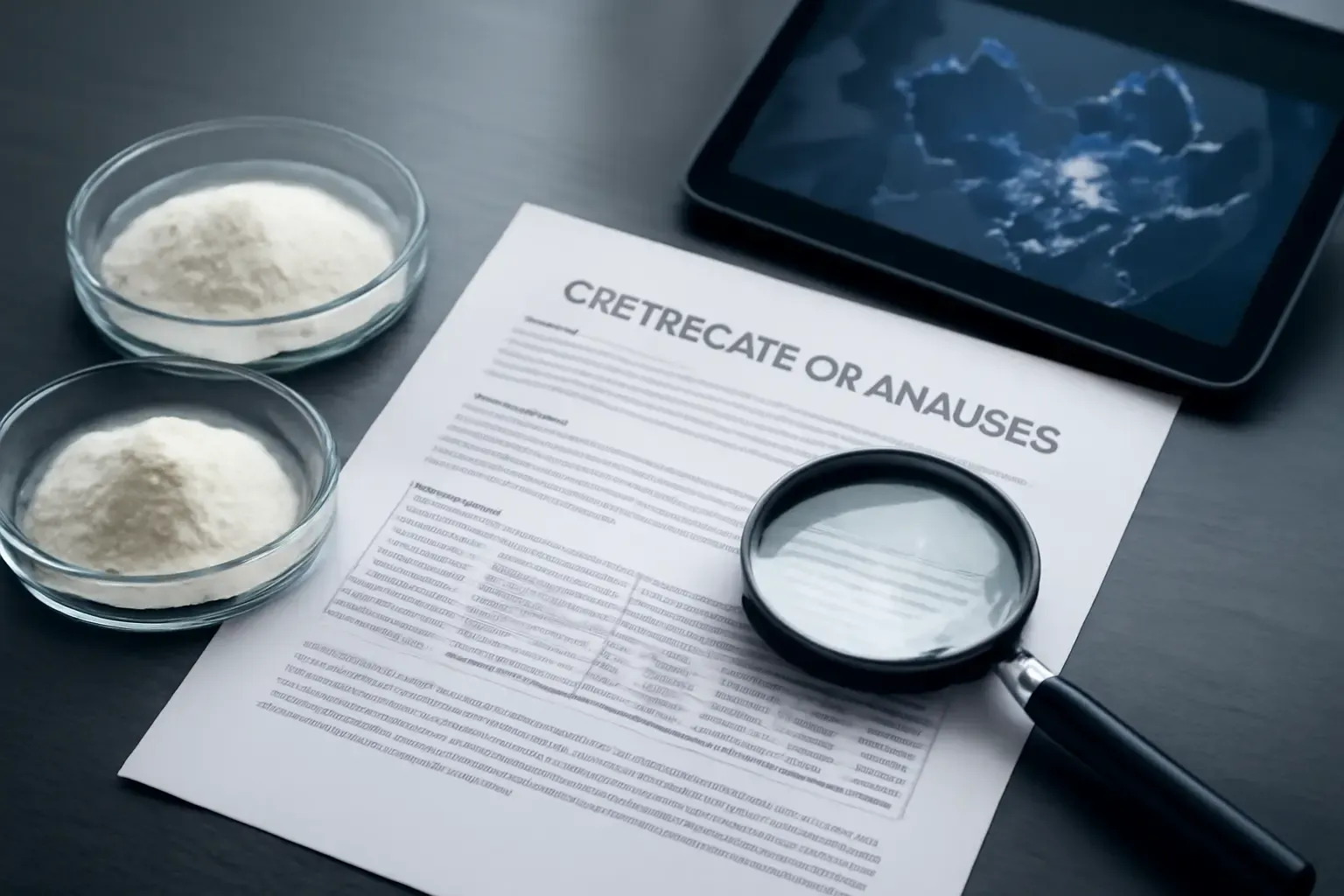
However, supply chain visibility remains a hurdle. If your sourcing plan involves China—as it does for a vast majority of the global volume—the fastest way to avoid costly reformulation delays and quality rejections is to learn how to read a China COA (Certificate of Analysis) like a technical buyer, not like a marketer. This guide breaks down the critical checkpoints.
Why 2026 Buyers Must Read Specs More Literally
Resistant dextrin and microcrystalline cellulose are both “quiet” ingredients. They rarely headline the front label of a finished product, yet they possess the power to make or break performance on the production line.
- Resistant dextrin is the secret to supporting higher fiber claims while maintaining a neutral taste, low viscosity, and predictable mixing behavior in beverages and powders. It allows brands to boost nutritional profiles without altering the flavor consumers love.
- Microcrystalline cellulose is the structural backbone supporting tablet integrity, flowability, and robust processing—essential traits when a formulation must survive global transport, humidity swings, and high-speed automated filling lines.
China remains a dominant origin for both ingredients. Consequently, the skill that separates a highly recommended Chinese microcrystalline cellulose supplier from an average commodity trader—and a top-tier Chinese resistant dextrin manufacturer from a middleman—is often found on a single page: the Certificate of Analysis (COA).
Resistant Dextrin Fundamentals: Aligning on Function
Resistant dextrin is commonly described as a soluble dietary fiber derived from starch (typically corn or tapioca). However, for purchasing decisions, the chemical name matters less than the functional profile it delivers at realistic usage levels in the factory.
Understanding the Difference: Resistant Dextrin vs. Maltodextrin
Unlike conventional digestible maltodextrin, resistant dextrin is engineered to resist digestion in the small intestine, thereby functioning effectively as a dietary fiber. In practical sourcing terms, a reliable resistant dextrin dietary fiber supplier is expected to provide a powder that meets three non-negotiable criteria:
- Dissolves Cleanly: There should be no haze or sediment surprises when the ingredient is used in products marketed as “clear” or “smooth.”
- Remains Stable: It must withstand typical pH fluctuations and heat ranges used in modern food processing without degrading.
- Maintains Viscosity: It should add fiber content without inadvertently turning a Ready-to-Drink (RTD) beverage into a “thick shake,” unless that texture is explicitly desired.
For buyers seeking “fiber without the sensory tax,” this functional separation is exactly why specific resistant dextrin manufacturer China searches have become a routine part of procurement diligence.
The Four Parameters That Decide Pass or Fail
Export-oriented Chinese plants typically control resistant dextrin production using a tight set of parameters. A professional procurement review invariably starts with these four lines on the spec sheet:
- Fiber Content (≥82%): This is often treated as a non‑negotiable baseline. A value below this suggests incomplete hydrolysis or higher sugar content, which can compromise caloric claims.
- Moisture (<6%): This is a critical indicator for shelf-life and flowability. Excess moisture can lead to caking during ocean transit, turning free-flowing powder into unusable bricks.
- Protein (≤6.0%): A common COA line item in this category. Keeping protein low is essential for flavor neutrality and reducing potential allergen concerns in pure fiber applications.
- Solubility: Frequently specified as very high (buyers often request >98% or “clear solution”) to ensure the ingredient disappears into the liquid matrix.
These values are consistent with high-standard industry listings, such as those found on Shine Health resistant dextrin pages, where fiber content ≥82% and protein ≤6.0% are standard benchmarks. To see how these parameters are presented in a supplier format, you can compare product pages such as resistant dextrin and low calorie dietary fiber.
Where Resistant Dextrin Wins in Formulations
A specialized resistant dextrin dietary fiber supplier becomes most valuable when the formulation requires significant fiber enrichment but cannot tolerate strong tastes, grit, or high viscosity. Typical application targets include:
- Functional Beverages: Coffee mixes, nutrition drinks, and “light” RTDs where texture must remain thin.
- Powdered Nutrition: Easy-mix formats where sediment at the bottom of the shaker bottle is unacceptable.
- Confectionery Concepts: Fiber-enriched gummies and soft chews where sugar reduction is the goal.
Category pages from suppliers like Shine Health illustrate these positioning patterns across variants like keto-friendly resistant dextrin and nutritional dietary fiber powder.
Certifications Buyers Commonly See (and What They Signal)
- GMP: Indicates a controlled production environment and documented procedures (crucial for excipients).
- ISO 22000 / FSSC 22000 / HACCP: Signals structured food safety management systems are in place.
- Halal / Kosher: Essential for export-market compatibility across specific customer segments.
- BRC: Often requested by Western brands with strict supplier approval programs.
On pages for products like resistant tapioca dextrin, certifications such as ISO9001, BRC, HALAL, HACCP, and KOSHER are explicitly mentioned as key indicators of export readiness.
Microcrystalline Cellulose (MCC): Grading Matters
Microcrystalline cellulose is a purified, partially depolymerized cellulose widely used across solid dosage forms and specific food systems. For sourcing professionals, the main takeaway is simple: microcrystalline cellulose is a grade-driven ingredient. The grade is not merely a marketing detail; it defines the product's physical behavior.
MCC is a Family of Grades, Not One Ingredient
Most buyers recognize MCC by common “PH” grades (for example, PH-101 vs. PH-102). Even without listing every proprietary grade, a recommended Chinese microcrystalline cellulose manufacturer must be able to articulate how particle size and flow properties affect:
- Direct Compression Performance: Can the powder form a tablet without wet granulation?
- Blend Uniformity: Will the active ingredients distribute evenly?
- Tablet Hardness and Friability: Will the tablet hold together during packaging?
- Disintegration Behavior: Will it break down in the stomach as intended?
If the application is pharmaceutical, the discussion must quickly move from generic “MCC” to pharmacopeial compliance (USP/EP/BP) and quality systems. This is why many seasoned buyers start their search with “China pharmaceutical excipient suppliers” rather than just the ingredient name.
A practical starting point for non-specialists is industry literature, such as the MCC Grades Formulation and QC Guide, which frames MCC selection as a QC and application-fit exercise rather than a commodity purchase.
Food Grade vs. Pharma Grade: A System Decision
Microcrystalline cellulose in foods often acts as a texturizer or stabilizer, but MCC pharma grade is usually held to stricter documentation and system expectations. When a buyer writes “MCC pharma grade supplier China” in a Request for Quotation (RFQ), the supplier should be prepared to clarify:
- Which pharmacopeial standards the grade is manufactured to meet.
- Which specific test items are routinely included in every batch COA.
- Which GMP controls and QC lab capabilities are part of the final release process.
Production Standards: How Chinese Plants Ensure Quality
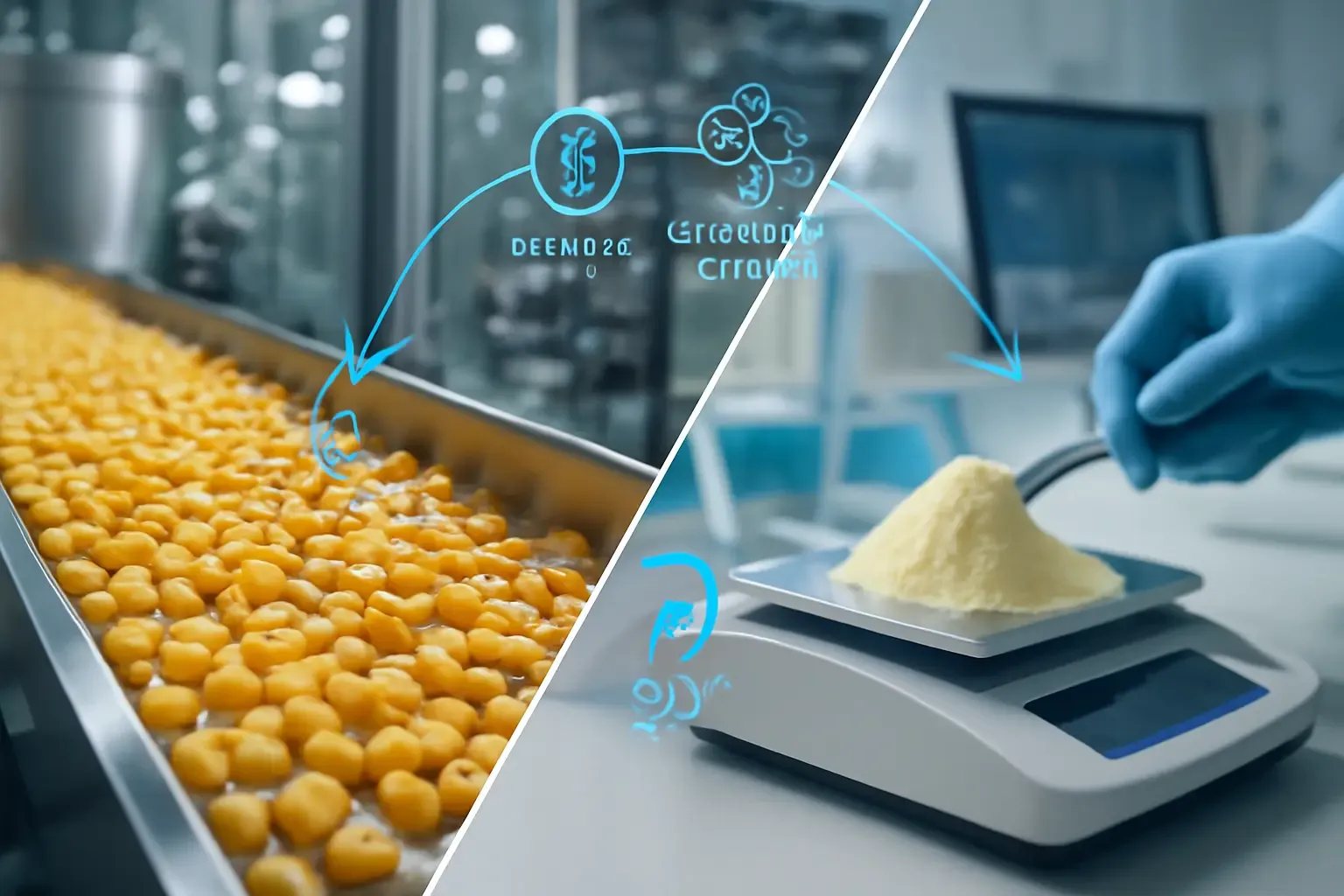
China’s export-ready resistant dextrin capacity is increasingly built around sophisticated starch conversion technology and tight process control. Leading manufacturers have moved beyond basic processing to adopt advanced systems that ensure batch-to-batch consistency. In product documentation from suppliers like Shine Health, recurring manufacturing themes often include:
- NON‑GMO Corn Starch: Used as the primary raw material to meet global clean-label demands.
- Imported Biological Enzymes: Utilization of advanced enzymes from overseas to ensure precise hydrolysis.
- Automated Central Control: Full automation from raw material feeding to finished product filling, reducing human error.
- Precision Equipment: Production lines often featuring German-origin machinery and Japanese craftsmanship techniques.
- GMP Standard Workshops: Clean environments paired with fully equipped QC laboratories for in-process and final release checks.
The goal for the buyer is not to memorize equipment brands, but to link these process controls to repeatable COA outcomes.
For pages for products like resistant tapioca dextrin, certifications such as ISO9001, BRC, HALAL, HACCP, and KOSHER are explicitly mentioned as key indicators of export readiness.
The COA Reading Checklist for China Suppliers
A COA should help a buyer answer one fundamental question: Will this batch behave exactly like the last batch in my target application? Use the checklist below to screen both a resistant dextrin manufacturer and a microcrystalline cellulose supplier.
COA Lines to Prioritize for Resistant Dextrin
When reviewing resistant dextrin COAs from China, smart buyers prioritize these specific lines:
- Fiber Content: Confirm it meets the ≥82% threshold if that is the purchase spec.
- Moisture: Verify it is <6% to ensure stability during shipping.
- Solubility / Clarity: Request the specific method or acceptance criteria if it is not explicitly shown on the document.
- Appearance: "White to light yellow" is the industry standard description.
- Microbial Limits: Critical for beverage and powder formats where no further kill-step exists.
- Storage Conditions: Look for clear instructions like “store in a cool place,” which appears consistently in professional supplier listings.
If a product is positioned for specific dietary trends, such as low-carb formats, confirm the labeling strategy aligns with the supplier’s documentation. For instance, keto-friendly resistant dextrin is often positioned as a soluble fiber that supports low-carb diets because it is indigestible and does not contribute to net carbs.
COA Lines to Prioritize for Microcrystalline Cellulose
For microcrystalline cellulose, the COA must prove that the grade is not just generic “MCC,” but the correct functional grade for your machinery:
- Grade Identification: The exact grade name (e.g., PH-101) must match the Purchase Order.
- Loss on Drying (LOD): Directly linked to flow and compression behavior; critical for tablet presses.
- Particle Size Distribution: Linked to blend uniformity and potential dusting issues.
- Bulk Density / Tapped Density: Essential for calculating die fill volume and capsule filling weights.
- Microbial Profile: Especially vital when MCC is used in nutraceutical formats.
- Compliance Statement: A clear declaration of compliance for the intended market (USP/EP/JP) is non-negotiable for pharma applications.
For teams building a list of recommended Chinese microcrystalline cellulose suppliers, these COA lines are often paired with a short questionnaire on change control to ensure no unannounced process shifts occur.
How Resistant Dextrin and MCC Complement Each Other
Buyers often evaluate resistant dextrin and microcrystalline cellulose in tandem because the commercial reality is that many “fiber-forward” products now span both food and supplement formats.
A Quick Sourcing Comparison
| Buying Factor | Resistant Dextrin | Microcrystalline Cellulose |
|---|---|---|
| Primary Role | Soluble dietary fiber for health claims | Excipient and texturizer for solid forms |
| Sensory Impact | Neutral taste, typically low viscosity | Neutral, but influences mouthfeel/texture |
| Solubility | Designed to dissolve well in water systems | Insoluble; selected for structure & processing |
| Critical COA Lines | Fiber %, moisture, solubility, micro | Grade, moisture, particle size, density |
| Typical Formats | RTD beverages, powders, gummies, bars | Tablets, capsules, chewables; some foods |
In practice, resistant dextrin helps a beverage or powder hit the nutritional fiber target, while microcrystalline cellulose ensures tablets and capsules survive the scale-up process. This synergy is why a “recommended Chinese resistant dextrin manufacturer” and a “recommended Chinese microcrystalline cellulose supplier” tend to be evaluated as a pair in multi-format product pipelines.
A Streamlined Sourcing Route
This approach is intentionally lightweight—useful when a buyer is narrowing options from a long list and doesn't have the resources for an immediate full audit.
- Start with the Application: Define the target (clear RTD vs. gummy vs. tablet) before discussing the ingredient name.
- Lock the Non-Negotiables: Put specific specs in writing (e.g., Fiber ≥82%, Moisture <6% for dextrin; correct Grade and Compliance for MCC).
- Audit the Paperwork: Ask for a recent COA and a typical spec sheet, then cross-reference them to ensure they align.
- Verify Raw Materials: Confirm the origin story. For resistant dextrin, NON‑GMO corn starch is a frequent and valid request.
- Check Factory Signals: Look for evidence of GMP workshops, active QC labs, and consistent documentation practices.
For buyers who want a benchmark of how export-oriented documentation should be structured, exploring the resistant tapioca dextrin pages or other resistant dextrin formats provides a solid reference point.
The Bottom Line for 2026 Sourcing
In the current market, “recommended” rarely equates to the cheapest option on the list. For a resistant dextrin manufacturer or a microcrystalline cellulose supplier in China to be reliably recommended, the proof is usually found in the boring details: stable COAs, clear grade control, and production systems that keep moisture, fiber content, and performance consistent from batch to batch.
For procurement professionals looking to compare resistant dextrin documentation styles across multiple product variants or to find a supplier that meets these rigorous standards, the resistant dextrin hub on www.sdshinehealth.com serves as an excellent reference point for screening and selecting reliable partners.