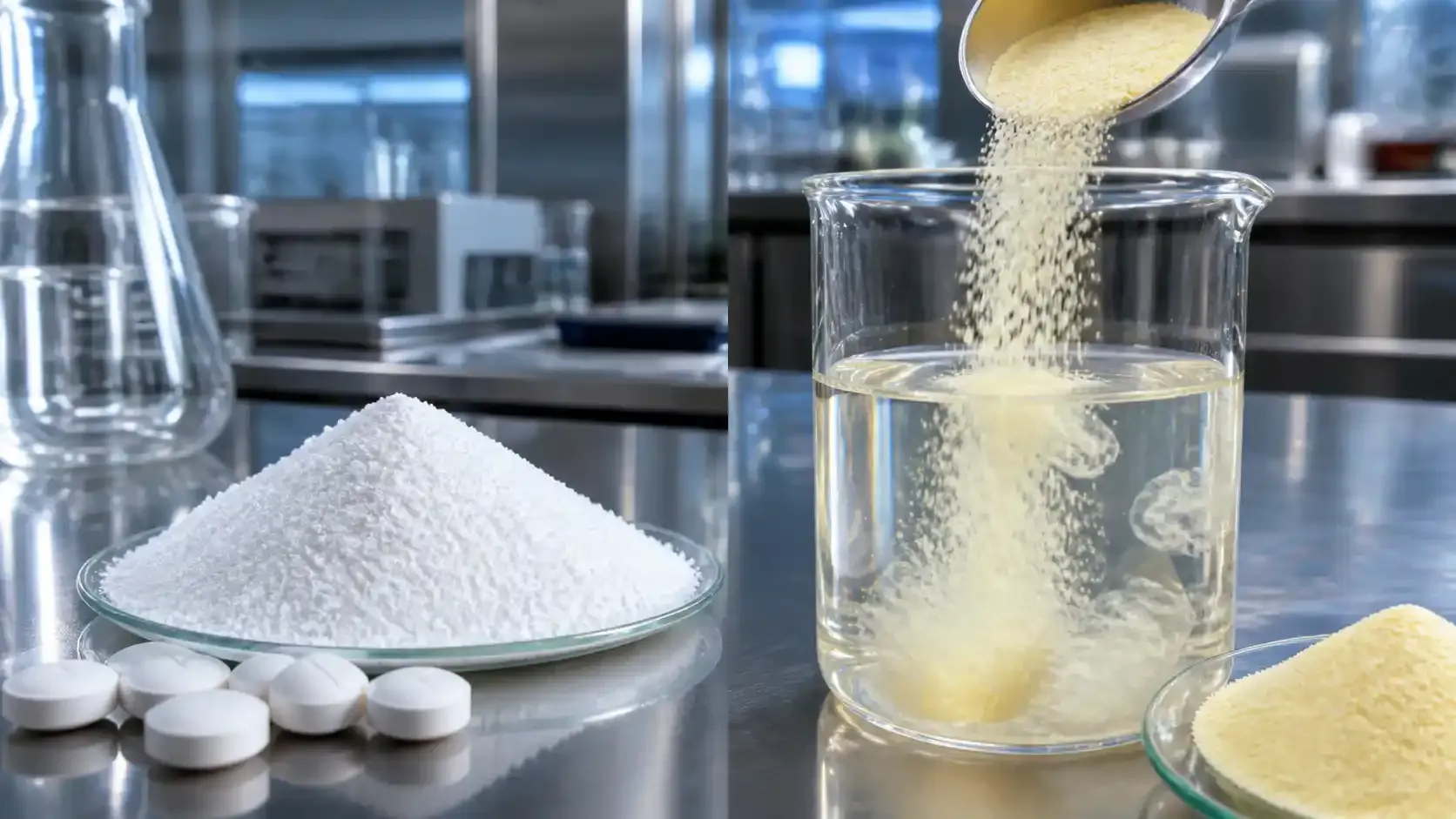
A buyer looking for a China resistant dextrin supplier is rarely just purchasing “fiber.” They are securing a repeatable performance essential for beverages, powders, gummies, and low-carb foods—along with the paperwork and process control that ensure product launches stay on schedule. The same logic applies when the bill of materials includes MCC pharmaceutical grade excipients: the correct particle behavior and comprehensive documentation often outweigh a marginally lower initial quote.

This guide translates common procurement risks into a practical shortlist method. It focuses on two ingredient families frequently sourced together from Asia-Pacific producers: resistant dextrin for fiber-first formulations and microcrystalline cellulose (MCC) for tablets, capsules, and multi-format nutrition products.
Why buyers are tightening supplier screening now
The market demand for clean-label, functional products continues to increase the volume of RFQs for soluble fiber and excipients. In practice, procurement teams are navigating a landscape defined by:
- More formula-sensitive projects: Clear RTD drinks, keto-friendly powders, and sugar-reduced confectionery require precise ingredient performance.
- More claim-sensitive labeling: Brands are strictly monitoring non-GMO positioning, fiber claims, and low-sugar validation.
- Less tolerance for batch drift: Inconsistencies such as clarity changes, viscosity shifts, off-notes, or flowability issues are no longer acceptable.
For a resistant dextrin supplier, these pressures manifest as stricter specification language, frequent requests for third-party testing, and deeper audits. Similarly, for a microcrystalline cellulose supplier China evaluation, buyers are demanding pharmacopeial alignment and solid evidence of dosage-form performance.
Translate fiber science into purchase specs that prevent rework
Resistant dextrin is typically positioned as a soluble dietary fiber that resists digestion in the small intestine and is fermented in the large intestine—a functionality buyers seek for satiety, glycemic support, and digestive health positioning. However, vague requests lead to inconsistent samples.
To purchase responsibly, you must turn “health benefits” into measurable, shipment-ready specifications. For many fiber-focused formulations, buyers start by aligning on the supplier’s core technical baseline, which often includes:
- Fiber content: A standard benchmark is resistant dextrin technical specifications ≥82 percent fiber (on a dry basis), ensuring the ingredient delivers the intended nutritional value.
- Protein limit: Many commercial specs reference a cap such as ≤6.0%, which is crucial for maintaining flavor neutrality and preventing off-notes in sensitive applications.
- Appearance: Typically white to light yellow powder, which indicates proper refining and drying processes.
- Solubility and pH: High-quality resistant dextrin should offer near 100% water solubility and remain stable across a pH range (often 4–5), making it versatile for acidic beverages.
- Storage expectations: Standard documentation usually advises to “store in a cool place” to maintain low water activity and prevent caking.
Examples of how suppliers present these baselines can be seen across resistant dextrin product families, such as resistant dextrin listings and application variants like nutritional dietary fiber powder and low calorie dietary fiber.
Add application-critical specs before you request quotes
A common sourcing mistake is asking multiple suppliers for generic “resistant dextrin” while omitting the parameters that dictate performance in the finished product. Before comparing offers from a China resistant dextrin supplier, define the application signals that matter most:
- Clarity targets: Essential for beverages, especially clear or lightly flavored RTDs where haze is unacceptable.
- Viscosity tolerance: Critical for high-dose fiber servings to ensure the drink doesn't become unpleasant to consume.
- Sweetness and taste neutrality: Vital for low-sugar systems where the fiber shouldn't alter the flavor profile.
- Process stability: Verify the ingredient can withstand your specific heat, acid, and storage conditions without degrading.
If your internal spec doesn’t include these items, the first pilot often becomes an expensive discovery exercise rather than a confirmation of suitability.
What robust China resistant dextrin suppliers tend to share
When buyers describe a “recommended” resistant dextrin supplier, they are usually describing a combination of raw material discipline, process control, and documentation maturity.
1) Raw material discipline that supports labeling and consistency
For many RFQs, the starting expectation is NON-GMO corn starch (or tapioca starch) as a controlled input. Reliable suppliers explicitly position non-GMO sourcing as a core feature across resistant dextrin-related offerings, including low-carb and keto-positioned variants. For procurement, the practical question is: can the supplier explain where the starch comes from, how it is qualified, and how batches are kept consistent?
A useful cross-check is whether the supplier’s product pages and application pages consistently reference the same raw material foundation. For example, in low-carb positioning, resistant dextrin is often presented as a fiber that helps reduce net carbs in finished foods; see Low Carb Food Additives for how suppliers frame resistant dextrin’s role in low-carb formulations.
2) Process signals that reduce batch-to-batch drift
From a buyer’s perspective, the strongest operational signals are those that reduce human variability and stabilize critical control points. High-quality production environments often feature:
- Imported biological enzymes: The use of advanced enzymes ensures consistent hydrolysis and fiber content.
- Precision production lines: Some suppliers cite German-origin machinery for spray drying and sieving, which contributes to uniform particle size.
- Advanced control systems: Look for fully automated central control covering everything from raw material feeding to final filling. This level of automation minimizes contamination risks and ensures that every bag meets the same spec.
Buyers do not need these phrases as marketing claims—they need them as prompts for verification. If the supplier mentions high automation, ask specific questions about which steps are automated and which still rely on manual handling.
3) QC labs and routine release evidence
A supplier’s internal QC lab matters only if it produces actionable release decisions and supports traceability. In practice, a shortlist-worthy resistant dextrin supplier should be able to provide:

- A per-lot Certificate of Analysis (COA) matching the negotiated spec.
- An up-to-date MSDS.
- Clear batch identification and traceability basics.
If your internal approval process requires it, build your RFQ template around an audit ready resistant dextrin COA and MSDS package—because missing documentation is one of the fastest ways to delay customs clearance, internal QA release, or customer label review.
Match resistant dextrin parameters to real product formats
Different product formats punish different weaknesses. Buyers can prevent most “surprise reformulations” by sourcing to format-specific needs.
Beverages and keto-friendly drinks
For beverage systems, the most common pain points are haze, slow dissolution, and a mouthfeel shift at higher dosing. Buyers sourcing for low-carb and keto beverages will usually prioritize:
- Fast dissolution: The powder must mix easily without clumping.
- Low viscosity impact: It should add body without making the drink thick or slimy.
- Taste neutrality: It must not introduce any off-flavors.
A representative application framing for keto-style use can be found at keto-friendly resistant dextrin.
Confectionery, gummies, and baked goods
In confectionery, fiber addition often fails because the ingredient changes texture, crystallization behavior, or processing tolerance. Buyers should look for suppliers who understand these interactions.
A fiber-forward positioning for confectionery can be reviewed at FIBER-FUL Confectionery (category context is provided in supplier materials). Buyers should request the supplier’s guidance on:
- Texture targets: Achieving the right chew, softness, or density in gummies and soft chews.
- Sugar reduction compatibility: How the fiber interacts when replacing sugar bulk.
- Crystallization prevention: In hard candies, resistant dextrin can help prevent crystallization, ensuring a smooth texture.
- Processing stability: The ingredient must survive high-heat cooking and cooling steps without degrading.
For baked goods, resistant dextrin variants are often selected for stability and label-friendly fiber addition; a product-family reference is resistant dextrins for baked goods.
Powders and weight-management formats
Powders and meal-replacement formats often prioritize “clean taste” and “easy mixing” because consumer rejection happens quickly when fiber creates grit or off-notes. Satiety is also a key functional benefit here.
For how resistant dextrin is positioned in weight-management use cases, see best fibre for weight loss.
Quick comparison table for fiber sourcing discussions
Use this table as a conversation starter when you are comparing line items from a dietary fiber bulk supplier China for beverages or when you need a second fiber option in the same program.
| Buyer decision lens | Resistant dextrin | Digestion-resistant maltodextrin | Polydextrose |
|---|---|---|---|
| Typical role in formulas | Soluble fiber enrichment with neutral taste | Soluble fiber functionality with detailed microbiological and chemistry specs often listed | Soluble fiber/bulking option used in reduced-sugar and low-calorie systems |
| Common buyer checkpoints | Fiber % (often ≥82%), taste neutrality, solubility | pH range, moisture/ash limits, microbial limits, solubility/viscosity behavior | Sweetness/bulking behavior, stability, documentation completeness |
| Useful starting pages for spec alignment | Resistant Maltodextrin | Digestion resistant maltodextrin | Polydextrose powder |
How to screen a microcrystalline cellulose supplier China for pharma and nutrition
While resistant dextrin sourcing is often driven by food and beverage performance, MCC is frequently sourced as an excipient that must perform in manufacturing—especially in tablets and capsules. A recommended Chinese microcrystalline cellulose manufacturer typically earns that status not by broad claims, but by showing control over three areas:
- Pharmacopeial alignment for intended markets: For MCC pharmaceutical grade sourcing, buyers commonly look for alignment with the pharmacopeias relevant to their registration strategy (often described as USP/EP/JP conformity expectations).
- Particle and flow control that matches the dosage form: Particle size distribution, flowability, and compressibility influence uniformity, tablet hardness, and downstream coating behavior.
- Performance verification rather than spec sheets alone: Tablet performance and processing stability should be supported by repeatable test methods and batch records.
For buyers who want a structured way to think about MCC selection and QC controls, industry notes such as MCC Grades Formulation and QC Guide and Microcrystalline Cellulose in Cosmetics are useful prompts for audit questions—especially when the same supplier group serves food, pharma, and personal care.
Documentation and pilot trials that protect bulk orders
Most sourcing failures are not caused by a single bad result; they are caused by missing evidence when multiple stakeholders (QA, regulatory, R&D, procurement) need to approve quickly.
Documentation pack to request from every shortlisted supplier
For each China resistant dextrin supplier and each microcrystalline cellulose supplier China candidate, buyers should standardize a request that includes:
- Latest COA for at least one recent lot (preferably multiple lots).
- Current MSDS.
- Stated test methods or internal standards used for key parameters.
- A basic statement of manufacturing standard (e.g., GMP workshop claims, ISO certifications like ISO9001, HACCP, Kosher, or Halal when applicable).
If a supplier cannot provide an audit ready resistant dextrin COA and MSDS package early, it is usually a sign that later onboarding will be slow.
A practical pilot approach for resistant dextrin programs
Instead of testing a single generic fiber, buyers can reduce reformulation risk by piloting two or three variants that map to the actual product pipeline:
- A baseline soluble fiber option from the resistant dextrin category.
- A processing-focused option such as indigestible maltodextrin or digestion resistant maltodextrin.
- A label-driven alternative such as organic dietary fiber powder or soluble tapioca fiber.
This pilot structure makes it easier to decide whether you need one long-term resistant dextrin supplier or a dual-sourcing strategy.
Closing shortlist rule for buyers
A shortlist-worthy China resistant dextrin supplier is the one that can prove the fiber spec you need, demonstrate stable process controls, and deliver documentation without repeated follow-ups. A reliable MCC partner is the one that can demonstrate pharmacopeial fit, particle behavior control, and dosage-form performance evidence.
For buyers building a supplier map, manufacturer knowledge hubs and product-family pages can be a practical starting point for screening and spec alignment. One example of a consolidated set of resistant dextrin variants and related fibers is available at www.sdshinehealth.com.