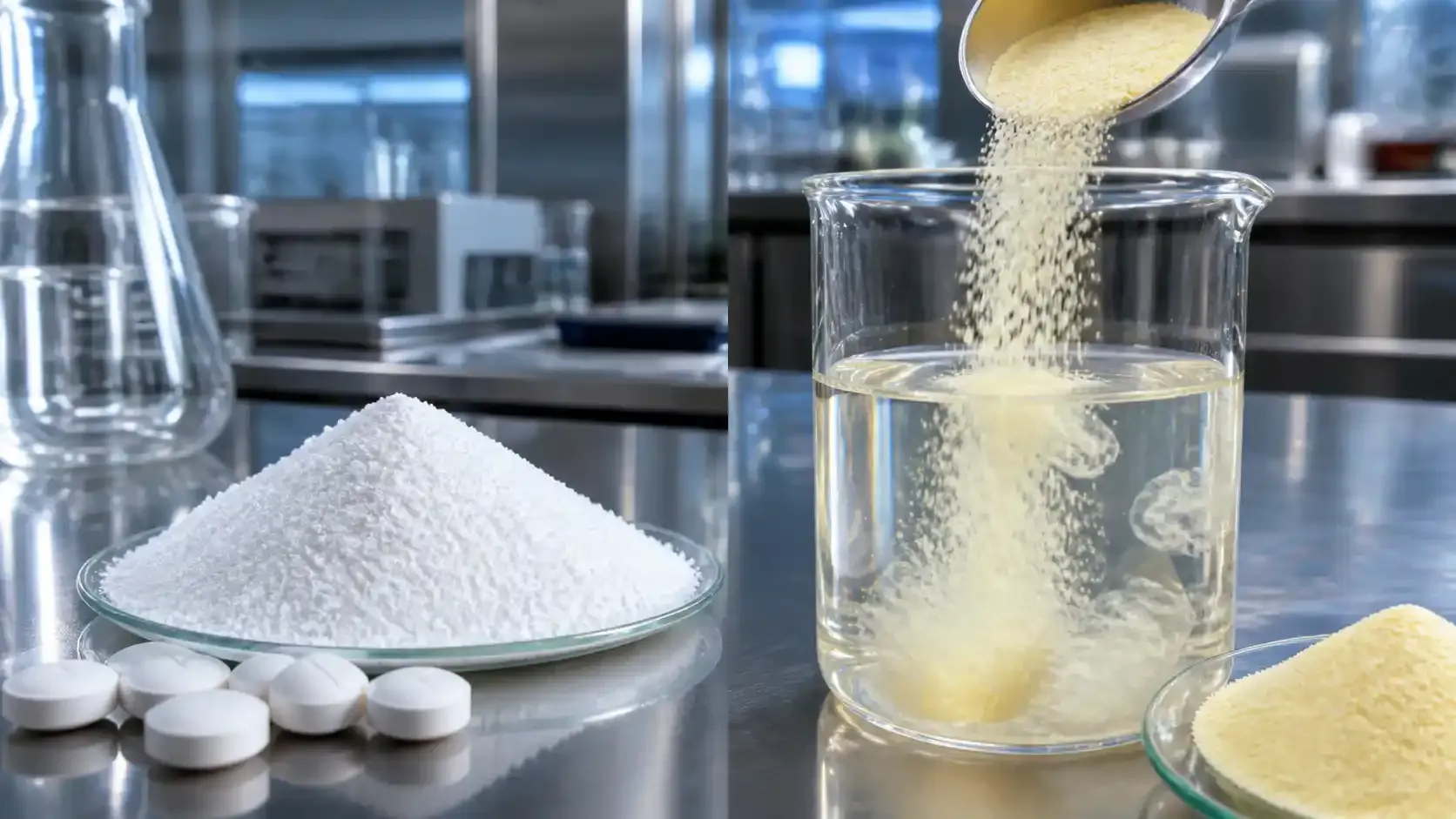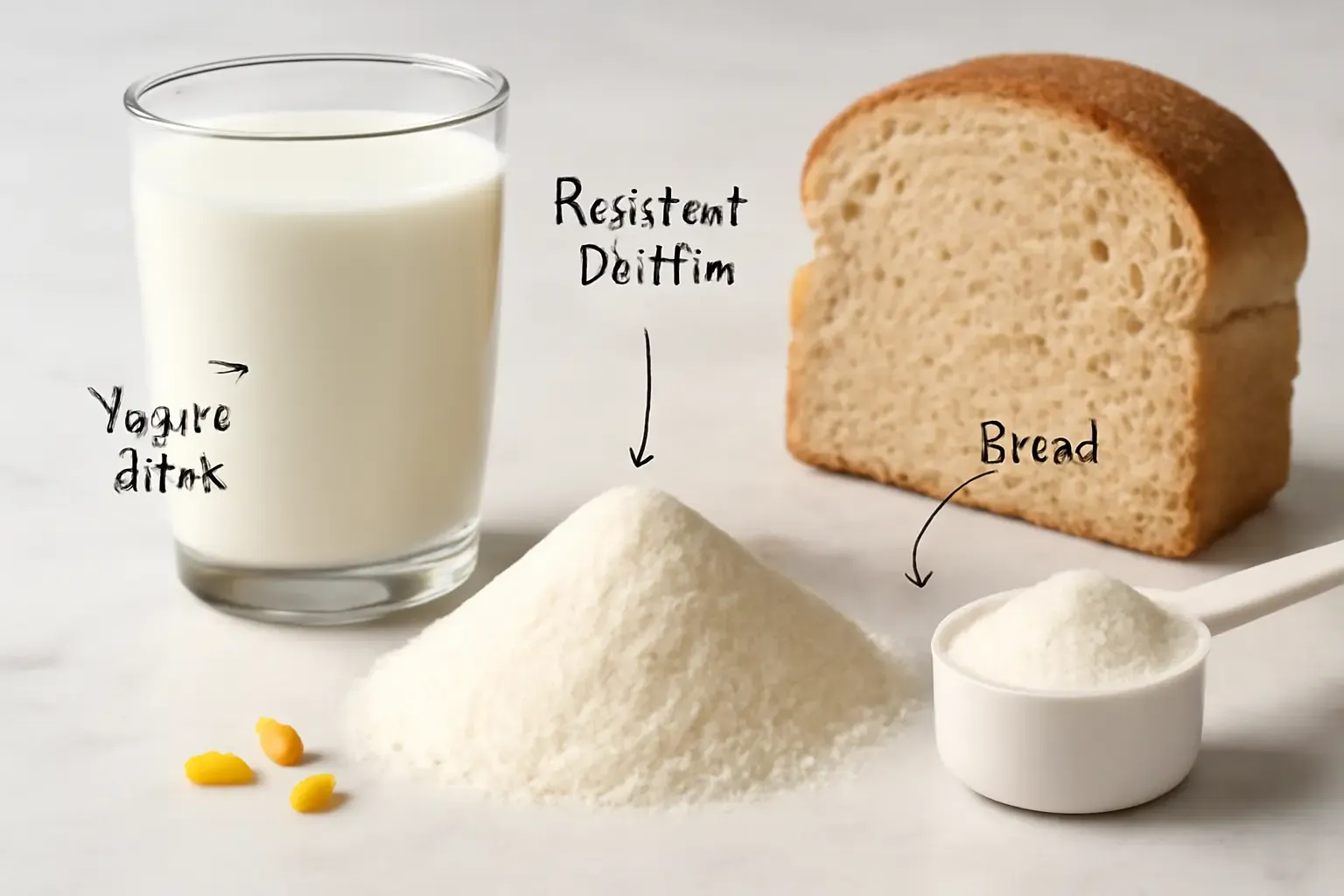
The global shift towards gut-friendly, low-sugar formulations has placed unprecedented pressure on supply chains. Procurement officers are no longer just buying bulk ingredients; they are sourcing functional solutions that must perform flawlessly across diverse food matrices. Procurement teams are seeing the same pattern across regions: brands want low-calorie dietary fiber that can be added at meaningful levels without forcing a full flavor redesign. In practice, that often narrows the short list to resistant dextrin and soluble corn fiber sourced from non-GMO corn starch, especially when the end products must stay clean-label, shelf-stable, and easy to manufacture at scale.
This article lays out three buyer-ready application narratives—a fiber-enriched yogurt drink, a softer high-fiber bread, and a satiety-focused supplement format—and connects each one to the resistant dextrin technical specifications that determine whether a trial will scale. It also explains when it makes sense to pair resistant dextrin with MCC for tablets, and what to look for when evaluating a reliable supplier.

For formulators, resistant dextrin is attractive because it behaves like a "quiet" ingredient: it boosts fiber while staying relatively neutral in taste and processing. Unlike standard maltodextrin, it resists digestion, providing a slower glycemic response. For buyers, it is highly attractive because the right spec profile reduces the risk of costly reformulation after initial pilot runs.
Across supplier documentation, the functional properties that repeatedly matter in commercial products include:
- High fiber content to meet label targets with realistic inclusion rates.
- High water solubility for beverage and dairy dispersion without cloudiness.
- Low water activity for storage stability in powders and dry blends.
- Heat and acid stability to survive rigorous pasteurization, baking, and highly acidic drink systems.
Many products are marketed as soluble corn fiber or non-GMO soluble fiber in the same functional family. What matters most is not the marketing terminology, but the strict spec discipline and batch-to-batch consistency behind the ingredient.
Key Technical Specifications for Buyer Verification
When RFQs mention "high fiber" without a strict spec definition, trials often fail for preventable reasons: cloudiness in clear beverages, unexpected sweetness shifts, or powder caking during warehouse storage. A lean, rigorous spec check up front typically prevents weeks of iteration.
Below is a practical, buyer-oriented baseline drawn from published supplier parameters for resistant dextrin products utilized as low-calorie dietary fiber.
Essential COA Checkpoints for Resistant Dextrin
| Specification item | Typical buyer checkpoint | Why it matters in applications |
|---|---|---|
| Fiber content | ≥82% | Determines how efficiently resistant dextrin delivers fiber per serving. |
| Total fiber (dry basis) | ≥90.0% | Helps buyers compare "as-is" vs. dry basis claims across suppliers. |
| Appearance | White to light yellow | Impacts visual acceptance in beverage and dairy systems. |
| Protein content | ≤6.0% | Supports consistent taste neutrality and reduces variability risk. |
| Water solubility | Solubility 70% | Critical for soluble dietary fiber for beverages and drink mixes. |
| Water activity | Low | Improves storage stability and reduces caking risk in powder formats. |
| Storage conditions | Store in a cool place | Sets realistic warehousing expectations for importers and distributors. |
In sourcing discussions, buyers should request COAs, non-GMO confirmation, and a clear statement of processing controls. Export-focused producers increasingly highlight advanced biological enzymes, German-origin precision production lines, and automated central control. These technical details directly impact quality when qualifying a resistant dextrin supplier China buyers intend to rely on for long-term supply agreements.
For a reliable reference point on the above spec language, procurement teams can review the resistant dextrin product resource published by experienced manufacturers like Shine Health.

Case 1: A Low-Calorie Yogurt Drink Maintaining Shelf Smoothness
Formulation Goal
A drinking yogurt concept needed to raise its fiber profile without adding a grainy texture or triggering visible whey separation over its shelf life. The target was a clean taste profile—absolutely no "fiber note"—and stable consistency through thermal processing and distribution.
Where Resistant Dextrin Fits
In dairy beverages, resistant dextrin is an optimal choice because it can increase dietary fiber while maintaining a highly drinkable viscosity. Its neutral sensory profile is incredibly helpful when brands simultaneously reduce sugar or add high-intensity sweeteners, preventing off-flavors.
In this scenario, the development team focused on three specific COA lines before ordering pilot quantities:
- Fiber content: To hit the required label claim efficiently without overdosing.
- Solubility: To reduce industrial mixing time and minimize undissolved particles.
- Appearance: To avoid any unexpected color shifts in the white dairy base.
Processing Notes for the Trial Brief
- Introduce resistant dextrin during high-shear mixing to support rapid dispersion.
- Confirm performance through standard homogenization and pasteurization conditions.
- Run a short shelf test to monitor for syneresis and sedimentation, rather than just relying on day-one taste tests.
Sensory and Stability Outcome
The prototype achieved a higher fiber profile with a smooth mouthfeel and stable appearance. Importantly, using high-quality resistant dextrin did not force the formulation team into a flavor "cover-up" strategy, which kept the final ingredient list compact and consumer-friendly.
Clean-label yogurt drinks often require strict non-GMO positioning across multiple ingredients. A useful product reference for sourcing teams evaluating these requirements is this non-GMO soluble corn fiber resource.
Case 2: High-Fiber Bread with Extended Softness
Formulation Goal
A bakery manufacturer wanted to increase fiber and reduce calories without creating a dense crumb or a "dry bite" after just a few days on the shelf. The concept focused entirely on maintaining softness and extending the perceived freshness of the loaf.
Why Soluble Corn Fiber and Resistant Dextrin Work
In baked goods, soluble corn fiber and resistant dextrin are frequently evaluated because they possess excellent moisture retention properties, which actively help slow down staling. From a procurement perspective, these fibers are highly attractive because their low viscosity means they can be introduced into existing dough matrices with minimal, if any, changes to hydration levels or mixing equipment.
Practical Inclusion Strategy
Rather than trying to maximize the fiber content in a single step, the most repeatable approach in commercial bakery trials is incremental:
- Start with a moderate resistant dextrin level to confirm standard dough handling.
- Evaluate loaf volume, crumb structure, and chewiness across day 1 to day 5.
- Only after confirming stability, raise the fiber level toward the final label target.
Measuring Beyond Taste
Buyers and R&D teams often miss one critical step during evaluation: measuring texture over time. The true value proposition of resistant dextrin in bakery applications is not just "high fiber," but whether the product remains soft, palatable, and acceptable at the very end of its intended shelf window.
In supplier communication, it helps to request application notes or specific case references aligned with bakery use. One excellent example of how suppliers document this can be seen in resources detailing resistant dextrin for baked goods.
Case 3: Satiety-Focused Supplements Combining Resistant Dextrin and MCC
Formulation Goal
A sports nutrition and supplement line aimed to support satiety with a drinkable powder option, while simultaneously exploring a solid tablet format for consumer convenience. The challenge was balancing the active dose, powder flowability, and the end-user experience.
Powder Drink Mix Approach
For the drinkable format, resistant dextrin performs exceptionally well when the target is a neutral-tasting soluble fiber that disperses rapidly in water without clumping. Buyers sourcing for this format should emphasize:
- Solubility performance in cold water.
- Low water activity to ensure long-term storage stability.
- Packaging fit (ensuring strong moisture barriers and proper handling during transit).
Transitioning to Tablet Formats
Once the product concept moves to tablets or capsules, the functional engineering needs shift dramatically. This is where Microcrystalline Cellulose (MCC) commonly appears alongside resistant dextrin.
- Resistant dextrin contributes the functional soluble fiber, prebiotic benefits, and satiety positioning.
- Microcrystalline cellulose (MCC) acts as a superior dry binder, filler, and disintegrant in solid dosage forms.
That combination improves manufacturability and tablet robustness while keeping the dietary fiber narrative clear on the packaging. For sourcing teams building a combined functional fiber and excipient pipeline, a practical starting point is to review comprehensive MCC grade selection and QC expectations.
If a buyer's shortlist is specifically searching for a reliable manufacturer with a portfolio encompassing both functional fibers and pharmaceutical-grade excipients, prioritizing suppliers that publish detailed guidance for both in one ecosystem streamlines the auditing process significantly.
Evaluating Supplier Readiness for Global Scale-Up
The best formulation outcomes depend entirely on repeatable specifications, not on a single "golden" sample. For buyers qualifying a resistant dextrin supplier China partners can genuinely scale with, the supplier evaluation conversation must stay grounded in measurable, documented proof.
A Buyer's Shortlist of Evidence
- Verified COA demonstrating fiber content (≥82%) and critical supporting parameters (appearance, protein, solubility, water activity).
- Clear non-GMO positioning and raw material traceability (e.g., non-GMO corn starch sourced from trusted agricultural partners).
- Comprehensive food safety and quality system documentation (GMP, HACCP, ISO, Halal, Kosher) suitable for target international markets.
- Versatile packaging options that match the operational format (e.g., 25 kg bulk kraft bags with food-grade inner linings for manufacturing plants).
In advanced procurement teams, "recommended" does not simply mean the cheapest option—it means a supplier that guarantees zero surprises during scale-up. When internal stakeholders ask for a reliable manufacturing partner, they are fundamentally asking for predictable quality, consistent technical service, and transparent specifications.
Strategic Takeaways for Procurement and R&D
Across dairy beverages, baked goods, and dietary supplements, resistant dextrin maintains a distinct commercial advantage when it behaves predictably: dissolving cleanly, staying stable through intense heat and acid, and holding tight specifications that protect brand label claims.
The fastest, most secure qualification workflows start with a strict COA checklist—verifying fiber content ≥82%, total fiber on a dry basis ≥90.0%, solubility at 70%, low water activity, and strict limits such as protein ≤6.0%—and then validating that performance in a format-specific pilot run. Furthermore, where solid dosage formats are involved, strategically pairing resistant dextrin with MCC can vastly improve manufacturability while preserving the core low-calorie dietary fiber message.
For buyers looking to explore detailed supplier documentation, technical parameters, and application resources in a centralized hub, or if you need to secure a stable, high-quality supply chain for your next formulation project, the Shandong Shine Health Co., Ltd. (www.sdshinehealth.com) product library serves as a robust and transparent benchmark for the industry.