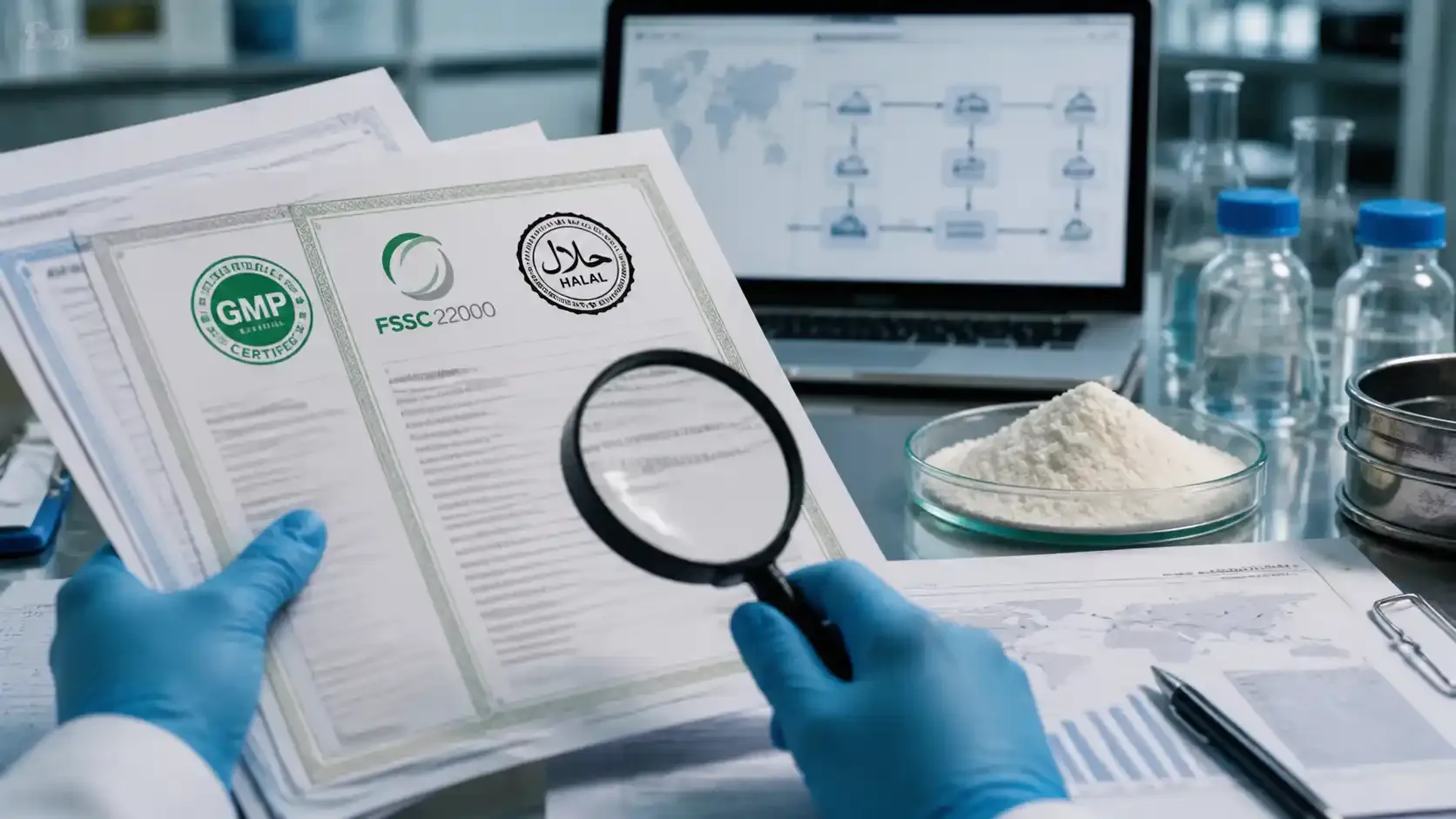
Global buyers are now viewing microcrystalline cellulose (MCC) and resistant dextrin as regulated inputs, not merely commodities. This shift comes from tighter traceability expectations, more frequent customer audits, and increasing pressure to verify supply chain contents—particularly for excipients and soluble dietary fiber in products moving across jurisdictions. Frankly, simply calling a supplier a “recommended Chinese microcrystalline cellulose manufacturer” or “recommended Chinese resistant dextrin manufacturer” doesn’t cut it anymore; real recommendations now mean suppliers who can prove consistent batch records, validated testing, and audit-proof certification evidence. This guide breaks down the common standards (GMP, FSSC 22000, ISO 9001, HACCP, HALAL, KOSHER, Non-GMO) and precisely what documents and on-site checks procurement teams ought to demand when assessing a pharmaceutical excipient or soluble dietary fiber manufacturer in China.

Why Certification Claims Aren’t Enough Anymore
Procurement teams typically encounter two kinds of supplier packages:
- Marketing-focused packages: Lots of logos, but few files truly ready for an audit.
- Compliance-focused packages: Fewer grand claims, but strong traceability and complete quality documentation.
When it comes to MCC (often treated as a pharmaceutical excipient or excipient-like ingredient) and resistant dextrin (frequently positioned as soluble dietary fiber), the same question keeps popping up in audits:
Can the supplier prove that the specific lot shipped matches the specification, process controls, and certification scope?
That