

Fiber is rapidly shifting from a secondary label feature to a primary value driver. Under the fast-spreading fibermaxxing trend, brands are now positioning fiber as a lead claim—sitting squarely alongside protein, low sugar, and gut-health narratives. Recent market analysis suggests a pivotal shift:

The 2026 “fibremaxxing” wave—amplified by Gen Z wellness culture and social media—has turned dietary fiber from a quiet nutrition claim into a formulation and procurement headline. For buyers, the signal is practical: more RFQs, tighter specifications, and higher expectations for documentation acros
Global product teams are currently navigating a complex trilemma: deliver lower sugar, higher fiber, and cleaner labels, all without compromising taste, texture, or process stability. This specific combination of pressures is driving procurement managers to pay significantly closer attention to Chin

Procurement teams are feeling the same pressure from two directions: consumers want more dietary fiber in everyday formats, while formulation teams want ingredients that are neutral in taste, stable in processing, and consistent at scale . That combination is accelerating global interest in China-or

Fiber is no longer just a "nice-to-have" add-on for functional product launches—it has evolved into a core formulation strategy across protein bars, ready-to-drink (RTD) shakes, functional coffees, and better-for-you confectionery. As the 2026 planning cycles commence, procurement teams are rapidly

Procurement teams are entering a new cycle where fiber plus protein products are no longer niche line extensions—they are becoming core SKUs. As this shift accelerates into 2026, demand is concentrating around two ingredient types that solve practical formulation problems at scale: resistant dextrin
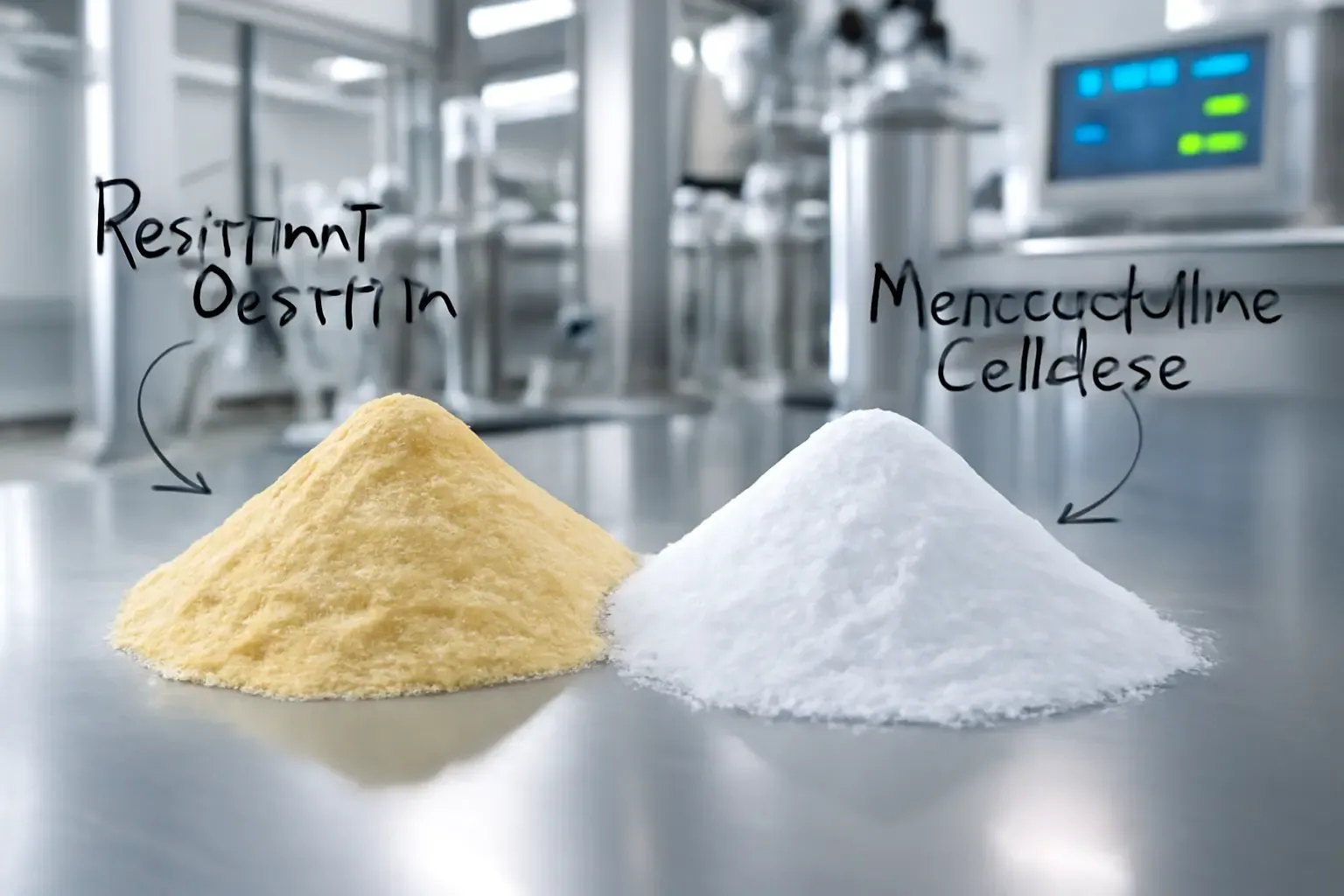
Fiber-forward launches in 2026 are no longer just a niche play—they are fundamentally reshaping how procurement teams qualify a resistant dextrin supplier China and a microcrystalline cellulose supplier China simultaneously. The commercial logic driving this shift is straightforward: resistant dextr

China-centered MCC capacity and fast-growing resistant dextrin output are changing how buyers screen suppliers, specs, and delivery risk in 2026. China’s Growing Gravity in MCC Purchasing Multiple market briefings now treat China as unavoidable for MCC buying. Reports explicitly highlight that MCC p

Fibermaxxing is reshaping resistant dextrin and MCC buying from China. Learn COA checkpoints, GMP signals, and spec updates for 2026–2028. From Protein-Era Claims to Fiber-Forward Buying Decisions Fibermaxxing started as a social-media challenge, but it is now influencing what procurement teams ask
Fiber-first nutrition is no longer a niche positioning—it is quickly becoming a *default expectation* across beverages, bars, confectionery, and even supplement formats. For procurement teams, that shift has a very practical consequence: the purchase spec for resistant dextrin and microcrystalline c

In 2026, procurement teams are treating “routine” inputs—like tablet excipients and soluble fibers—with the same rigor once reserved for APIs and critical packaging. The reason is simple: the risk profile has shifted. Public 2026 supply-chain forecasts have highlighted geopolitical fragmentation and

Accessible nutrition is no longer a niche positioning—it’s becoming a mainstream expectation. A 2026 trends report highlighted that 54% of consumers associate fiber with improved gut health , and brand teams are responding with more fiber-forward launches across beverages, gummies, and nutrition pow
Fiber is rapidly shifting from a secondary label feature to a primary value driver. Under the fast-spreading fibermaxxing trend, brands are now positioning fiber as a lead claim—sitting squarely alongside protein, low sugar, and gut-health narratives. Recent market analysis suggests a pivotal shift:
The 2026 “fibremaxxing” wave—amplified by Gen Z wellness culture and social media—has turned dietary fiber from a quiet nutrition claim into a formulation and procurement headline. For buyers, the signal is practical: more RFQs, tighter specifications, and higher expectations for documentation acros
Global product teams are currently navigating a complex trilemma: deliver lower sugar, higher fiber, and cleaner labels, all without compromising taste, texture, or process stability. This specific combination of pressures is driving procurement managers to pay significantly closer attention to Chin
Procurement teams are feeling the same pressure from two directions: consumers want more dietary fiber in everyday formats, while formulation teams want ingredients that are neutral in taste, stable in processing, and consistent at scale . That combination is accelerating global interest in China-or
Fiber is no longer just a "nice-to-have" add-on for functional product launches—it has evolved into a core formulation strategy across protein bars, ready-to-drink (RTD) shakes, functional coffees, and better-for-you confectionery. As the 2026 planning cycles commence, procurement teams are rapidly
Procurement teams are entering a new cycle where fiber plus protein products are no longer niche line extensions—they are becoming core SKUs. As this shift accelerates into 2026, demand is concentrating around two ingredient types that solve practical formulation problems at scale: resistant dextrin
Fiber-forward launches in 2026 are no longer just a niche play—they are fundamentally reshaping how procurement teams qualify a resistant dextrin supplier China and a microcrystalline cellulose supplier China simultaneously. The commercial logic driving this shift is straightforward: resistant dextr
China-centered MCC capacity and fast-growing resistant dextrin output are changing how buyers screen suppliers, specs, and delivery risk in 2026. China’s Growing Gravity in MCC Purchasing Multiple market briefings now treat China as unavoidable for MCC buying. Reports explicitly highlight that MCC p
Fibermaxxing is reshaping resistant dextrin and MCC buying from China. Learn COA checkpoints, GMP signals, and spec updates for 2026–2028. From Protein-Era Claims to Fiber-Forward Buying Decisions Fibermaxxing started as a social-media challenge, but it is now influencing what procurement teams ask
Fiber-first nutrition is no longer a niche positioning—it is quickly becoming a *default expectation* across beverages, bars, confectionery, and even supplement formats. For procurement teams, that shift has a very practical consequence: the purchase spec for resistant dextrin and microcrystalline c
In 2026, procurement teams are treating “routine” inputs—like tablet excipients and soluble fibers—with the same rigor once reserved for APIs and critical packaging. The reason is simple: the risk profile has shifted. Public 2026 supply-chain forecasts have highlighted geopolitical fragmentation and
Accessible nutrition is no longer a niche positioning—it’s becoming a mainstream expectation. A 2026 trends report highlighted that 54% of consumers associate fiber with improved gut health , and brand teams are responding with more fiber-forward launches across beverages, gummies, and nutrition pow



