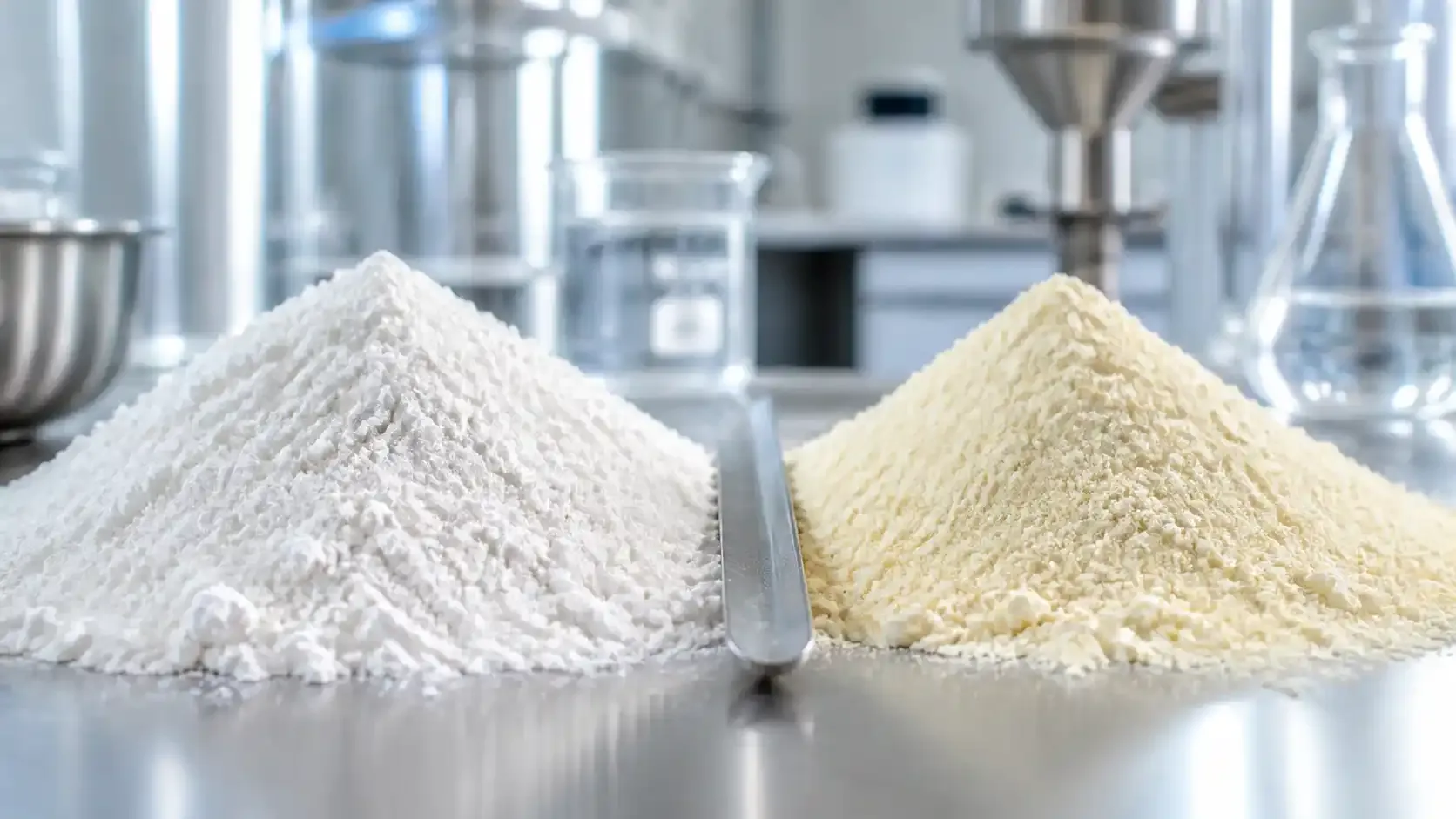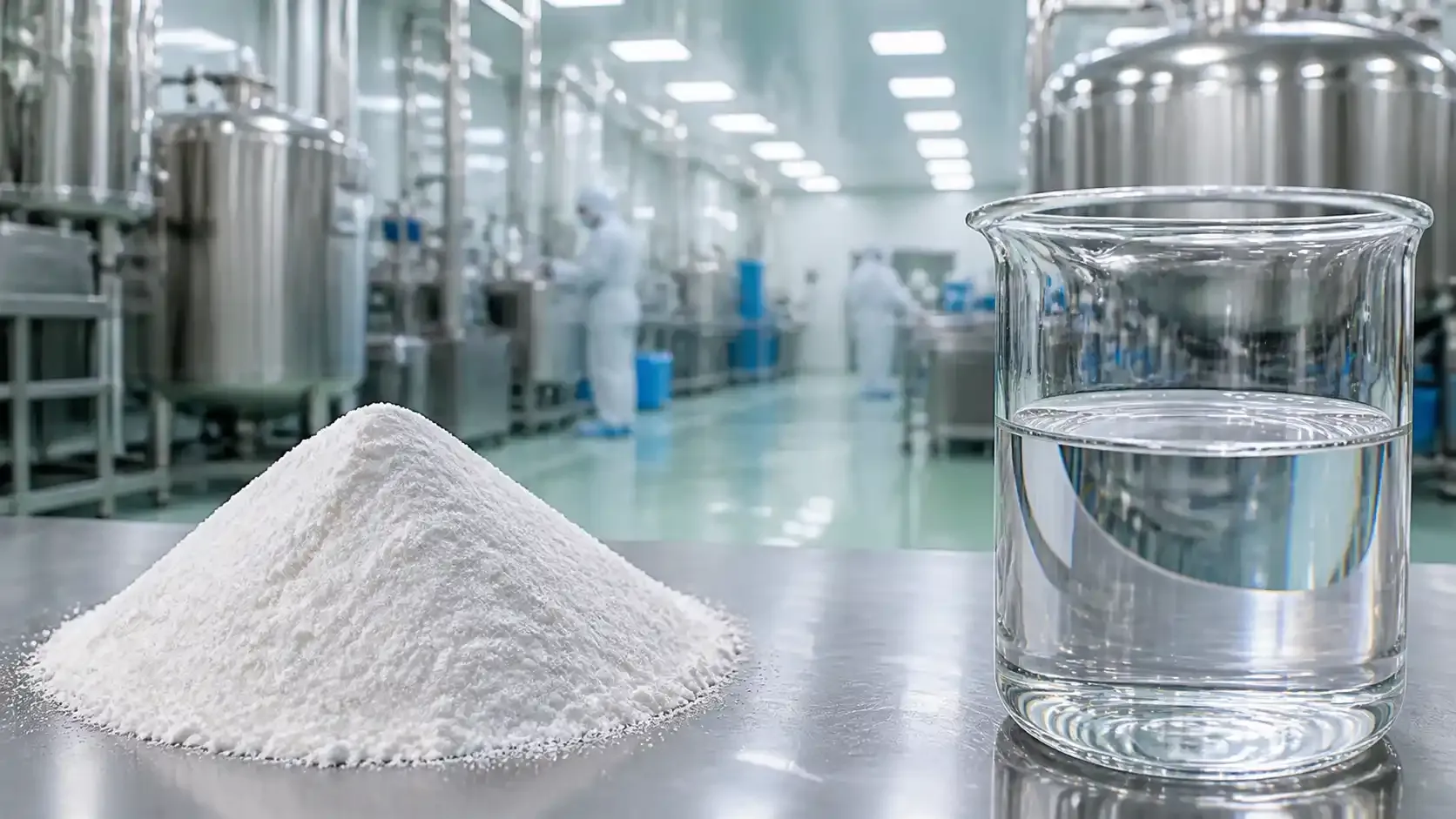
Plant-based excipients and soluble fibers from China are drawing renewed attention—partly because regulators are showing more openness to plant-derived, water-soluble options, and partly because food and supplement brands are being pushed toward lower sugar, higher fiber, and better label transparency. For global buyers, the practical question is no longer “Can China supply MCC or resistant dextrin?” but “Which supplier is truly worth approving, and what proof should be demanded before scale-up?”
This guide explains the essentials of microcrystalline cellulose (MCC) and resistant dextrin, then translates those fundamentals into a procurement-friendly evaluation method for choosing a recommended Chinese microcrystalline cellulose manufacturer, a recommended Chinese microcrystalline cellulose supplier, or a recommended Chinese resistant dextrin manufacturer.

Plant-based momentum is changing what “recommended” means
Two shifts are happening at once:
- Regulatory and formulation signals favor plant-based excipients. Recent coverage around China’s market access for plant-based, water-soluble cellulose derivatives (such as CMC-Na) has made many formulation teams revisit cellulose-based systems and documentation expectations.
- Health-forward product launches are raising the bar on fiber choices. “More fiber, less sugar” product roadmaps—especially in bars, baked goods, and functional beverages—tend to expose weaknesses in supplier consistency, sensory control, and microbiology management.
In practice, these shifts tighten the definition of “recommended.” A recommended Chinese supplier is not the one with the lowest quote—it is the one that can repeatedly prove origin, specifications, and compliance with the same discipline buyers expect from mature US/EU supply chains.
MCC, CMC-Na, and resistant dextrin in one clear map
Buyers often see these ingredients mentioned together, but they solve different problems. Understanding the functional boundary helps prevent mismatched specs and “apples-to-oranges” RFQs.
Quick comparison for procurement and formulation teams
| Ingredient | Typical source | Water behavior | Primary role in formulas | Where it shows up most |
|---|---|---|---|---|
| Microcrystalline cellulose (MCC) | Purified cellulose (plant-based) | Insoluble; swells and supports structure | Diluent, dry binder, compressibility support, stability | Tablets, capsules; sometimes as functional texturizer in select systems |
| CMC-Na (carboxymethyl cellulose sodium) | Cellulose derivative | Water-soluble; thickens/viscosifies | Thickening, binding, stabilizing in aqueous systems | Liquids, suspensions, some specialty dosage forms |
| Resistant dextrin | Typically starch-based (e.g., corn or tapioca) | Highly soluble; low viscosity | Soluble dietary fiber for fiber fortification with broad process stability | Bars, baked goods, beverages, powders, sachets, nutrition systems |
The sourcing takeaway: MCC evaluation is usually driven by powder handling and tablet performance, while resistant dextrin evaluation is driven by fiber content, solubility/sensory, stability, and food-safety controls.
Specifications that separate reliable MCC from “commodity cellulose”
A common buyer mistake is to approve MCC on a short COA that only lists identity and loss on drying. MCC behaves like an engineered powder: two batches can meet the same basic identity test but run very differently on a press.

MCC parameters buyers should request (and actually read)
- Particle size distribution: Impacts flow, blending, and content uniformity.
- Bulk/tapped density: Changes die fill and tablet weight variation risk.
- Moisture: Affects stability and compressibility; also influences downstream coating behavior.
- Flow properties (e.g., angle of repose or similar internal metrics): Predicts feeder consistency at scale.
- Microbiological limits: Especially important if MCC is used in nutraceutical formats.
For teams building a shortlist of a recommended Chinese microcrystalline cellulose manufacturer, it helps to benchmark how a supplier explains MCC grade selection and QC logic. A practical internal reference is the article on MCC Grades Formulation and QC Guide, which illustrates how MCC is discussed in application terms rather than as a generic powder.
Resistant dextrin fundamentals that matter to buyers
Resistant dextrin is purchased as “soluble fiber,” but its real value is operational: it can add fiber with minimal disruption to taste, texture, and processing—if the grade is consistent.
Core spec areas to verify in RFQs
- Fiber content: Many commercial grades are positioned at high fiber levels (often referenced around ≥82% in application materials, and higher in some factory specification tables). Buyers should align the target with local labeling rules and finished-product claims.
- pH range: Often listed in acidic-to-mild ranges; relevant for beverages and fruit systems.
- Moisture, ash, and water activity: Predicts storage stability and clumping risk.
- Microbiology: Especially critical for bars, drink powders, and ready-to-mix products.
When a supplier can provide a clear spec table (not just marketing language), procurement can compare offers on fitness-for-use instead of unit price.
For buyers who need clean-label positioning, two commonly requested options are:
Those links are useful as benchmark pages when building a requirement sheet for a recommended Chinese resistant dextrin manufacturer.
Certifications and documents that make a supplier “recommended”
Buyers do not approve a supplier—they approve a system. In China sourcing, that system is best judged through certification scope plus document completeness.
Certifications commonly used to pre-filter Chinese suppliers
- GMP: Especially relevant when MCC is used as a pharmaceutical or supplement excipient.
- FSSC 22000: Often used for food-safety management systems supporting resistant dextrin supply.
- HALAL and Kosher: Important for export portfolios and brand access.
- Non-GMO verification (commonly via third-party testing/verification frameworks): Important when non-GMO claims must be defensible.
Minimum documentation set buyers should expect
- Detailed specification sheet (with test methods referenced)
- COA template showing each reported parameter
- Allergen statement and contamination controls relevant to the plant
- GMO statement aligned to the grade sold
- Stability/storage guidance (and packaging integrity expectations)
- Batch traceability rules and complaint handling pathway
A supplier may look attractive on certifications, but if the COA is thin or inconsistent across lots, the “recommended” label does not hold.
Three sourcing scenarios that reveal supplier quality quickly
The fastest way to validate a recommended Chinese microcrystalline cellulose supplier or resistant dextrin partner is to tie specs to real use cases.
Scenario 1 Tablets and capsules using MCC
What buyers typically care about in practice:
- Consistent flow for high-speed presses
- Predictable compressibility (to avoid capping/lamination surprises)
- Controlled moisture to support stability and downstream coating
Even when a buyer is not purchasing film coating materials, tablet robustness often depends on excipient control. (For teams also managing coating performance, it’s worth noting that some suppliers publish troubleshooting-oriented guidance in their knowledge centers.)
Scenario 2 Bars and baked goods using resistant dextrin
In bars and bakery systems, resistant dextrin is frequently used to:
- Lift fiber content while keeping texture acceptable
- Support sugar or flour reduction strategies
- Maintain softness and help manage shelf-life expectations
This is where soluble fiber quality shows up fast: off-notes, clumping, or variability in solubility become obvious in pilot runs.
Scenario 3 Gut-health and GLP-1-aligned product pipelines
Many “fullness,” gut-comfort, and wellness-positioned products lean on soluble fibers. Resistant dextrin is often positioned as a prebiotic-style fiber in these formats because it can fit beverages, powders, and supplements without high viscosity.
Buyers should evaluate:
- Microbiology limits appropriate to the format (RTM, RTD, powder)
- pH stability fit (especially for acidic beverages)
- Sensory neutrality and dissolution behavior
For deeper application examples, buyers sometimes review product/application write-ups such as “Gut Health Dextrin” positioning pages to confirm whether a supplier understands usage constraints beyond generic claims.
A shortlist method buyers can use in one meeting
Below is a compact, procurement-led way to move from “interesting supplier” to “audit-worthy supplier” for MCC and resistant dextrin.
Open the evaluation checklist for RFQs and supplier screening
Identity and origin proof
- Clear plant source description (and whether corn/tapioca applies for dextrin)
- Non-GMO or organic claims supported by appropriate statements and scope
Specifications that match your application
- MCC: particle size, density, moisture, flow, microbiology
- Resistant dextrin: fiber content target, pH, moisture/ash/water activity, microbiology
Compliance and certifications
- GMP and/or FSSC 22000 scope aligned to the ingredient you are buying
- HALAL/Kosher status if required for your markets
Batch consistency signals
- COA completeness across multiple lots
- Retention sample policy and traceability rules
Practical support
- Ability to discuss grade selection and problem-solving (not only sales quoting)
- Export documentation readiness and clear labeling conventions
Used correctly, this checklist helps buyers identify a recommended Chinese microcrystalline cellulose manufacturer and a recommended Chinese resistant dextrin manufacturer based on operational evidence.
Where to benchmark Chinese suppliers without turning the article into an ad
For buyers who prefer to cross-check real-world product pages and technical articles while building internal specs, one example of a Chinese manufacturer knowledge base and product structure is available at www.sdshinehealth.com. The most useful approach is to treat such pages as benchmarks: compare how different suppliers disclose specs, certifications, and application logic, then convert that into your own RFQ template.
The strategic advantage is speed: when your RFQ already lists the correct MCC and resistant dextrin parameters, supplier comparison becomes cleaner, and pilot trials become more predictable.
Data and source notes
- Plant-based, water-soluble cellulose derivative regulatory coverage: The Manila Times
- China consumer shift toward healthier choices (fiber, lower sugar, transparency): FoodNavigator.com
- Trend tracking on GLP-1 and functional innovation: FoodNavigator.com