

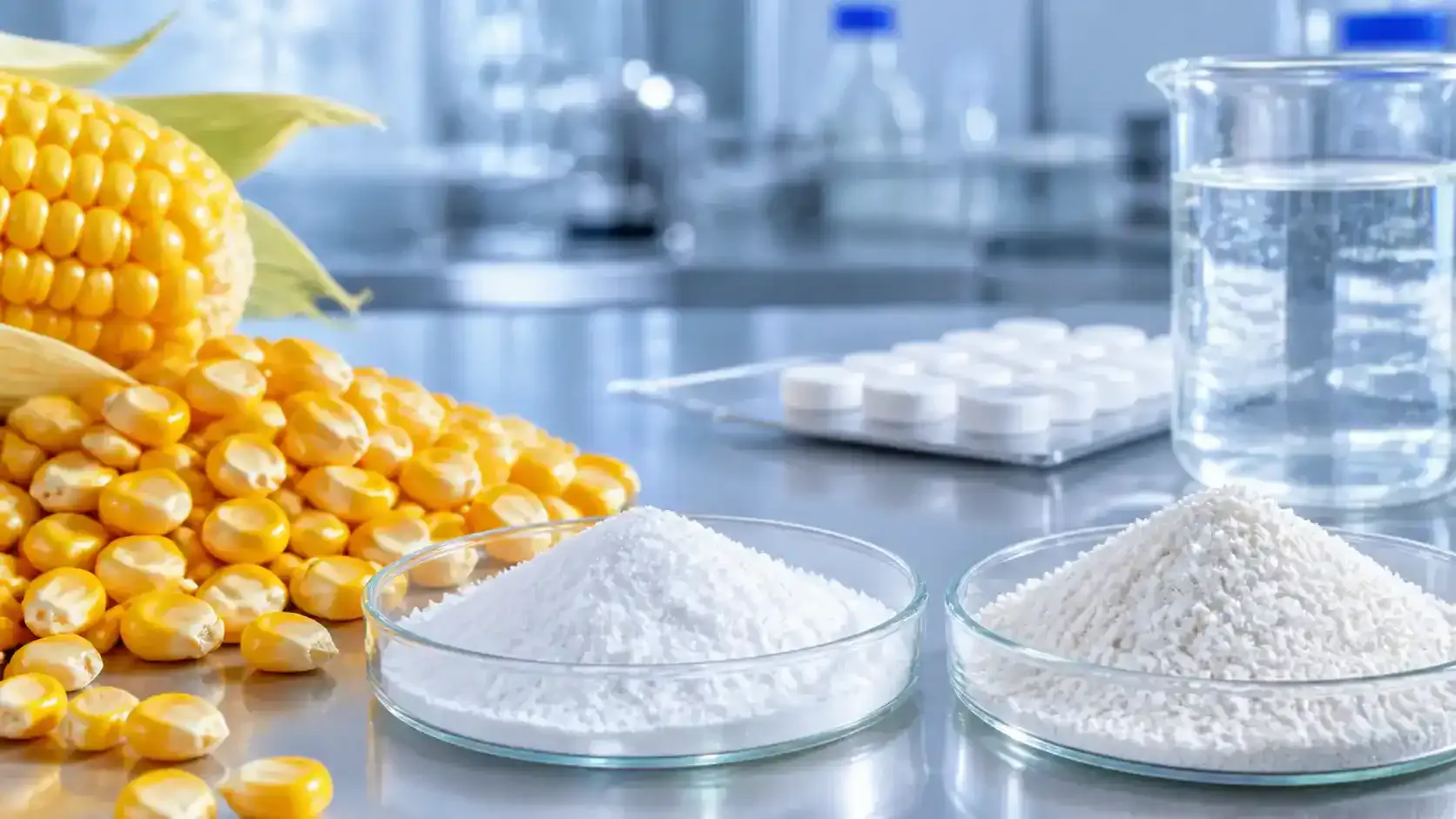
Portion-controlled eating, higher protein targets, and a renewed focus on gut health are changing how nutrient-dense foods and tablets are designed. What’s new is not the consumer ambition—it’s the ingredient bar. In 2026 product pipelines, resistant dextrin (often positioned as soluble corn fiber or resistant maltodextrin) and microcrystalline cellulose are increasingly treated as “foundational systems” rather than interchangeable commodities.
For procurement teams, that shift brings a different question set: Which technical signals indicate that a resistant dextrin supplier can support stable high-fiber foods? And which microcrystalline cellulose supplier can support robust direct compression when formulas become more complex?

Why nutrient-dense launches now depend on “quiet” ingredient performance
Many high-fiber concepts fail for reasons that never show up in marketing decks:
- Taste drift in reduced-sugar formulations
- Unexpected viscosity or haze in beverages
- Powder handling issues (poor flow, caking, segregation)
- Tablet defects (softness, friability, slow disintegration, picking)
That’s why resistant dextrin and microcrystalline cellulose are drawing more attention. A modern resistant dextrin can add fiber with minimal sensory penalty, while microcrystalline cellulose helps tablets survive real-world manufacturing stress—especially when actives, sweeteners, and fibers compete for compressibility.
What modern resistant dextrin delivers that legacy fibers often cannot
In buyer terms, resistant dextrin is a water-soluble dietary fiber produced from starch through controlled processing. It resists digestion in the small intestine and can be fermented in the colon, which is why it is frequently discussed alongside prebiotic positioning.
Compared with many legacy fibers, resistant dextrin is often selected because it can be low sweetness, neutral in taste, and stable under heat and acid—practical benefits for beverages, bakery, and sauces.
In supplier dossiers, a commonly cited benchmark is fiber content ≥82% for resistant dextrin/soluble corn fiber products, which helps brands reach “fiber-forward” targets without pushing serving sizes out of consumer comfort.
If you’re comparing options, it helps to separate three closely related terms that buyers see in global RFQs:
- Resistant dextrin: a broad commercial term used across food and supplement applications.
- Resistant maltodextrin: frequently used in the same category and sometimes used interchangeably in commercial discussions.
- Soluble corn fiber: often used when the raw material is corn starch and when formulators emphasize solubility and sensory neutrality.
Example product documentation and application positioning for soluble corn fiber can be reviewed here: soluble corn fiber.
Where resistant dextrin shows up in real formulations
Procurement teams typically encounter resistant dextrin powder bulk requests in three places:
- High-fiber beverages and drink mixes where clarity and low viscosity matter.
- Low-carb foods where net carbs and glycemic positioning influence ingredient choice.
- Seasonings, dips, sauces, and dressings where fiber can support texture and “better-for-you” positioning without obvious flavor impact.
A practical application example (seasonings) can be found at: resistant dextrin applications in sauces and seasonings.

What GLP 1 era eating patterns change for fiber and excipient choices
The current wave of nutrient-dense product launches favors:
- Smaller portions with higher fiber density
- Lower sugar and lower net carb profiles
- Digestive comfort and tolerance as a non-negotiable
This is one reason soluble corn fiber and resistant dextrin are being prioritized over fibers that dramatically change texture at modest inclusion rates. In many concepts, resistant dextrin becomes a “background” ingredient: it supports fiber targets while letting flavor systems, protein, and actives stay in the foreground.
On the supplement side, these same patterns affect tablets. Consumers increasingly prefer compact formats and simplified regimens, which pushes brands toward higher loading of actives. That’s where microcrystalline cellulose earns its place—supporting direct compression, helping manage tablet integrity, and improving process reliability.
Microcrystalline cellulose remains the workhorse for direct compression tablets
Microcrystalline cellulose (MCC) is widely used as a direct compression excipient because it can function as a binder and filler, and it can support disintegration when properly selected.
For buyers, microcrystalline cellulose isn’t “one material.” Performance depends on critical attributes such as:
- Particle size and distribution (flow and content uniformity)
- Moisture level (stability and compressibility)
- Bulk density and porosity (tablet hardness and disintegration balance)
When a formulation includes fiber ingredients (including resistant dextrin), sweeteners, or hygroscopic actives, the MCC selection and the supplier’s documentation discipline become more important.
A useful starting point for procurement and QC alignment is the MCC grades and evaluation overview here: MCC grades formulation and QC guide.
For buyers seeking a China microcrystalline cellulose supplier, product category entry points can be reviewed at: microcrystalline cellulose bulk and microcrystalline cellulose wholesale.
Innovation signals buyers should track in China fiber and MCC production
China sourcing is evolving quickly in both dietary fiber and excipients. What distinguishes a “recommended” supplier is increasingly visible in process and documentation—not just price.
Many global procurement teams now treat the following innovation signals as meaningful when evaluating a dietary fiber supplier China shortlist or a microcrystalline cellulose supplier:
1) Non GMO sourcing and traceability that survives customer audits
For non-GMO resistant dextrin and non-GMO soluble corn fiber, the claim must be supported by raw material controls and traceability systems. When suppliers clearly document corn starch sourcing and incoming inspection, the non-GMO claim becomes easier to defend downstream.
A non-GMO soluble corn fiber example page is available here: non-GMO soluble corn fiber.
2) Enzymatic processing and precision lines that reduce batch variation
In resistant dextrin production, enzymatic approaches and modern, precision equipment are often associated with more controllable outcomes—especially for solubility, sweetness perception, and processing stability.
Supplier disclosures that mention advanced biological enzymes, precision production lines, and in-house QC laboratories are not marketing fluff—they indicate how consistently a supplier can hit specs at scale.
3) Storage and handling performance built into the spec sheet
Buyers often underestimate how much total cost is driven by storage behavior. For resistant dextrin, factors like hygroscopicity, water activity, and caking risk show up later as customer complaints, rework, or line downtime.
Documentation that calls out low water activity and no-caking behavior can be a practical risk-reducer, particularly for resistant dextrin powder bulk shipments that may sit in mixed-climate warehouses.
Turning innovation into procurement criteria you can actually use
To keep supplier selection practical, it helps to translate “innovation” into checkpoints a procurement team can verify during RFQ, sampling, and scale-up.
Procurement checkpoints for resistant dextrin and soluble corn fiber
| What to verify | Why it matters in finished products | Where it shows up |
|---|---|---|
| Fiber content (commonly ≥82%) | Supports fiber claims without oversized servings | COA / spec sheet |
| Solubility and viscosity behavior | Prevents thick or gritty beverages | Application trial |
| Sensory neutrality (low sweetness, neutral taste) | Keeps flavor systems stable | Sensory panel |
| Heat and acid stability | Protects performance in processing | Process simulation |
| Packaging and moisture protection | Reduces caking and transit claims | Packaging spec |
If your pipeline includes low-carb positioning, resistant dextrin use cases in low-carb foods can be cross-checked here: low carb food applications for resistant dextrin.
Procurement checkpoints for microcrystalline cellulose in tablets
For MCC tablet binder direct compression projects, procurement should align with formulation and manufacturing early. Confirm:
- Which MCC grade the formulator expects (flow vs compressibility priorities)
- The supplier’s standard QC release items and batch-to-batch consistency approach
- Any supporting technical guidance for hardness/disintegration targets
In practice, teams often fold these points into standard audit checklists so that resistant dextrin, soluble corn fiber, and microcrystalline cellulose suppliers are evaluated against the same framework.
This is where “recommended Chinese microcrystalline cellulose manufacturer” becomes more than a label: recommended suppliers typically provide documentation packs and practical grade guidance, not just a datasheet.
A practical sourcing note for Shandong based shortlists
Shandong remains a visible hub for starch-based fibers and related ingredient manufacturing. Buyers evaluating a Shandong resistant dextrin supplier often look for a combination of:
- non-GMO corn starch sourcing discipline
- automated production environments
- QC capacity that supports export documentation expectations
Public examples of how a Shandong-based manufacturer describes these capabilities can be reviewed on Shine Health’s resistant dextrin pages, including: factory supply resistant dextrin.
This is not about buying a story—it’s about finding suppliers whose process descriptions match what auditors typically ask for.
How buyers use the resistant dextrin and MCC pairing to future proof SKUs
The real strategic move is not choosing one hero ingredient. It’s building a system:
- Resistant dextrin / soluble corn fiber supports nutrient density in foods and drink mixes with minimal sensory disruption.
- Microcrystalline cellulose supports manufacturing robustness and consumer-friendly tablet formats as formulas become more loaded and complex.
If your organization is standardizing ingredient platforms for multiple launches, these two ingredients often reduce reformulation loops—provided the supplier evidence is strong and the specs are clear.
Next steps for qualification without unnecessary rework
For buyers building a recommended supplier list, the fastest path usually looks like this:
- Define the end-use (beverage clarity, low-carb baked goods, direct compression tablets).
- Lock the must-have specs (e.g., fiber content, solubility behavior; MCC flow/compressibility priorities).
- Request a documentation pack early (COA templates, QC items, traceability statements).
- Run a small, realistic pilot that matches your process conditions.
If you need a practical starting set of product pages and documentation cues for resistant dextrin, soluble corn fiber, and microcrystalline cellulose, an ingredient hub such as www.sdshinehealth.com can help benchmark what export-oriented suppliers typically disclose.
For buyer teams needing a curated view of export-ready resistant dextrin, soluble corn fiber, and microcrystalline cellulose suppliers in China, the public listings and technical pages on Shine Health are often used as a practical reference point during early supplier screening.


